

Massaliasuchus affuvelensis was a Late Cretaceous crocodyliform from the Fuveau lignite basin of southern France. Its jaws have been compared for more than a century. A toothed specimen described in 2025 helped establish the source of a museum fossil and supported an allodaposuchid identification.
Quick facts
| Species | Massaliasuchus affuvelensis |
|---|---|
| Group | Allodaposuchid eusuchian |
| Age | Late Cretaceous, early Campanian |
| Locality | Fuveau basin, Provence, France |
| Principal fossils | Partial skull, jaws and teeth |
| Newly described specimen | Left dentary with teeth |
What can the fossils tell us?
Matheron’s figures preserve information about a jaw and its tooth row. Teeth and later museum specimens make it possible to compare the old account with surviving fossils.
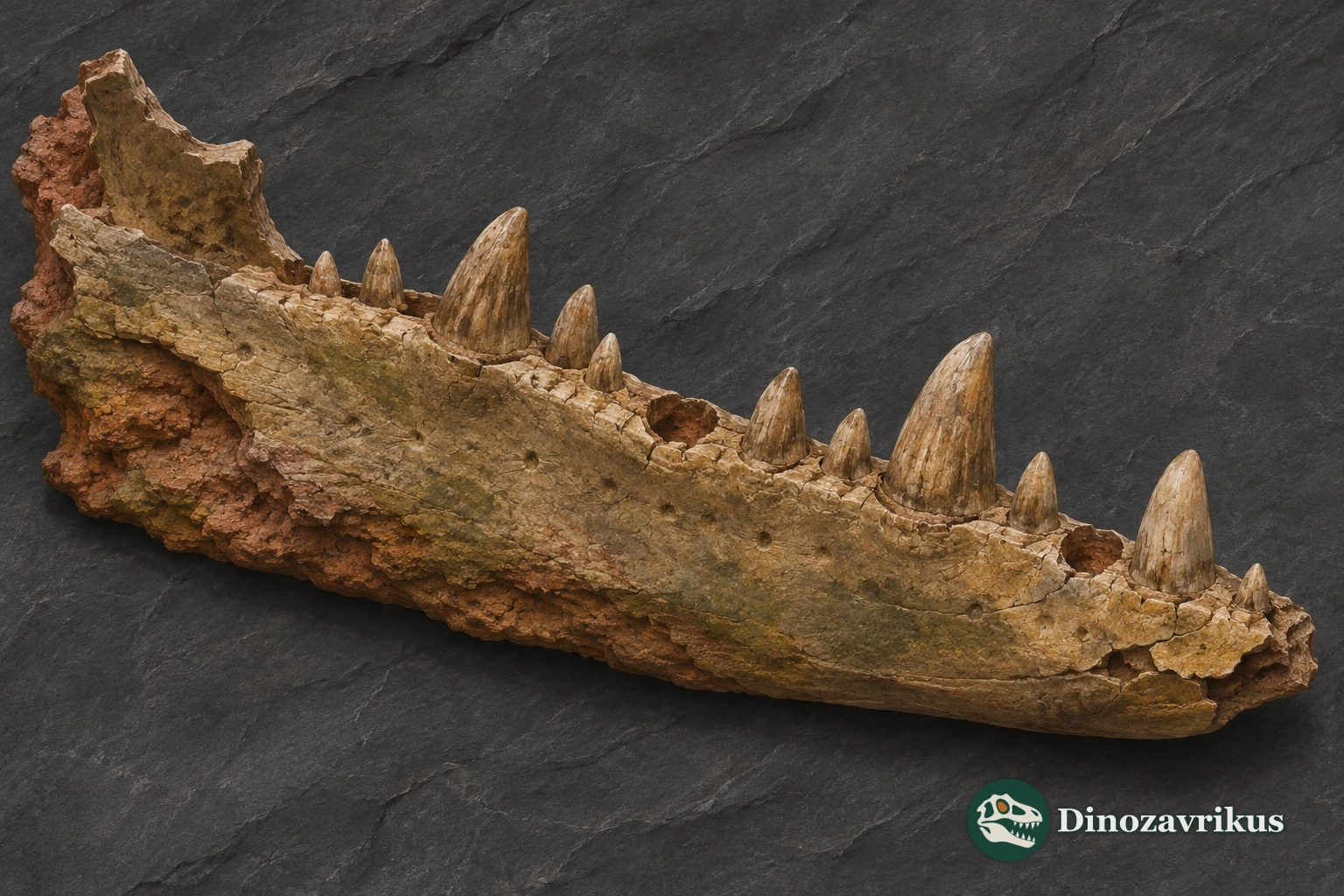
The newly described jaw has an especially wide space between the seventh and eighth positions. An illustration of Matheron’s specimen shows a similar pattern.
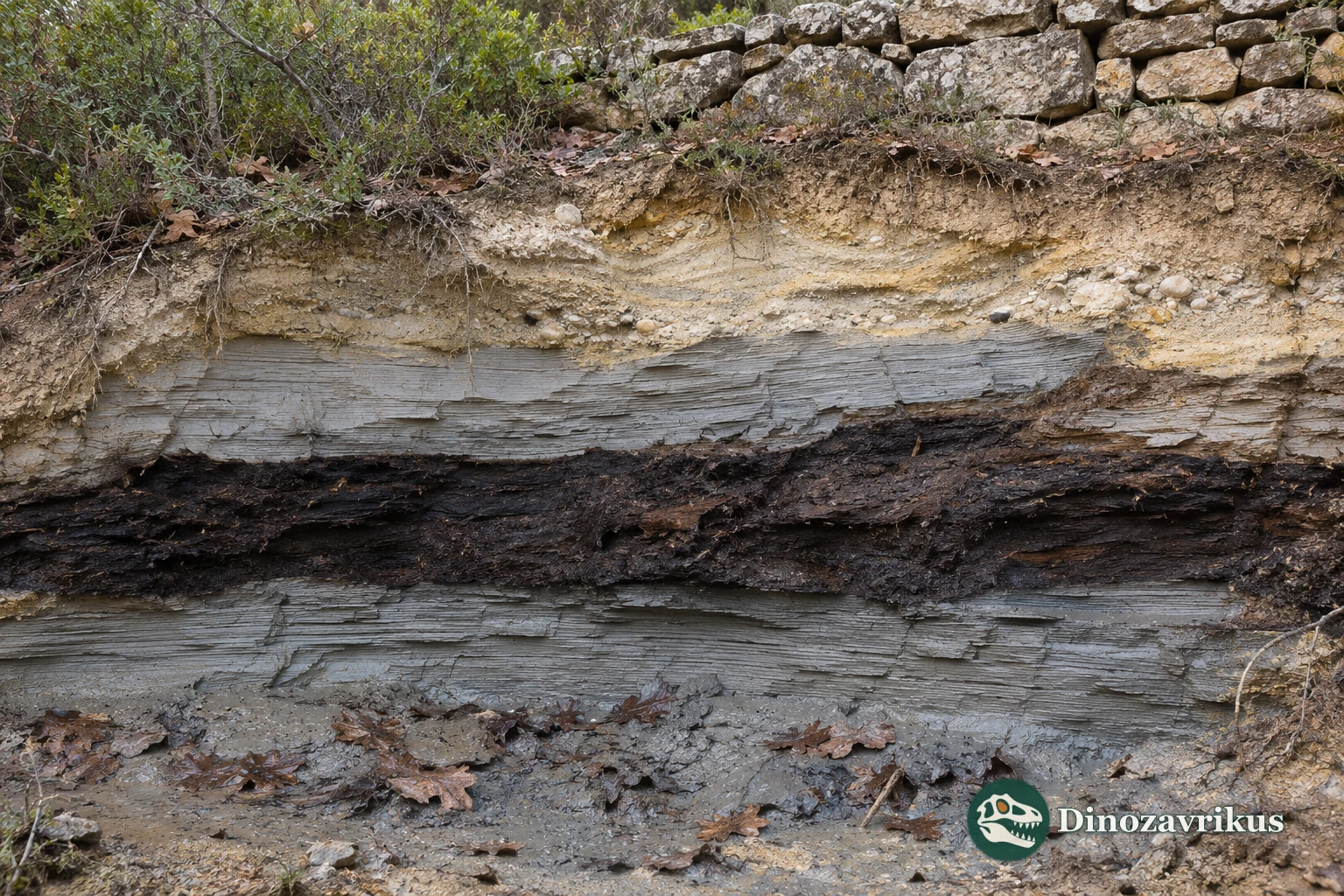
Preliminary analysis compared the pollen and spores in the rock around the jaw with the Fuveau deposits. The age is based on the regional stratigraphy.
From Matheron’s finds to a separate genus
Philippe Matheron named Crocodilus affuvelensis in 1869 from remains found near Fuveau. Some of the original jaw material could no longer be located, although drawings, isolated teeth and other bones survived. The lignites were mined around Gardanne and Valdonne, where other Cretaceous vertebrate fossils were also collected.
Jérémy Martin and Éric Buffetaut reassessed the fossils in 2008. They compared material in the Natural History Museum of Marseille, including part of a cranium and a specimen with the snout and lower jaw in occlusion. They established Massaliasuchus as a separate genus and initially interpreted it as an early alligatoroid.
A dentary in the Aix-en-Provence collection
In 2025 France de Lapparent de Broin described the left dentary MHN.AIX. PV.2023.15.1. The bone is broken behind the sixteenth tooth position. The front and middle teeth vary in height, and the rear crowns preserved in the row are rounder in cross-section. The space between the seventh and eighth positions is especially wide.
The distribution of these spaces resembles the tooth row figured by Matheron. Preliminary analysis of pollen and spores in the surrounding sediment linked the museum jaw to the Fuveau lignites. Regional stratigraphic evidence indicates an early Campanian age for the type locality.
How its relationships were revised
A 2015 study of European eusuchians proposed that Massaliasuchus belonged to the same family as Allodaposuchus. The comparisons included shape and bone features of the skull and outer lower jaw. The 2025 study supported allodaposuchid affinities on evidence from the new dentary.
Preserved head bones help distinguish the species and test its relationships. They provide less evidence for total body size and the foods it regularly ate.
Frequently asked questions
Where was Massaliasuchus found?
Its remains come from the Fuveau and Valdonne area of Provence in southern France. The type locality is associated with the Fuveau lignites.
What did the newer jaw reveal?
It preserves patterns of tooth spacing, including a large gap between the seventh and eighth positions. These features can be compared with older figures and other fossils.
Which group did it belong to?
The 2008 revision proposed alligatoroid affinities. Studies in 2015 and 2025 supported placement among the allodaposuchids, an extinct group of eusuchians.
Can its whole body be reconstructed?
The fossils chiefly document the muzzle and jaws. The proportions and external appearance of the body are much less certain.