

Early Devonian limestone in Nevada preserves silica-replaced shells of several Maurotarion species. One assemblage includes forms with twelve and thirteen movable segments. Articulated specimens allow those counts to be compared with the head and tail relief of the same individuals.
Quick facts
| Family | Aulacopleuridae |
|---|---|
| Age | Silurian and Devonian |
| Named by | G. K. B. Alberti, 1969 |
| Type species | Maurotarion maura |
| Type species locality | Upper Silurian of northwestern Morocco |
| Articulated material | Pragian Wenban Limestone, Nevada |
What can the fossils tell us?
The tail shield is distinct from the last movable segment. The specimen came from a loose block.
Head ornament and the expression of the tail rings provide independent characters.
The order of the assemblages applies to the local succession. It does not span the full lifetime of each species.
The Silurian type species from Morocco
G. K. B. Alberti established Maurotarion in 1969. He had described the type species, Harpidella maura, two years earlier from the limestone of the Ghirta Valley near Rabat. The beds are Ludlow in age.
Maurotarion was also treated as a subgenus of Otarion. Later revisions narrowed its limits and reconsidered several assignments involving Harpidella. Other occurrences include Silurian rocks in Canada and Devonian rocks in Argentina and Bolivia.
Thirteen segments and three clear tail rings
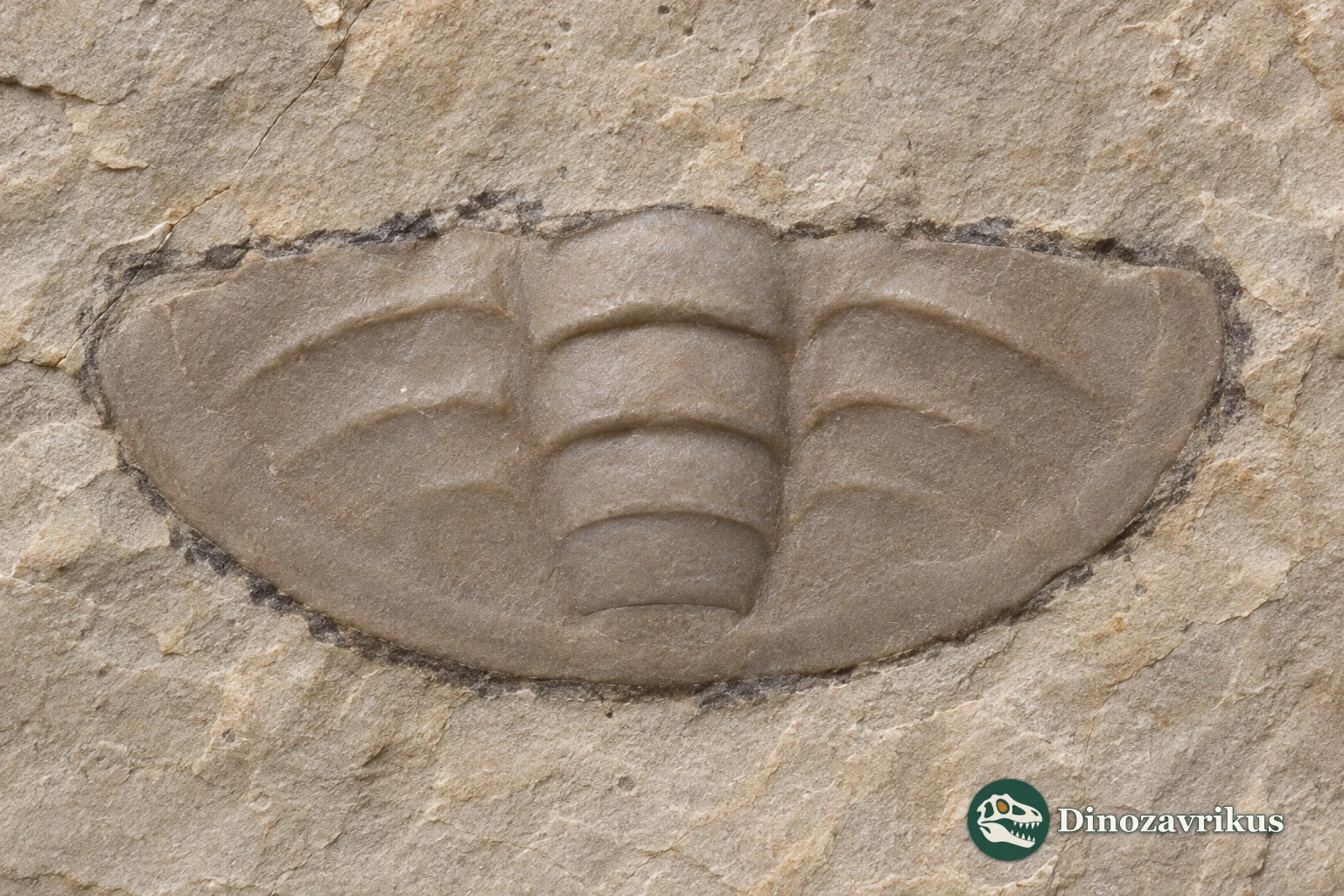
The holotype of M. wenbanense, SUI 109047, is articulated. It has short cheek spines and a glabella covered with tubercles. Further tubercles form rows along the rear of the occipital ring and on the thoracic axis. Thirteen movable segments lie behind the head.
The tail has a broad low rim, and three rings are clearly visible on the axis. M. chrysion from the same assemblage has a smooth glabella and twelve movable segments. Its tail has only two clearly expressed rings, though a possible third is faint. How well the grooves are preserved matters when comparing the species.
Three fossil assemblages in the Wenban Limestone
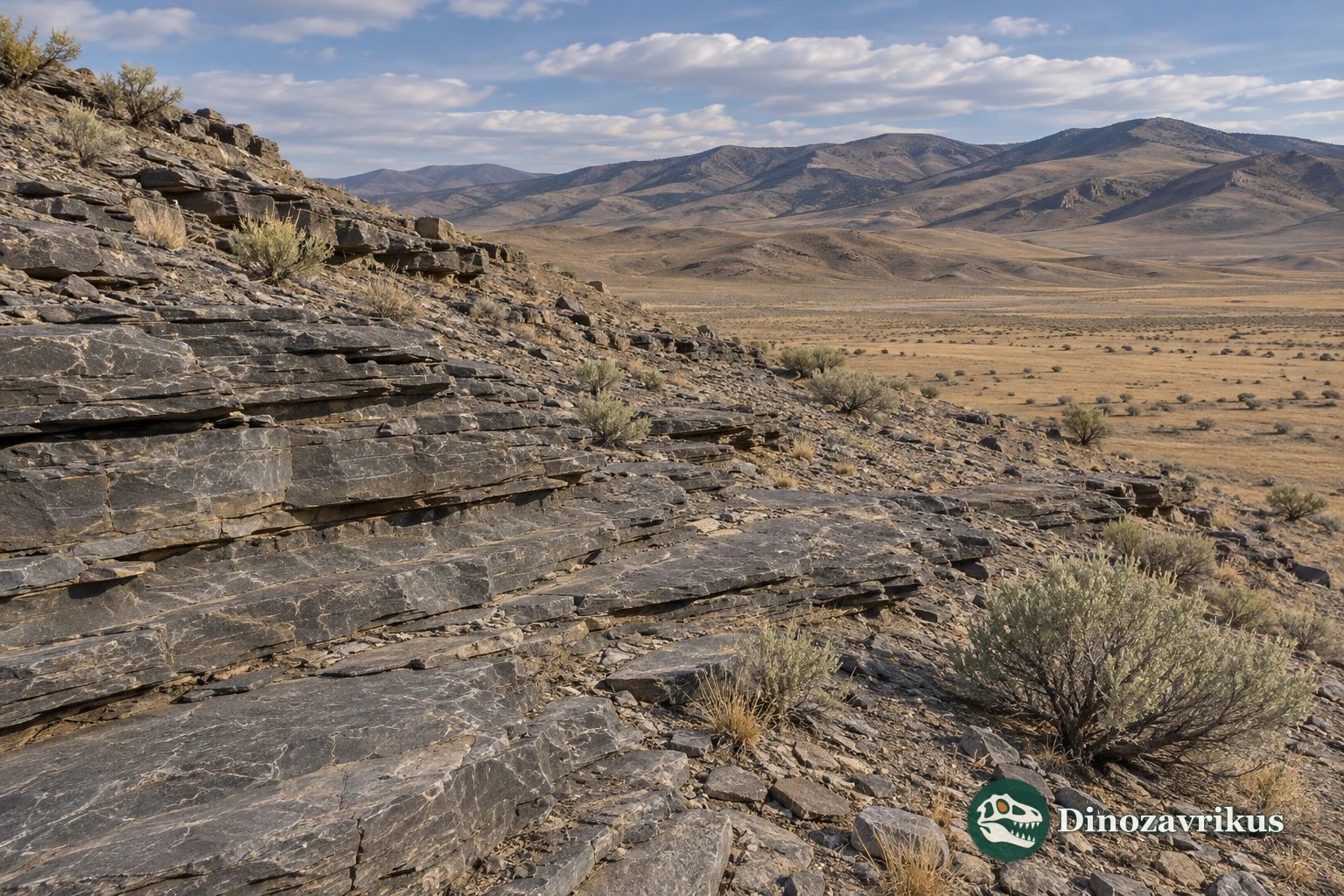
Jonathan Adrain identified three successive Pragian assemblages in the Cortez Mountains of Nevada. The lowest, in thinly bedded clay-rich limestone, contains M. periergum. The middle assemblage includes M. chrysion and M. wenbanense. Most trilobites of this middle interval came from a dark limestone bed about 15 cm thick and show little compaction.
The holotype of M. wenbanense came from a loose block along a haul road. An additional specimen comes from the main locality of the middle assemblage. Higher beds yielded M. fooi with other trilobites, brachiopods and solitary corals. The types of the newly described Nevada species are held by the University of Iowa.
Frequently asked questions
Where was the Maurotarion type species found?
It came from Upper Silurian limestone in the Ghirta Valley near Rabat in northwestern Morocco.
Do all Maurotarion species have the same thoracic count?
M. wenbanense preserves thirteen movable segments. M. chrysion has twelve.
How can the two species in the middle Nevada assemblage be told apart?
The thoracic count, head ornament and tail relief distinguish them. M. chrysion has a smooth glabella and two clearly visible rings on the tail axis.
Why do some Nevada fossils preserve fine relief?
The shells are preserved in silica, and those of the middle assemblage show little flattening. This helps retain small differences in surface relief.