

Megalotriton is a fossil salamander known mainly from scattered vertebrae and limb bones from the Quercy phosphorites of southwestern France. Karl Alfred von Zittel named the type species, M. filholi, in 1890. Its bones do not provide a reliable total length or mass. The ancient amphibian catalogue includes it among rare fossil salamandrids whose anatomy is known from isolated elements.
Quick facts
| Name | Megalotriton filholi Zittel, 1890 |
|---|---|
| Group | Caudate amphibian, family Salamandridae |
| Type material age | Late Eocene; old phosphorite collections may have broad age control |
| Locality | Quercy phosphorites, southwestern France |
| Known elements | Vertebrae and limb bones; no complete skeleton |
| Vertebra length | Older description gives about 15 mm for type vertebrae |
| Diet and behaviour | No direct evidence for a specific diet or behaviour |
| Catalogue | Ancient amphibians |
What can the fossils tell us?
Older descriptions noted depressed vertebrae with broad arches and strongly concave articular faces. These are skeletal features, not direct measurements of total body length.
Quercy is a set of phosphatic fills in karst cavities, not one continuous layer. Exact locality and age are unevenly documented for some old museum collections.
A 1978 study referred this material to Megalotriton in an Upper Eocene fauna. It adds skeletal elements but is not a complete skeleton and does not settle the status of every historical species.
Scattered vertebrae and limb bones show a salamander, but do not establish exact proportions, colour, diet or locomotion.
Early descriptions
Since the nineteenth century, the karst-filled phosphorites of Quercy have yielded fossils of mammals, reptiles and amphibians. In 1890, Karl Alfred von Zittel established Megalotriton filholi from material that included vertebrae and limb bones. He compared the vertebral form with living salamanders and noted its large size. There was no complete skeleton or single preserved individual from which to reconstruct body proportions.
In 1903, Giuseppe de Stefano named another species, Megalotriton portisi, and a separate form, Heteroclitotriton zitteli. Later work has repeatedly revisited the older names applied to Quercy salamanders. M. portisi should therefore be distinguished from the type species M. filholi; referral of isolated bones to one species is not automatically settled.
Which bones are known?
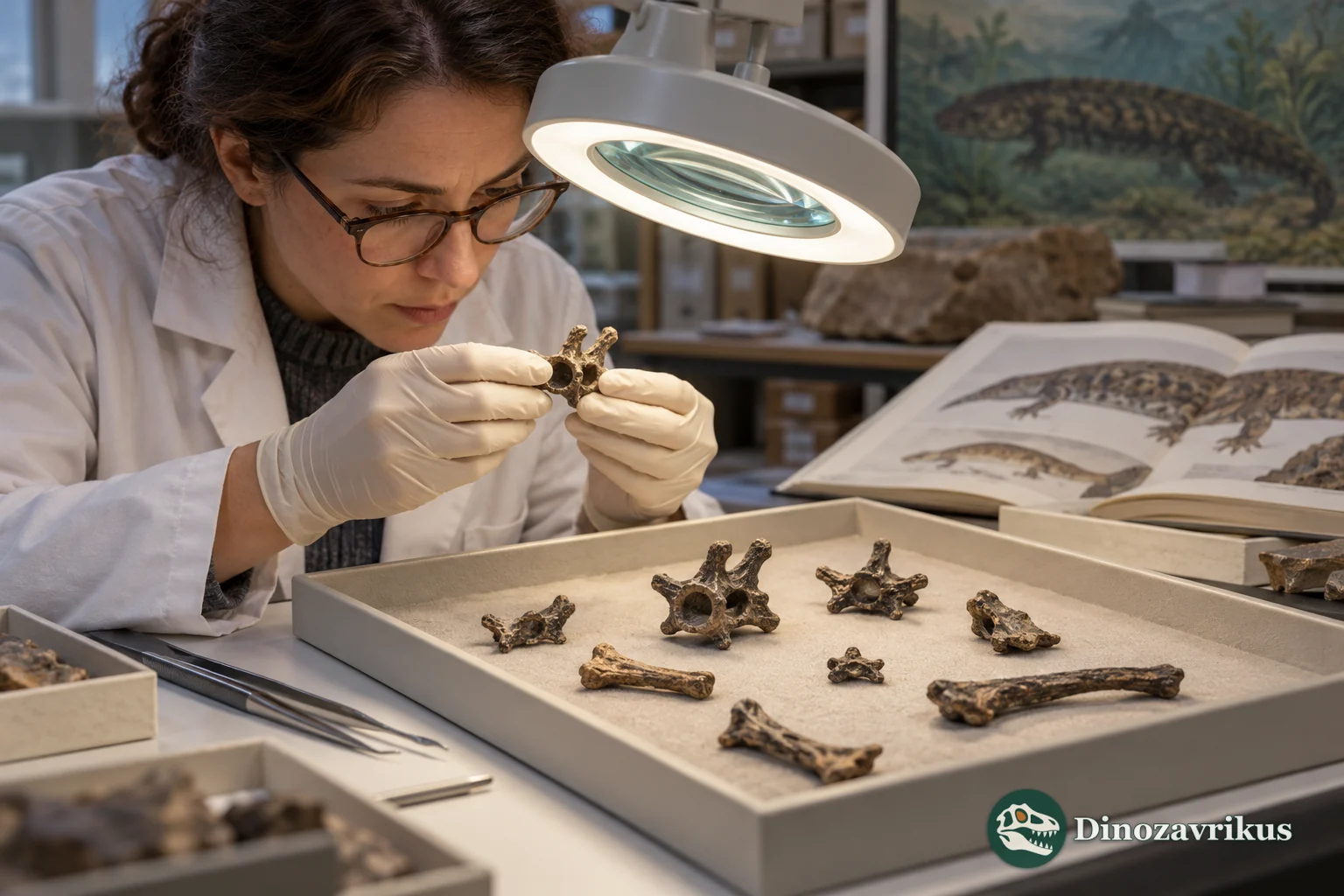
Disarticulated vertebrae are central to the record of M. filholi. An older description gives a length of about 15 millimetres for some type vertebrae. That is a bone measurement, not body length. It cannot be converted directly into total length without a tested proportional model, which is not available for this taxon.
A 1978 study of the Sainte-Néboule locality referred about ten vertebrae and two femora to Megalotriton. The authors distinguished this material from a smaller salamander that they could not identify to genus. The fossils came from an Upper Eocene fauna, but they still do not form a complete skeleton.
Age and karst localities
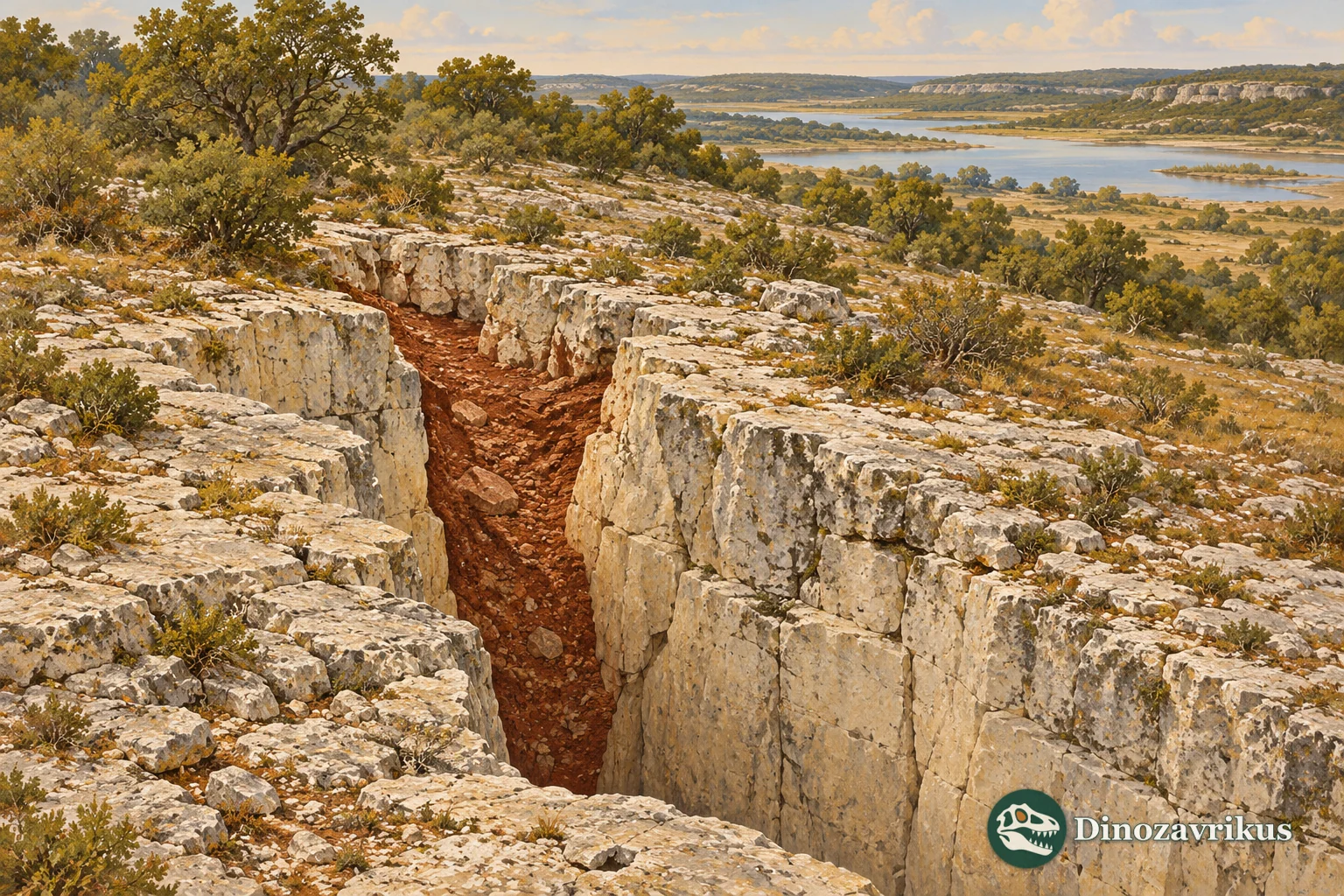
The Quercy phosphorites come from numerous fills of karst fissures and cavities. Their ages can differ even within a small region; reworking and older collecting methods complicate the assignment of individual bones to layers. All Quercy fossils should not be compressed into one short interval.
The type species M. filholi is associated with Upper Eocene Quercy collections. Later overviews discuss salamanders from these assemblages against a long history of deposits and point out gaps in the documentation of old material. New finds from precisely located sites are valuable because they help separate the age of a layer from the age historically attributed to a genus.
The nearby profile of Thaumastosaurus provides another example of amphibian diversity in Quercy phosphorite sites, but that animal was a frog, not a close salamander relative. Sharing a deposit does not imply similar anatomy or ecology.
What can be inferred about the animal?
Its placement among salamandrids and the vertebral form support a salamander with an elongated trunk and tail, as in other caudates. That broad body plan is comparatively likely, but exact proportions are not measured. Bone does not preserve skin colour, pattern or soft-tissue outline.
Diet and hunting behaviour are unknown. Modern salamanders commonly eat animal prey, but that observation cannot be presented as a demonstrated fact about this fossil genus without gut contents, coprolites or distinctive feeding traces. Seasonality of reproduction, larval development and time spent in water are also unknown.
The name Megalotriton and large isolated bones led early authors to regard it as one of the larger fossil salamanders. What is securely known is the scale of individual vertebrae, not the height or length of a complete animal. A cautious reconstruction retains a general salamander body plan without assigning a precise total length or mass.
Frequently asked questions
When did Megalotriton live?
The type species M. filholi is associated with Late Eocene Quercy phosphorites. Precise stratigraphic control is limited for some old collections.
Is a complete skeleton known?
No. The genus is known from separate vertebrae and limb bones; the Sainte-Néboule material is also incomplete.
What does a 15 mm vertebra tell us?
It is a measurement of a bone given in an older description. It is not body length and cannot by itself establish the animal's total size.
What did Megalotriton eat?
Direct dietary evidence is not known. General salamander biology cannot substitute for fossil evidence of feeding.