

Mesochoerus is a genus name used in older descriptions of African fossil pigs. It is now generally considered a junior synonym of Kolpochoerus. The jaws and teeth have not disappeared from science; their taxonomic label changed as collections were compared and nomenclatural priority was applied.
The cover is a general artistic reconstruction of a pig in this group, not an exact portrait of one named fossil species.
Quick facts
| Group | Extinct pigs, Suidae |
|---|---|
| Name status | Mesochoerus Shaw and Cooke, 1941: junior synonym of Kolpochoerus |
| Senior name | Kolpochoerus van Hoepen and van Hoepen, 1932 |
| Example species | M. heseloni Leakey, 1943; later K. heseloni |
| Region | African fossil localities |
| Age | Pliocene and Pleistocene material |
| Evidence | Especially jaws and molars |
What can the fossils tell us?
Kolpochoerus was published in 1932 and Mesochoerus in 1941. When the two generic concepts are united, the older available name normally has priority.
Crown height, the rear of the third molar and enamel patterns are compared across specimens. Wear and individual variation make isolated teeth less decisive.
African fossils from separate basins and intervals cannot be assembled into one animal. Deposits and associated fauna help test age and identification.
From the 1941 name to a senior genus
Van Hoepen and van Hoepen published Kolpochoerus in 1932. Shaw and Cooke introduced Mesochoerus in 1941. Subsequent comparisons united these generic concepts. A systematic study by Geraads explicitly lists Mesochoerus in the synonymy of Kolpochoerus; under that treatment the 1932 name takes priority.
The change is more than a label swap. Authors have disagreed about boundaries among species formerly associated with limnetes and heseloni. A genus name alone does not validate every historical specimen identification. The Kolpochoerus profile discusses the fossils under the widely used name.
What Leakey described from the Omo Basin
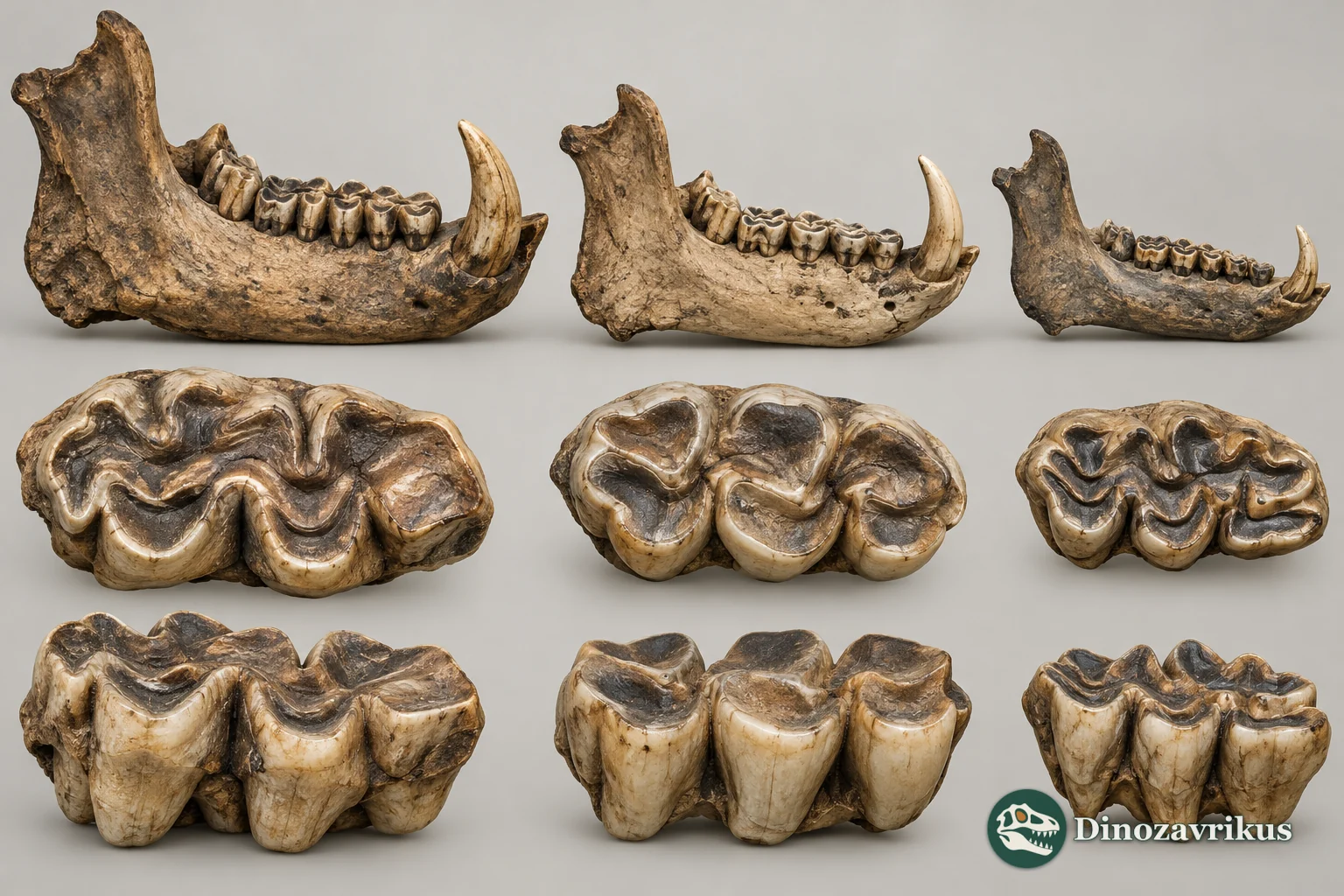
Louis Leakey named Mesochoerus heseloni in 1943 from the Shungura deposits of the Omo Basin. His diagnosis emphasized relatively low third-molar crowns compared with some pigs then placed in Mesochoerus, as well as long roots. Those features concerned a particular sample, not every ancient African pig.
Later literature uses the combination Kolpochoerus heseloni. A historical paper should be read with its original name, alongside the current combination. Debates about species limits and individual localities require reexamination of teeth and the age of their strata.
Why the third molar matters
Researchers compare crown height, cusps, the posterior extension of the third molar and enamel wear. Similar changes evolved independently in different pig lineages. A long or tall tooth cannot establish kinship on its own. Samples from successive deposits help separate variation within a species from differences among species.
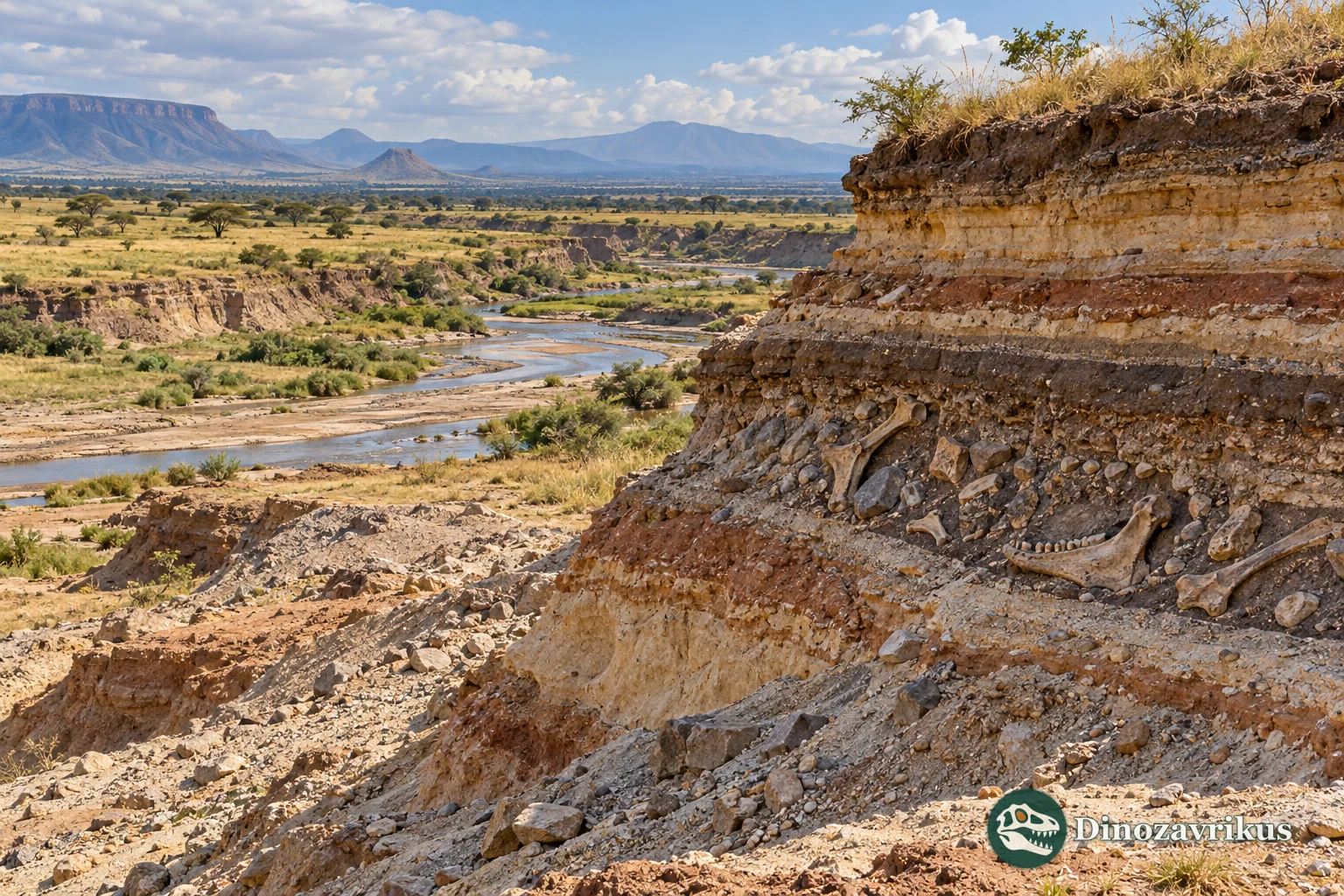
Geological context is as important as crown form. Pliocene and Pleistocene finds cannot be assembled into one 'Mesochoerus skeleton'. The related fossil pig Metridiochoerus is also known from African deposits, but a similarly sized molar does not make the genera identical. The landscape scene is an interpretive view, not a specific Shungura site.
Limits of a reconstruction
Jaws and teeth support taxonomy and study of chewing adaptations. They do not preserve hair color, herd behavior or the exact diet of every species. Wear may speak to abrasive food, but comparisons with independent evidence are needed. The cover suggests the general form of a fossil pig; its soft tissue remains unknown.
Frequently asked questions
Are Mesochoerus and Kolpochoerus the same genus?
Most modern systematic treatments regard Mesochoerus as a junior synonym of Kolpochoerus. Individual old identifications still need checking.
Why is Kolpochoerus used?
It was published in 1932, before Mesochoerus in 1941, so the senior name has priority when the genera are combined.
Which fossils are especially useful?
Jaws and molars: their crown shape, height and wear are compared among samples with known geological contexts.
Can one molar reveal the animal's behavior?
No. An isolated tooth can aid identification, but does not show herd structure, coat color or a complete diet.