

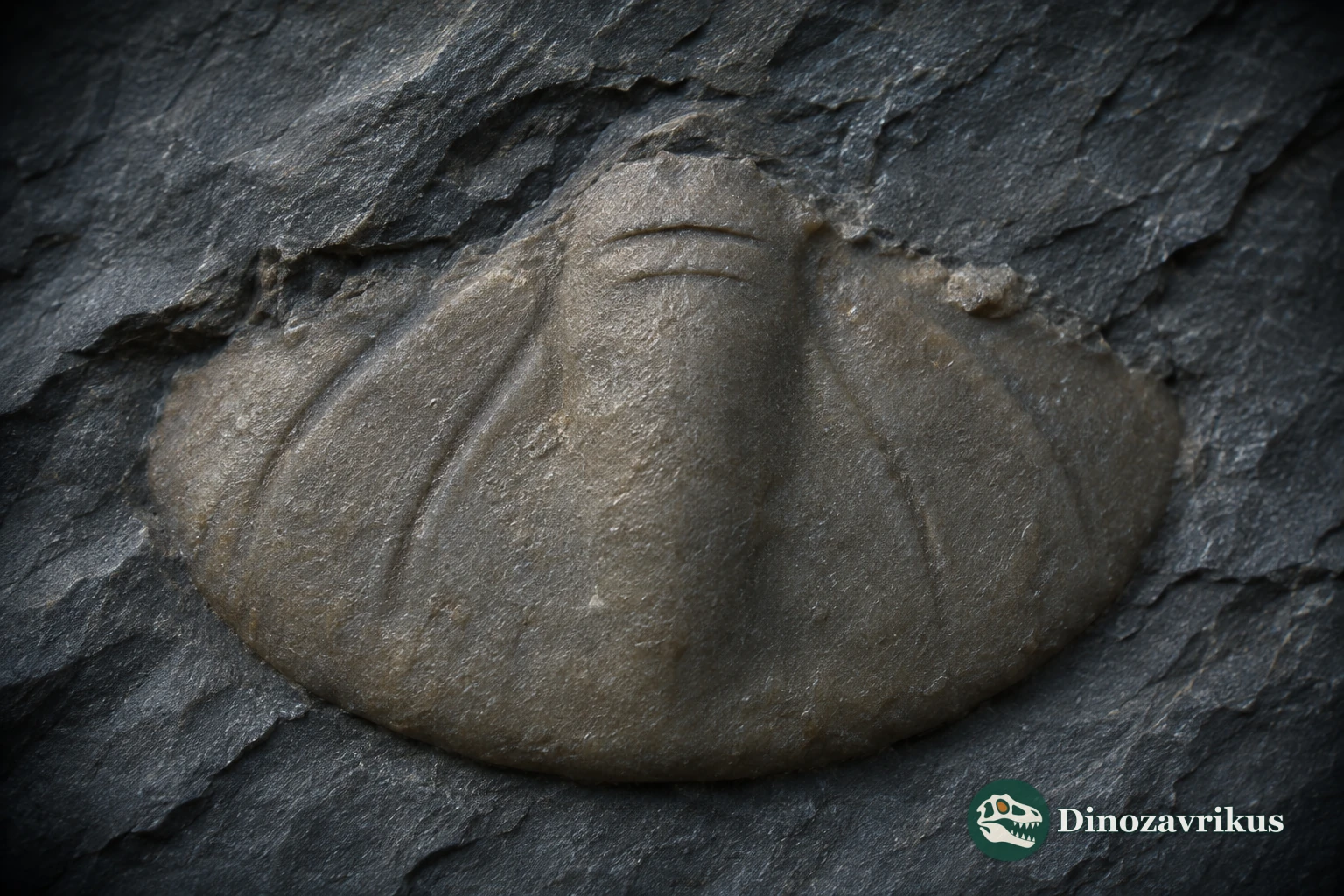
Mexicella was a Cambrian trilobite with a wide, convex field in front of the central lobe of its head. The type species was first found in Sonora, northwestern Mexico. Its remains have since been identified in rocks in the southwestern United States, where they help correlate layers.
Quick facts
| Group | Trilobites |
|---|---|
| Age | Middle Cambrian |
| Genus described by | Christina Lochman, 1948 |
| Type species | Mexicella mexicana |
| Holotype | Cranidium USNM 115800 |
| Type locality | Arrojos Formation, Caborca area, Sonora |
What can the fossils tell us?
A shallow furrow separates the narrow outer rim of the head. It can be difficult to see in poorly preserved specimens.
Its axis narrows quickly towards the back. Detached shields and thoracic segments do not establish a full segment count.
The Arizona shale specimens are flattened. The assignment rests on comparing their outlines and furrows with the Mexican fossils.
The Sonoran type material
Christina Lochman described Mexicella mexicana in 1948. The holotype from the Arrojos Formation is housed at the Smithsonian National Museum of Natural History. The type series also includes free cheeks, tail shields and separate thoracic segments.
From the swollen front to the short tail
The short central head lobe, or glabella, narrows towards the front. A wide, convex field lies ahead of it. Larger specimens show a slight swell in the middle of this field. At the outer edge is a narrow, weakly defined rim. The free cheek preserves small details near the eye and rear corner that can disappear when the shell is worn.
The tail shield is wider than it is long. Its axis tapers sharply and carries one or two narrow transverse furrows near the front. Lochman also described isolated thoracic segments with small axial nodes. The total number of segments could not be established from that material.
The same species in different rocks
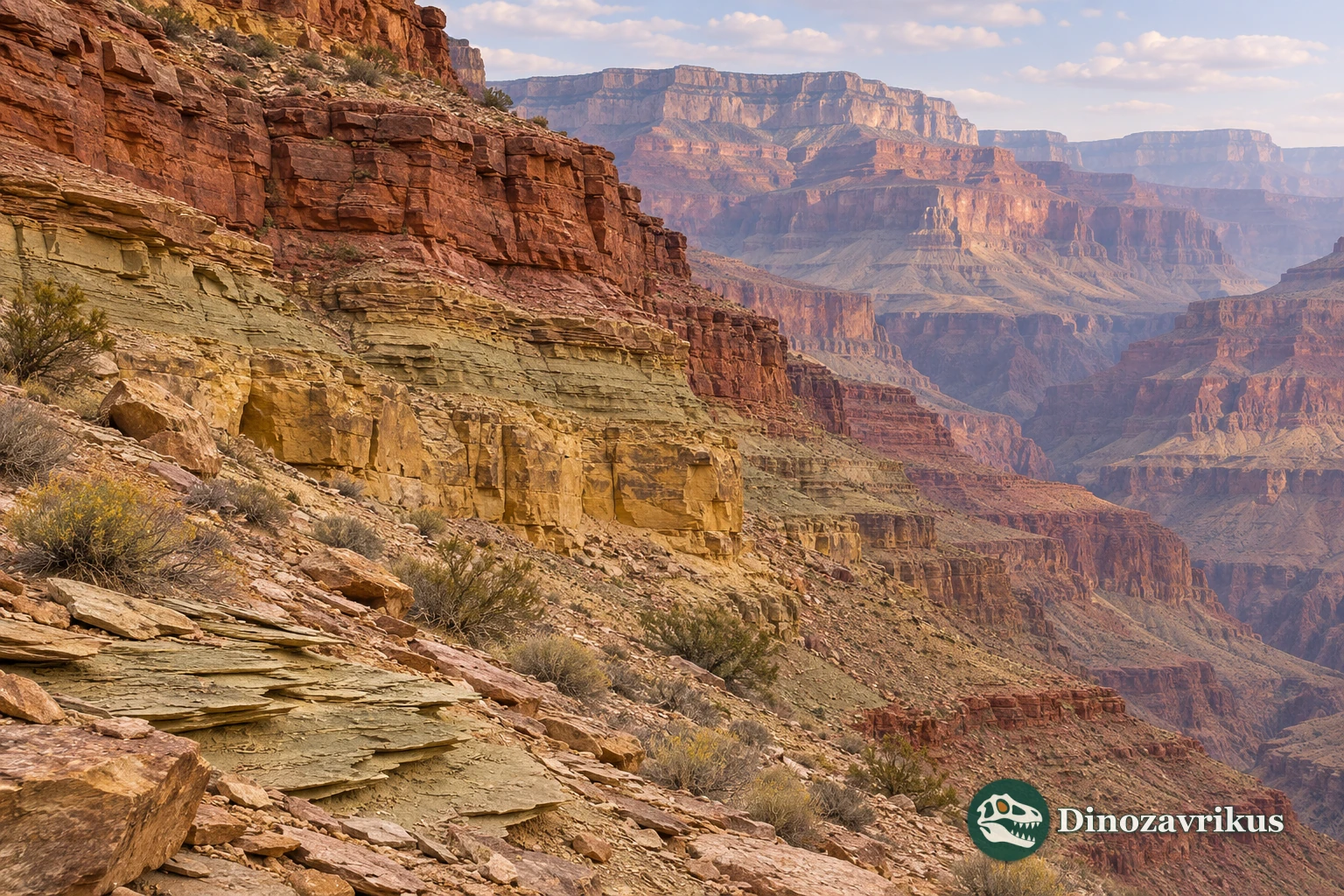
The type species is recorded in the Carrara Formation of Nevada and California and in the Pioche Shale of Nevada. At Rampart Cave in the Grand Canyon, flattened head material comes from shale of the Bright Angel Formation. Its outlines and furrows match Lochman's limestone material closely, with compaction affecting the original relief.
The Mexicella biozone in the Grand Canyon is Middle Cambrian. It lies above layers in the region that contain the Early Cambrian trilobite Olenellus.
Frequently asked questions
Where was the type species of Mexicella found?
In the Arrojos Formation near Caborca, Sonora, Mexico.
What part of the animal is the holotype?
It is a cranidium, the central part of the head shield, catalogued as USNM 115800.
What feature marks the front of the head?
A wide convex field, with a shallow furrow separating it from the narrow outer rim.
How is Mexicella used in the Grand Canyon?
Finds of the type species identify the biozone named for it. That interval can be compared with sections in Mexico and the western United States.