

Microdyromys is an extinct genus of dormice, small rodents in the family Gliridae. It is known chiefly from isolated cheek teeth collected at fossil localities in Europe, North Africa and Asia. Those teeth document a widespread lineage, but provide a much narrower view than a complete skeleton.
The genus belongs in the ancient mammal catalogue. Its record shows both the power and limits of dental taxonomy: molar ridges can distinguish forms, while overlapping measurements and intermediate patterns complicate species boundaries.
Quick facts
| Scientific name | Microdyromys de Bruijn, 1966 |
|---|---|
| Type species | M. koenigswaldi de Bruijn, 1966 |
| Group | Dormice, family Gliridae |
| Age | Late Oligocene to late Miocene in established records |
| Range | Europe, North Africa and parts of Asia |
| Main evidence | Isolated cheek teeth and small dental assemblages |
| Diet | Not directly known; molar form permits cautious comparisons |
| Caveat | Tooth size and patterns overlap among some species |
What can the fossils tell us?
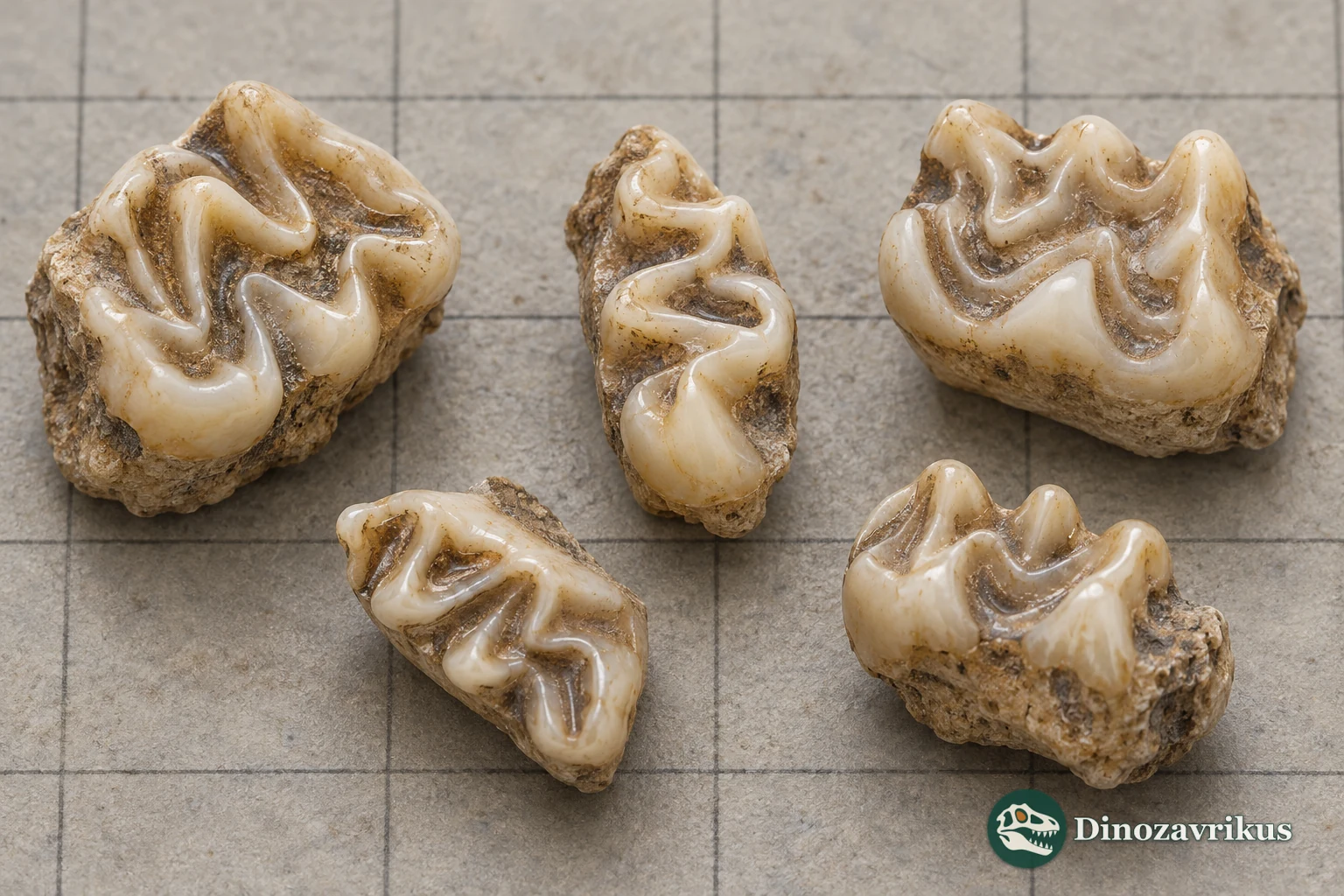
Microdyromys is recognised chiefly from cheek teeth. Cusp connections and enamel ridges are compared across samples, but wear and overlap between species complicate identification.
Records span Europe, North Africa and parts of Asia. They represent different localities and ages, not one population occupying the entire range at once.
Researchers have disagreed about whether intermediate teeth belong to separate species or synonyms. An identification depends on the comparative sample and taxonomic treatment.
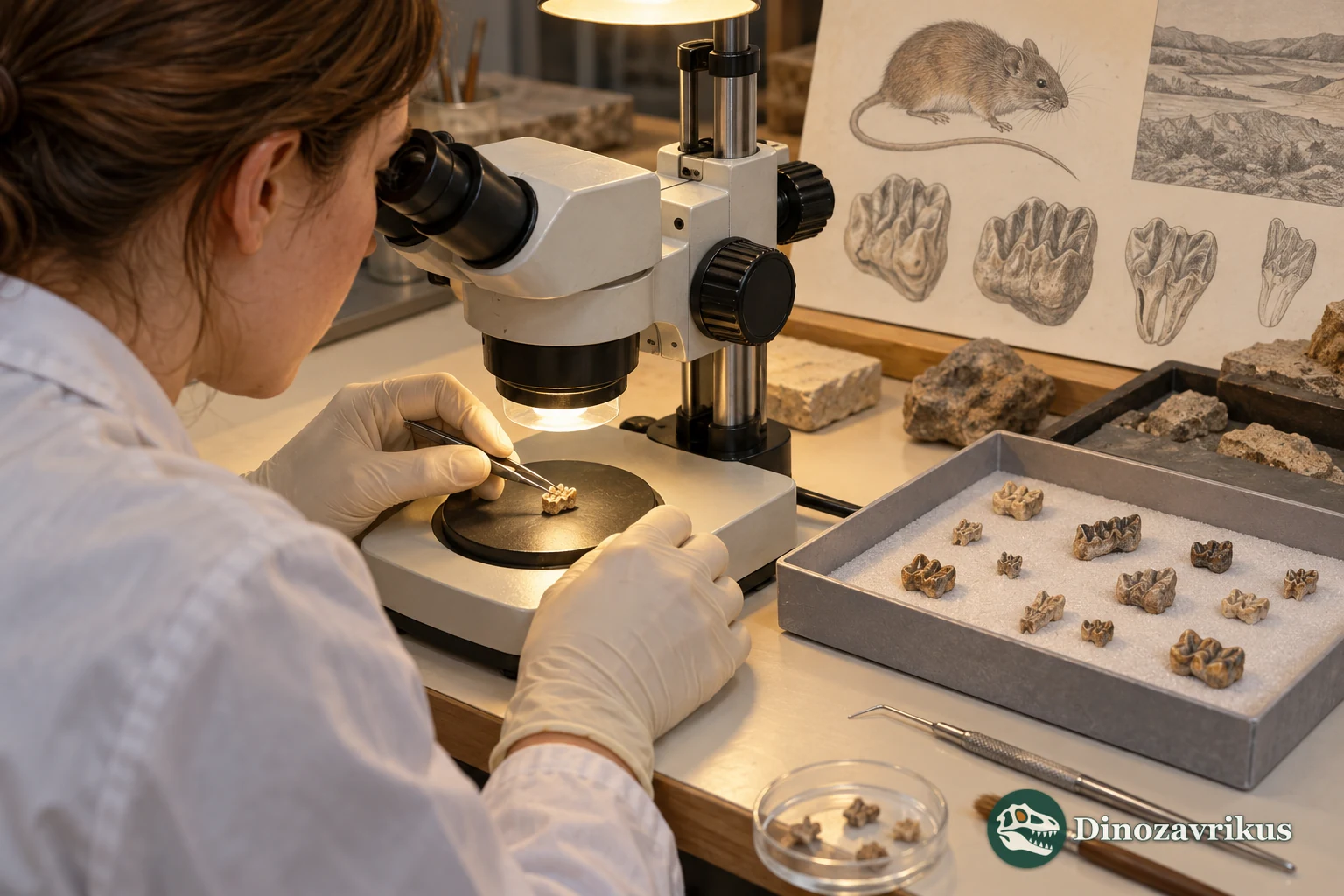
No complete skeleton establishes the genus silhouette. A dormouse-like body is a family-level inference; exact size, coat and behaviour remain unknown.
A genus founded on small teeth
Hans de Bruijn introduced Microdyromys in 1966 for fossil dormice from Spain. The type species, M. koenigswaldi, is based on material from Valdemoros 3B in the Calatayud-Teruel Basin. Small mammals are commonly recovered from screen-washed sediment, yielding many teeth but few associated skeletons.
The type specimen and type locality anchor the name; they do not supply a complete portrait. Later revisions compare additional samples and adjust which forms are included. Such taxonomic changes do not alter the original reference point for the genus.
What molars preserve
Glirid cheek teeth carry enamel cusps and ridges. Researchers record how these structures connect, measure crown length and width, and compare upper and lower tooth positions. A series is more informative than one crown because tooth position and wear affect the visible pattern.
Several Microdyromys samples show complex ridge patterns, but there is no universal simple key. Species measurements overlap, wear removes diagnostic detail, and authors have differed over intermediate forms. Identifications should be considered with locality, age and the full comparative sample.
Age and geography
Published records extend from the late Oligocene into the late Miocene across Europe, North Africa and Asia. These are successive populations separated by time, not proof that one species occupied the full range simultaneously. The central and eastern Asian record is comparatively patchy.
Valdemoros 3B is the type locality of M. koenigswaldi and is assigned to the Middle Miocene. Other named species come from different basins and horizons. Faunal zones and associated mammals refine ages, but a tooth alone rarely gives a precise date.
Species names and synonymy
Researchers have proposed merging some names and separating other samples. With mostly dental material, variation within a species can resemble a boundary between species. Revisions test this by comparing type specimens and larger locality samples.
M. koenigswaldi remains the type species even when the list of species included in the genus changes. Proposed younger island records need to be checked against current taxonomic treatments. This account uses the well-established Oligocene–Miocene range and does not present every newer proposal as settled.
Body, diet and ecology
Family membership makes a small rodent-like body plausible, but no complete Microdyromys skeleton provides a measured length or mass. Estimates inferred from molar dimensions depend on comparative models rather than direct measurement.
Molar ridges record food-processing surfaces, not the exact seeds, leaves or invertebrates consumed. Isolated teeth also cannot establish climbing, nest placement, hibernation or daily activity. These behaviours are known in living dormice, not directly observed in this fossil genus.
Where reconstruction stops
Direct evidence consists chiefly of teeth and their geological context. Comparisons place the fossils among dormice and distinguish some species. The broader range comes from many localities; the full body, diet and behaviour require progressively more inference.
The most defensible portrait is modest: a diverse glirid genus traced through diagnostic teeth, with species limits still tested. A furry animal in a tree is a useful family-level illustration, not a fossil observation.
Frequently asked questions
When did Microdyromys live?
Most established records range from the late Oligocene to the late Miocene.
Where were its fossils found?
Published records come from Europe, North Africa and parts of Asia, chiefly as isolated teeth.
What did Microdyromys eat?
The exact diet is unknown. Molars show food-processing structures but do not identify a menu.
Has a complete skeleton been found?
The genus is known mainly from teeth and small dental samples; no complete skeleton establishes its body shape.