

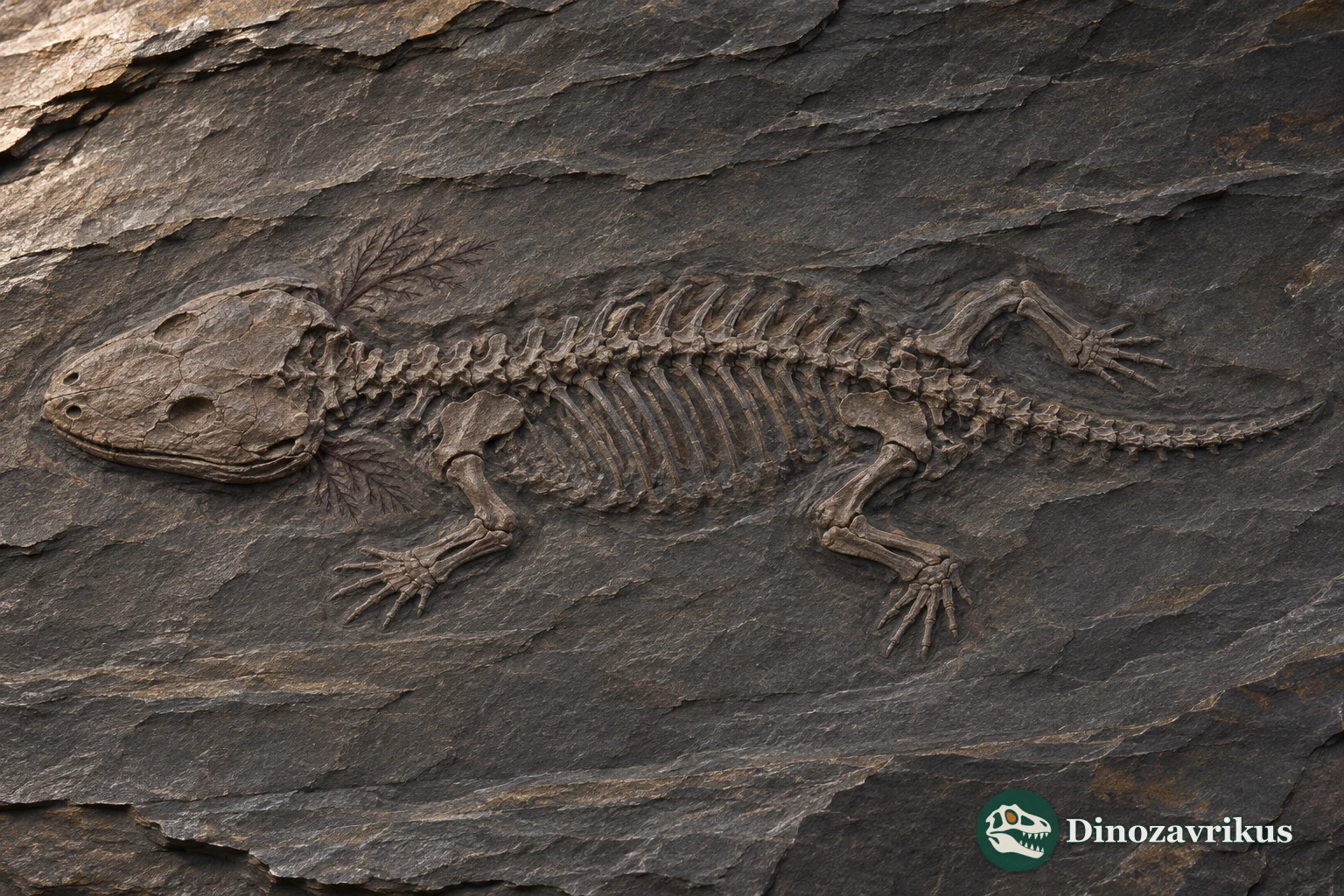
Micromelerpeton was a small temnospondyl from the Late Carboniferous and Early Permian lakes of Central Europe. A few fossils retain traces of its external gills, and some limb bones have unusual fusions or branches. Together these finds have helped researchers reconstruct how it grew and investigate how it may have recovered from injury.
Quick facts
| Group | Temnospondyls, micromelerpetids |
|---|---|
| Age | Late Carboniferous and Early Permian |
| Region | Europe (Central Europe, including Germany) |
| Type species | Micromelerpeton credneri |
| Scientific name | Micromelerpeton |
| Diet | Exact prey is unknown |
What can the fossils tell us?
Specimens of the type species preserve soft tissue traces beside the head. The gill branches became proportionately shorter as the animal grew.
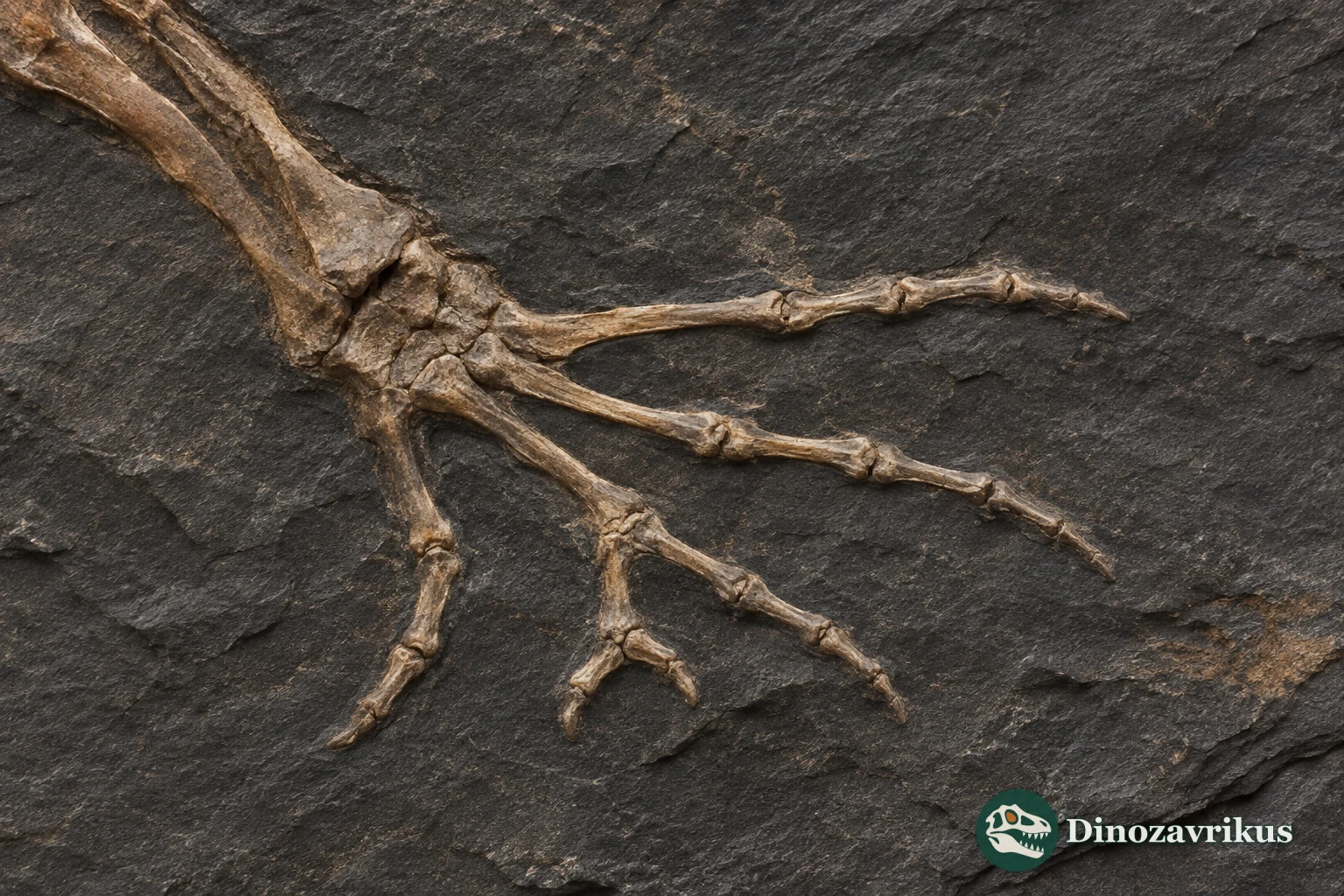
Fused bones, branched phalanges and additional digits resemble abnormalities seen when living salamanders regenerate injured limbs.
Some adults retained features suited to life in water. The available series leave it uncertain how regularly different populations or species left the water.
Fossils from Central European lakes
Oliver Bulman and William Whittard established the genus in 1926. The early descriptions included small adults from Odernheim, Germany, with skulls about 20–25 millimetres long. Many specimens of the type species come from ancient lake deposits. Low oxygen at the bottom helped preserve delicate details including traces of skin, scales and external gills.
Which bones formed first
Florian Witzmann and Hans-Ulrich Pfretzschner compared a growth series of 97 specimens. The smallest had a skull about six millimetres long. The roof of that skull was already bone, with sutures joining its elements. Much of the posterior trunk and the hind limbs remained cartilaginous. This contrast helps explain why tiny individuals can preserve skulls alongside a poorly represented trunk and limbs.
How the head changed with growth
As the gills shortened relative to the head, the cheek bones increased in length and width. The jaw joint shifted rearwards, leaving more space for the muscles that closed the jaws. The transition to adult proportions was gradual. Some large individuals lack lateral-line grooves, so the degree of dependence on water probably varied. Growth and the retention of larval traits are also studied in the related Branchierpeton.
The evidence for limb regrowth
The normal digit count was four on the forelimb and five on the hind limb. Specimen MB.Am. 1183 has a fused bone in the left hand and a spur-like branch on a phalanx of the left foot. SSN GwK-34 has an extra slender digit between other toes. In 2014 Nadia Fröbisch and colleagues compared these changes with the abnormal regrowth of injured limbs in living salamanders. The process itself is inaccessible in the fossils, but the combination of several types of abnormality supports the interpretation.
Frequently asked questions
When did Micromelerpeton live?
Its fossils come from Late Carboniferous to Early Permian lake deposits in Central Europe.
Are there fossil traces of its gills?
Yes. Some young individuals preserve three pairs of external gill branches. They became proportionately shorter over the course of growth.
What suggests that it could regrow parts of its limbs?
Several specimens have fused bones, branched phalanges or additional digits. Similar changes can follow injury and subsequent regrowth in modern salamanders.
How many digits did it usually have?
Four on the forelimb and five on the hind limb. Additional digits in individual fossils are considered abnormalities.