

Miohippus was an extinct North American equid particularly well represented in Oregon's Oligocene John Day Formation. Researchers have skulls, jaws, partial palates and many separate teeth. The unusually large sample raised a question that a single spectacular skeleton could not answer: how many species occupied the same deposits?
Older lists named as many as eight Miohippus species from one part of the formation. A statistical reassessment instead recognised one species of this genus in the Turtle Cove Member, while also detecting a smaller equid, Mesohippus. The distinction matters when placing this horse in the ancient mammal catalogue: a local revision should not be stretched into a verdict on the entire genus.
Quick facts
| Scientific name | Miohippus Marsh, 1874 |
|---|---|
| Type species | M. annectens Marsh, 1874 |
| Group | Equidae, Perissodactyla |
| Key locality | Turtle Cove Member, John Day Formation, Oregon |
| Main evidence | Skulls, partial palates, jaws and isolated teeth |
| Local revision | One recognisable Miohippus species in Turtle Cove |
| Other local equid | Smaller Mesohippus, species unresolved |
| Indicative mass | About 25–30 kg for M. annectens in an NPS account, not every species |
What can the fossils tell us?
The Turtle Cove sample includes skulls, partial palates, jaws and isolated teeth. A loose tooth does not automatically belong to any particular skull.
Nicholas Famoso examined 202 equid teeth, including casts. An ordered model found that hypostyle condition depends on wear stage, so this feature cannot divide species without accounting for wear.
The Turtle Cove sample supports one Miohippus, probably M. annectens, alongside a smaller Mesohippus. This result applies to the studied Oregon assemblage, not every named occurrence in North America.
Comparative skeletal evidence supports a three-toed early equid. The Turtle Cove dental sample cannot establish running speed, daily range or a precise diet.
From Thomas Condon's fossils to a crowded species list
Thomas Condon collected and shared fossils from the John Day Basin with Othniel Charles Marsh. Marsh established Miohippus in 1874; M. annectens became the type species and one of the early fossil horses named from the region. The names attached to nineteenth-century collections remain important, but a succession of names is not the same thing as a measured count of biological species.
Historical authors identified up to eight species of the genus in the Turtle Cove Member. Tooth-crown features carried much of that classification. Later workers also recognised the smaller Mesohippus in the same unit. A modern reassessment therefore had to separate differences between genera from individual variation, tooth position and wear.
The later horse Merychippus offers a family comparison. Similar ancestry does not prove that a particular Miohippus fossil was directly ancestral to any named Miocene horse.
Why an old tooth can look like another species
Nicholas Famoso examined 202 equid teeth, including 29 casts, in collections associated with John Day and the University of Oregon. He measured tooth length and width and tested a feature called the hypostyle on upper cheek teeth. Earlier diagnoses had used the form of this enamel structure to separate species.
His ordered statistical model found that the hypostyle's condition varies with tooth wear. As a crown wears down, a different pattern becomes exposed. Teeth from different life stages may therefore resemble different named forms even when they belong to one species. Measurements of the Turtle Cove sample did not support the old high species count.
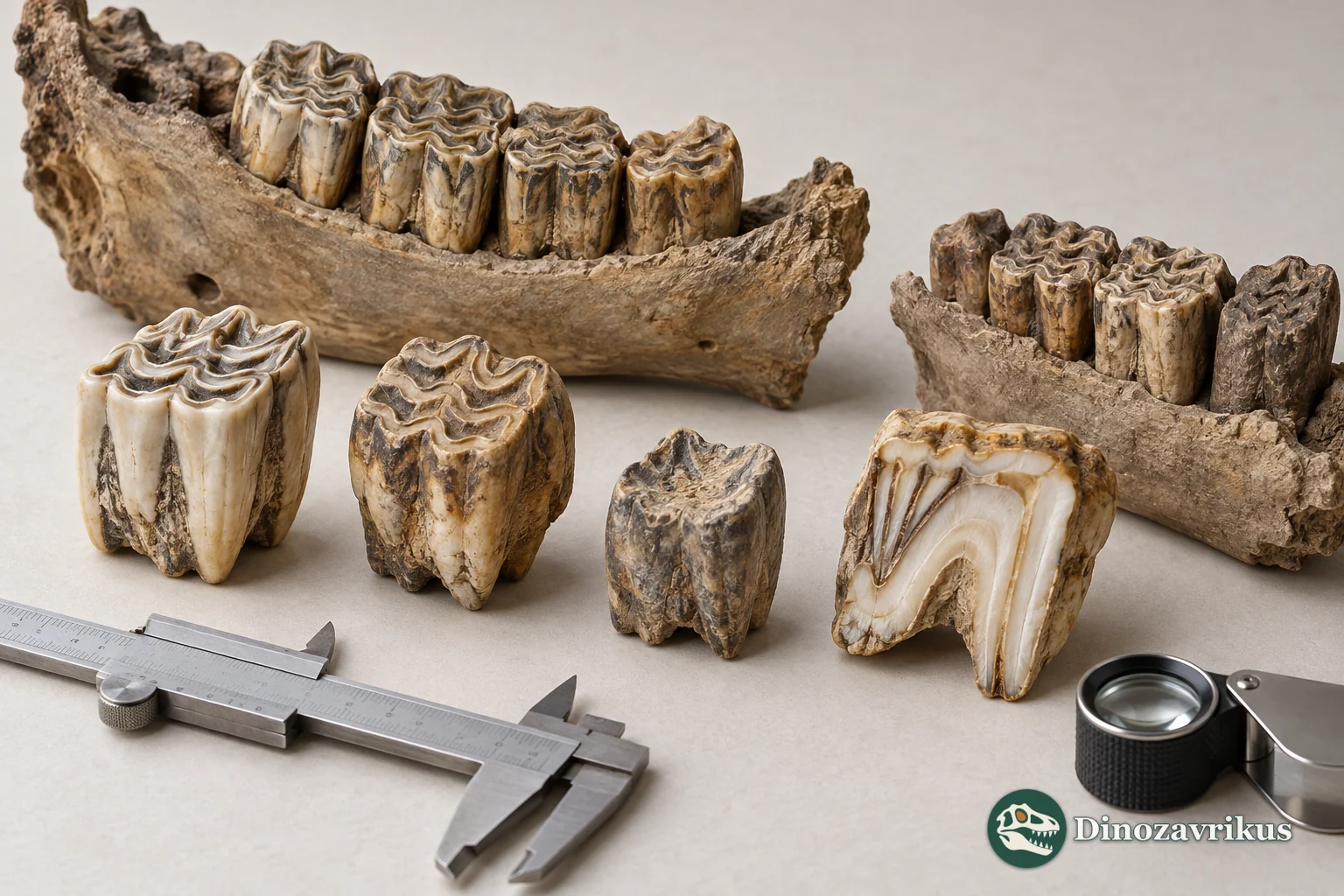
For Turtle Cove, the revision recognised one Miohippus, probably M. annectens, and a smaller Mesohippus whose species could not be named securely. It did not synonymise every Miohippus species across North America. Other units and regions still require their own samples and revisions.
What the rocks add to the collection
The John Day Formation spans changing environments in central and eastern Oregon. Its Turtle Cove Member contains a sequence of fossil-bearing beds and dated volcanic layers. Famoso's study treated that member as a local assemblage rather than blending every equid tooth from the entire formation. The stratigraphic distinction is essential: mixing specimens separated by time could make one population appear more variable than it was.
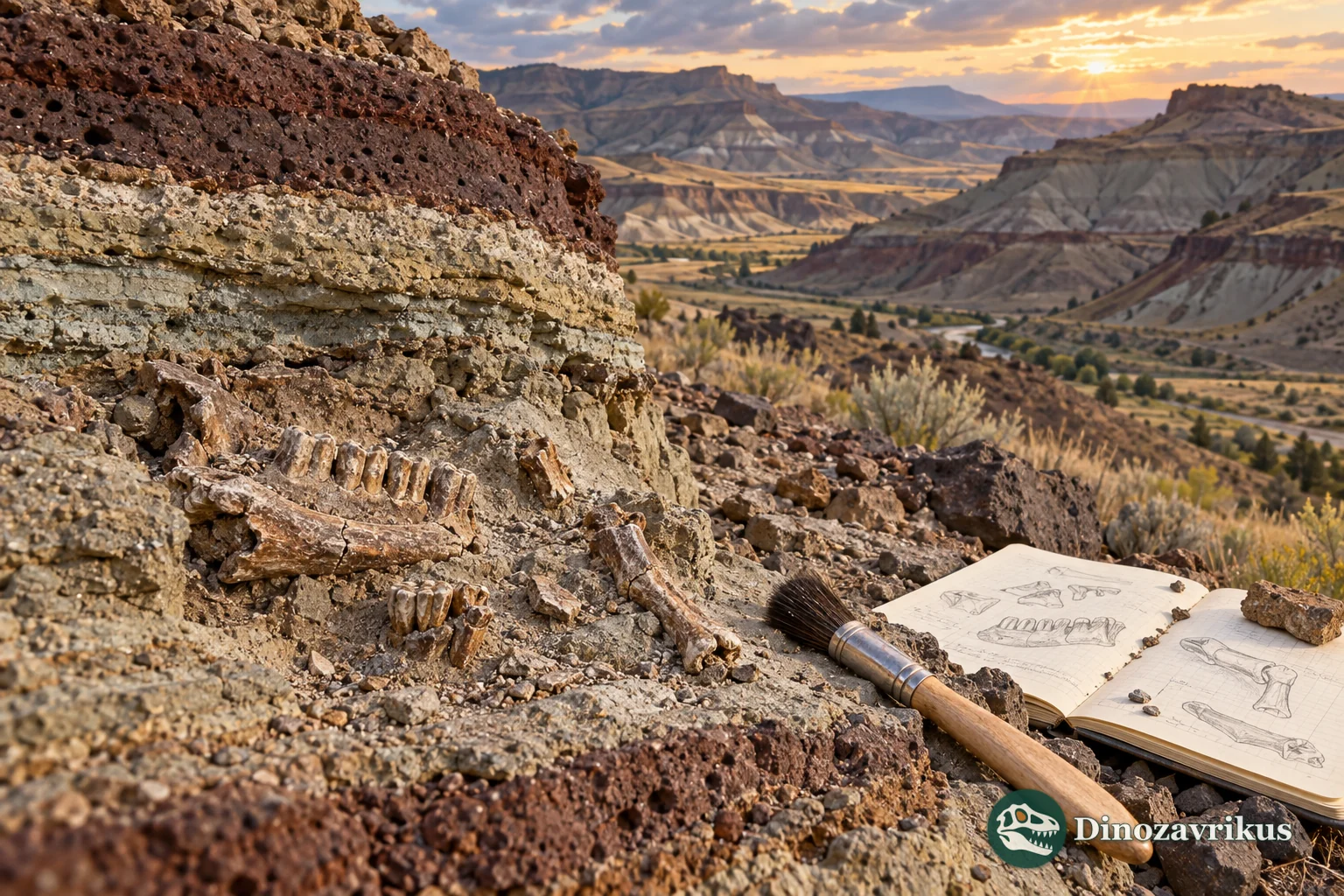
Other John Day finds have been cautiously assigned to forms such as ?M. equinanus or compared with M. equiceps. The question mark matters: isolated teeth do not always distinguish Miohippus cleanly from Mesohippus. More complete specimens and revision of the broader record are needed before local conclusions can be carried across a continent.
Skulls, size and what remains unknown
Skulls and jaws add evidence beyond loose teeth, including tooth-row arrangement and facial proportions. They are also the reason a museum can revisit old identifications instead of judging a species solely from one crown. But a skull does not preserve coat colour, a daily route or the social life of its owner.
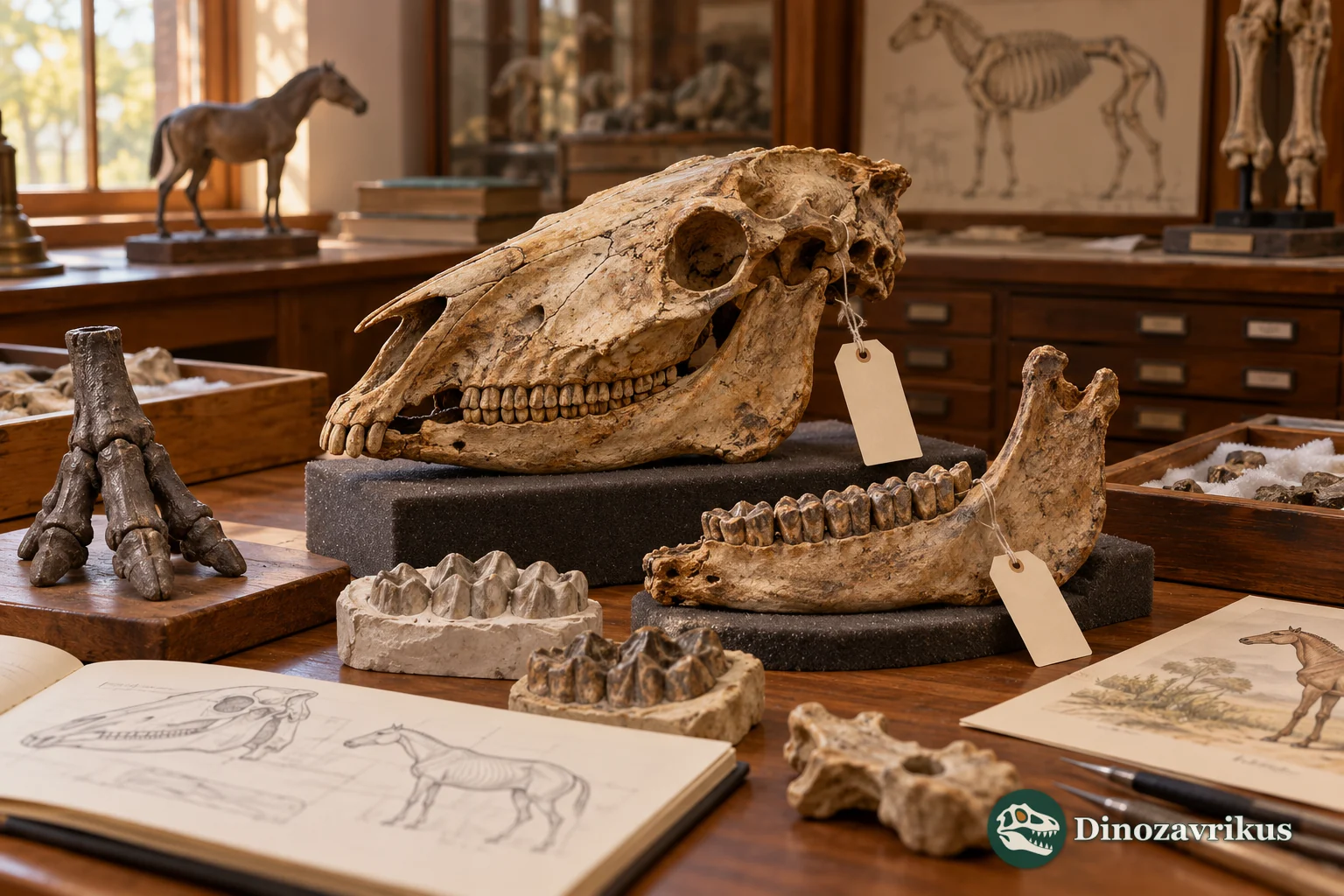
The US National Park Service gives an adult mass of about 25–30 kg for M. annectens. This is an approximate figure for the species in its account, not a universal value for every animal historically placed in Miohippus. Estimates in the literature differ with taxon, sample and method, so one number should not be stretched across the genus.
Three-toed anatomy identifies an early equid body plan, yet it does not tell us exact speed or gait for the Turtle Cove population. Famoso's tooth-wear analysis tested classification, not a complete menu of plants. Specific dietary claims would need appropriate microwear, isotope or environmental evidence. The Cenozoic overview places these changing mammal faunas in wider time.
Frequently asked questions
Was Miohippus the direct ancestor of the modern horse?
It belonged to Equidae, but family membership does not establish a direct lineage from a named Miohippus species to living horses.
Why did the John Day species count change?
Tooth measurements and a model of hypostyle shape showed that wear explained some features previously used to name separate species in Turtle Cove.
Did another early horse live beside it?
Yes. The studied Turtle Cove sample also contains smaller Mesohippus material, although the species could not be identified securely.
How heavy was Miohippus?
The National Park Service gives about 25–30 kg for M. annectens. This approximate species figure should not be assigned to every member of the genus.