

Moabosaurus utahensis was a plant-eating sauropod that lived in Utah during the Early Cretaceous. Bones from several individuals at Dalton Wells help reconstruct the animal from skull to tail. Forked projections on some neck vertebrae and ribs distinguish it from other long-necked dinosaurs in the region.
Quick facts
| Group | Sauropods (Turiasauria) |
|---|---|
| Age | Early Cretaceous |
| Region | North America (Utah, United States) |
| Diet | Herbivore |
| Type species | Moabosaurus utahensis |
| Holotype | BYU 14387, three dorsal vertebrae |
| Locality | Dalton Wells, Yellow Cat Member of the Cedar Mountain Formation |
| Estimated length | About 10 m according to the original description |
What can the fossils tell us?
The minimum count comes from repeated parts of the braincase assigned to Moabosaurus. Some other bones were found still joined to their neighbours.
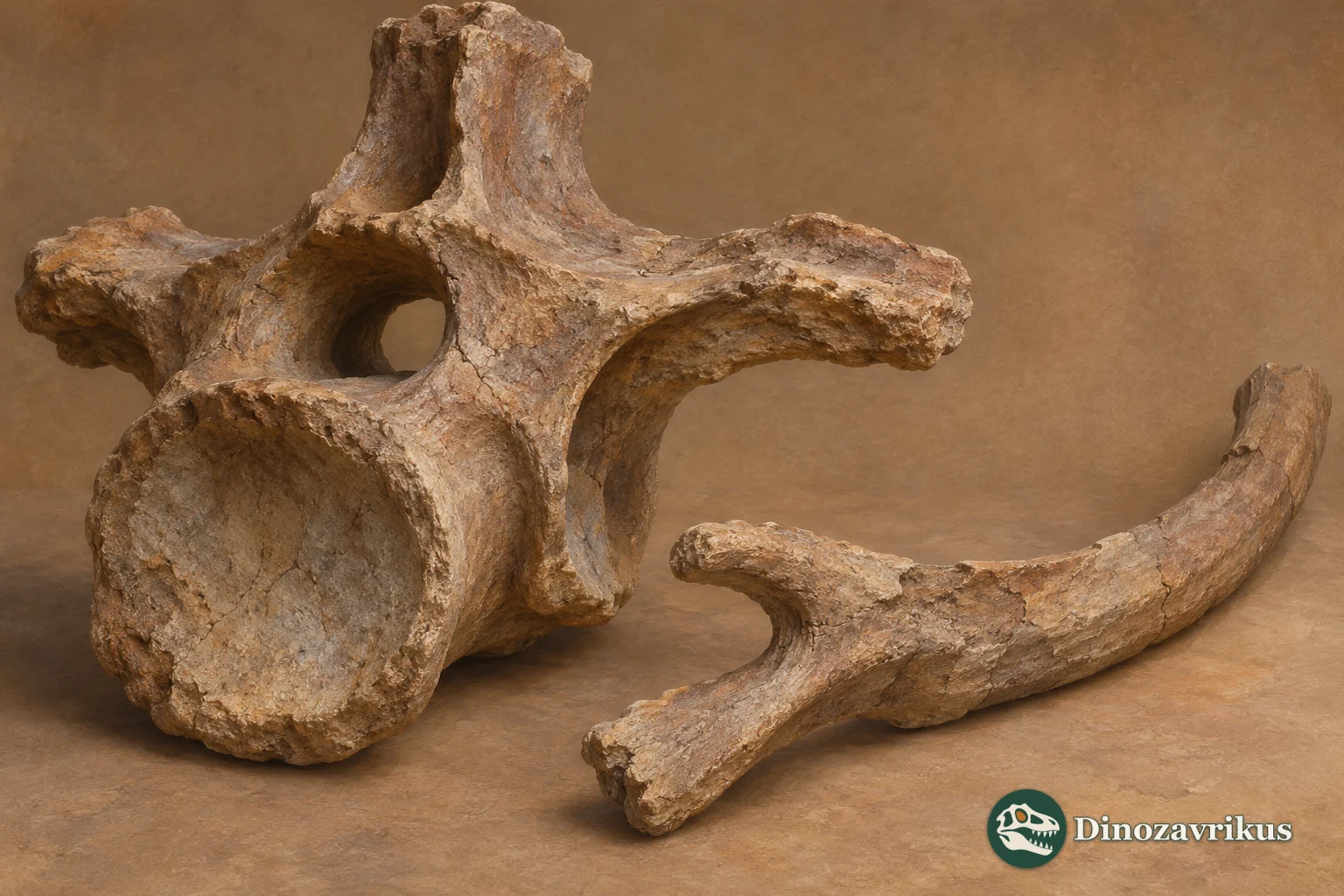
The tips of some neural spines are divided by a shallow notch. Some ribs from the neck also have divided front projections.
The teeth support plant feeding. A preliminary report describes plant fragments among stones near the bones. Whether the stones and plant material came from the digestive tract remains open.
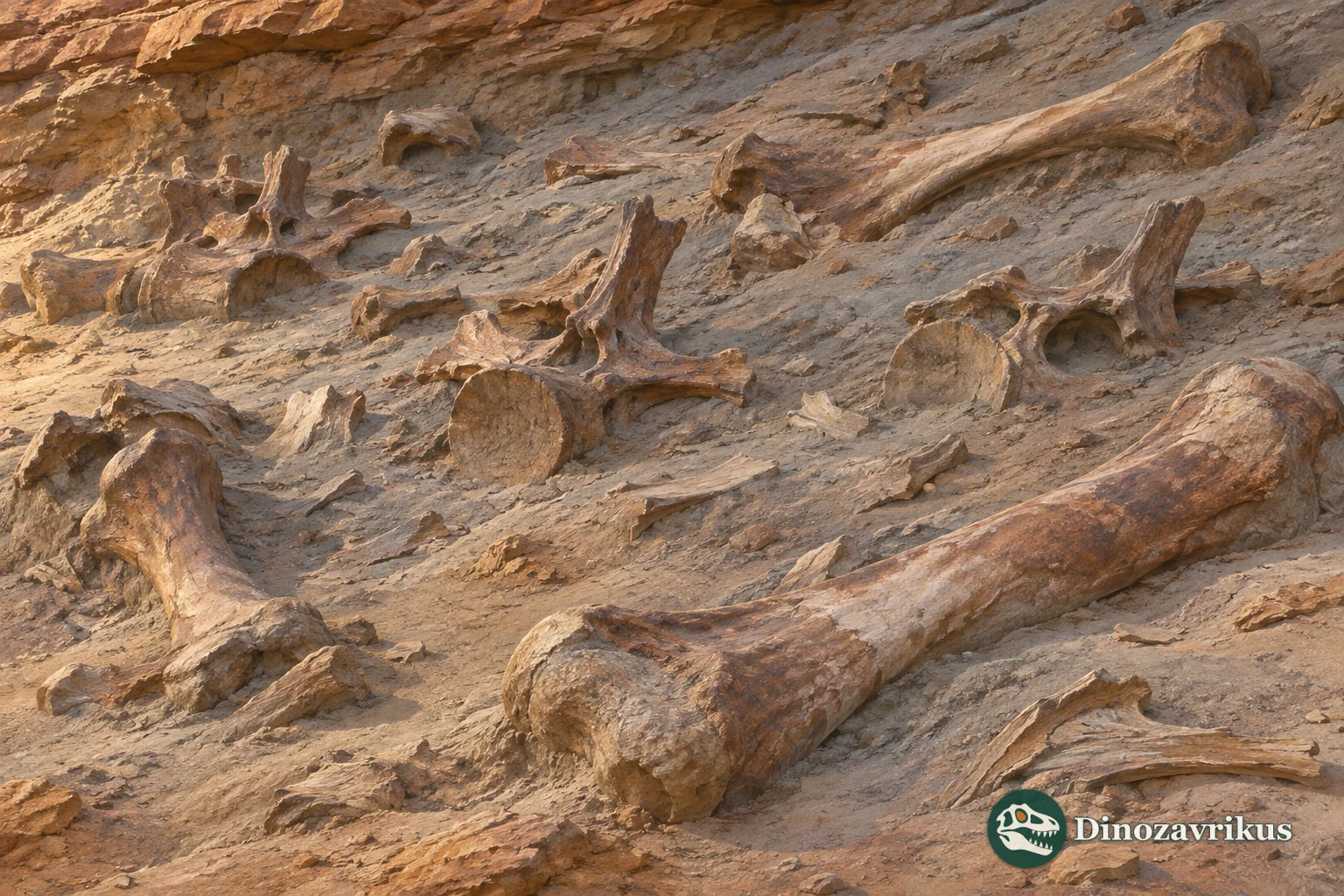
The Dalton Wells bonebed
Brooks Britt, Rodney Scheetz, Michael Whiting and Ronald Wilhite described the species in 2017. Its genus name refers to the city of Moab and its species name to Utah. The Brigham Young University Museum of Paleontology holds BYU 14387. It consists of three dorsal vertebrae, two still joined and a third found about 20 cm away.
Other finds include partial skulls, teeth, vertebrae from the neck, trunk and tail, and parts of the pelvis and limbs. Repeated braincase elements account for the minimum of 18 individuals. Articulated blocks show how some stretches of the spine fit together. The overall reconstruction draws on several animals.
Neck anatomy and turiasaur relationships
A shallow cleft divides the neural spine of several cervical vertebrae. Some neck ribs also have forked projections at their front ends. Relatively thick walls divide large internal chambers inside parts of the spine. The authors estimated that the animal reached about 10 metres in length.
The description initially placed Moabosaurus near the early relatives of titanosaurs. Analysis alongside Mierasaurus later in 2017 grouped it with turiasaurs, a result supported in a 2026 study. These North American finds extended the geographic range of the group that includes the European Turiasaurus.
Date of the deposit and evidence of diet
The fossils come from the Yellow Cat Member of the Cedar Mountain Formation. Studies have proposed Barremian and Aptian ages for Dalton Wells. Zircon dates from elsewhere in the member apply to the beds sampled at each site. Early Cretaceous is the most useful age for the Dalton Wells fossils at this level of precision.
The broad tooth crowns carry lengthwise ridges on their inner surfaces. In 2025 researchers reported finding small plant fragments among smooth stones near bones assigned to Moabosaurus. They interpreted the stones as possible gastroliths. That interpretation is preliminary, and the plant matter has yet to be securely linked to the dinosaur’s diet.
Frequently asked questions
Where does the name Moabosaurus come from?
It refers to the Utah city of Moab, near the Dalton Wells fossil site.
How many individuals have been identified at Dalton Wells?
The original description estimated at least 18 from repeated parts of the braincase.
What does the holotype contain?
BYU 14387 consists of three back vertebrae. Two were in articulation and the third lay about 20 cm away.
What kind of sauropod was Moabosaurus?
Later analyses place it in Turiasauria alongside other sauropods such as Mierasaurus and Turiasaurus.