

Mongolitubulus is a genus of Cambrian fossils first identified from tiny spines in Mongolia. The spines carry rows of scale-like projections. A later discovery from South Australia shows that in one species a spine grew directly from a carapace valve.
Quick facts
| Group supported by valve fossils | Bradoriids, small arthropods |
|---|---|
| Age of the first-described fossils | Early Cambrian |
| Genus named | Vladimir Missarzhevsky, 1977 |
| Type species | Mongolitubulus squamifer |
| Type locality | Salany-Gol River, Mongolia |
| Key fossil | Valve with attached spine, South Australia |
What can the fossils tell us?
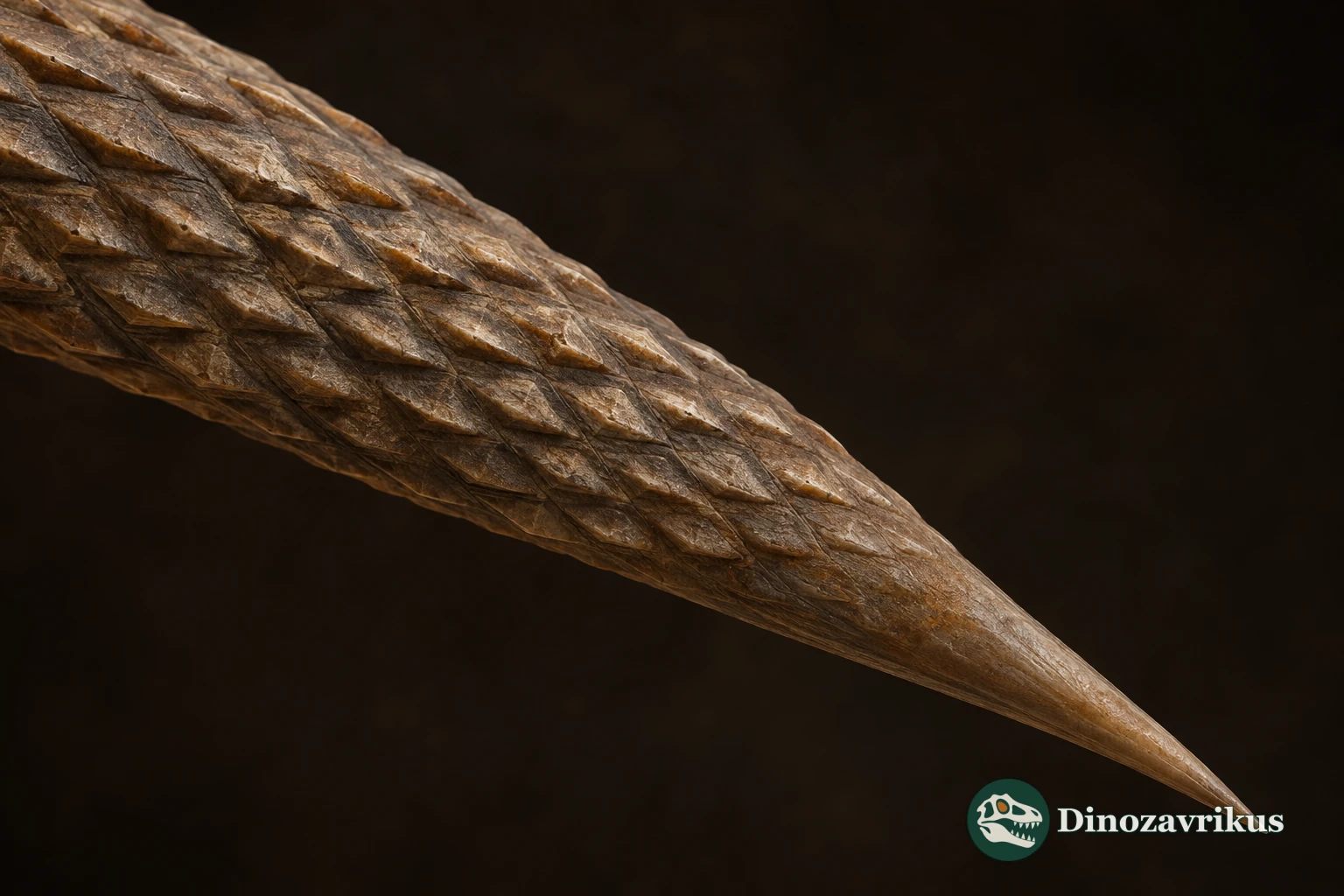
The tip of a typical M. squamifer spine is smooth. Microscopic surface features allow comparison of isolated fragments.
The base is continuous with the carapace. That attachment shows where the spine grew on this animal.
Similar surface textures occur in different Cambrian animals. Internal structure and a preserved attachment can help test an identification.
Diamond-shaped scales on Mongolian spines
Vladimir Missarzhevsky described M. squamifer in 1977 from Early Cambrian fossils at the Salany-Gol River in Mongolia. The spines narrow gradually to a tip. Regular rows of raised structures cover most of their surface, leaving the tip smooth.
Comparable fossils have been studied in Greenland and South Australia. Under magnification the ornament ranges from rounded projections to distinct diamond shapes. Shape and texture let researchers compare fragments, even when the base has broken away.
An attached spine from South Australia
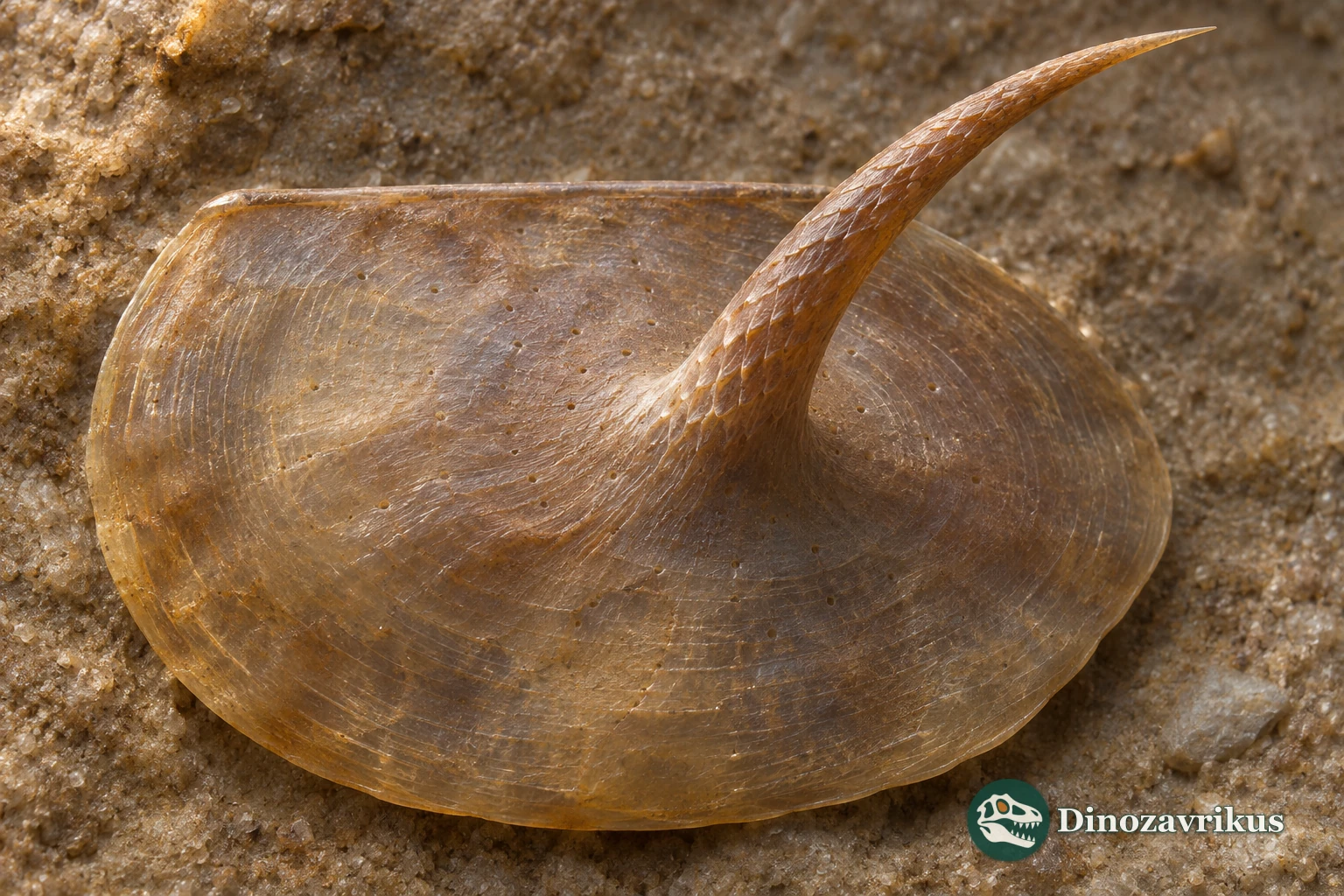
A valve from the Early Cambrian Mernmerna Formation of South Australia preserves a large spine rising from its outer surface. The specimen, SAMP42195, is the holotype of M. unispinosa. Images of it show how the base of the spine joins the valve.
The attachment identifies this species as a bradoriid, a small arthropod with a two-valved carapace. Other Cambrian arthropods, such as Isoxys, also had two valves. The point and structure of spine attachment are more informative than the overall two-valved outline when identifying this fossil.
Why individual spines are still debated
Some isolated spines historically assigned to Mongolitubulus have been compared with the external spines of lobopodians related to Hallucigenia. Different studies weigh similarities in shape, ornament and internal structure differently.
The Australian valve establishes the position of the spine in that species. The type species is based on isolated remains. Those specimens leave open the shape of the entire animal and how its spines were arranged.
Frequently asked questions
What remains were described first?
Small isolated spines from Early Cambrian rocks in Mongolia.
Where was a spine found attached to the shell?
In the Mernmerna Formation of South Australia. The M. unispinosa holotype directly preserves this attachment.
What covers the spines of the type species?
Rows of raised rounded or diamond-shaped scales. The tip is usually smooth.
Why does one spine reveal so little about the entire animal?
The point of attachment is often broken away, and similar spine textures occur in different animals.