

Nannosuchus gracilidens is known from a small skull found in Early Cretaceous rocks in Dorset. Richard Owen regarded it as a dwarf crocodilian. Later studies identified the specimen as immature, reopening two different questions: how large the animal grew and whether it belonged to a genus of its own.
Quick facts
| Species | Nannosuchus gracilidens |
|---|---|
| Group | Goniopholididae |
| Age | Early Cretaceous, Berriasian |
| Locality | Durlston Bay, Dorset, England |
| Lectotype | BMNH 48217, immature skull |
| Skull length | About 12 cm |
What can the fossils tell us?
BMNH 48217 is about 12 cm long. That measures one immature animal and leaves adult size open.
BMNH 48301 fits the proportions of a skull about one and a half times longer. Its species cannot be confidently established.
Historical notes connect the material to freshwater marls. The old bed name cannot be tied securely to a single horizon in the modern section.
From a Dorset excavation to the museum
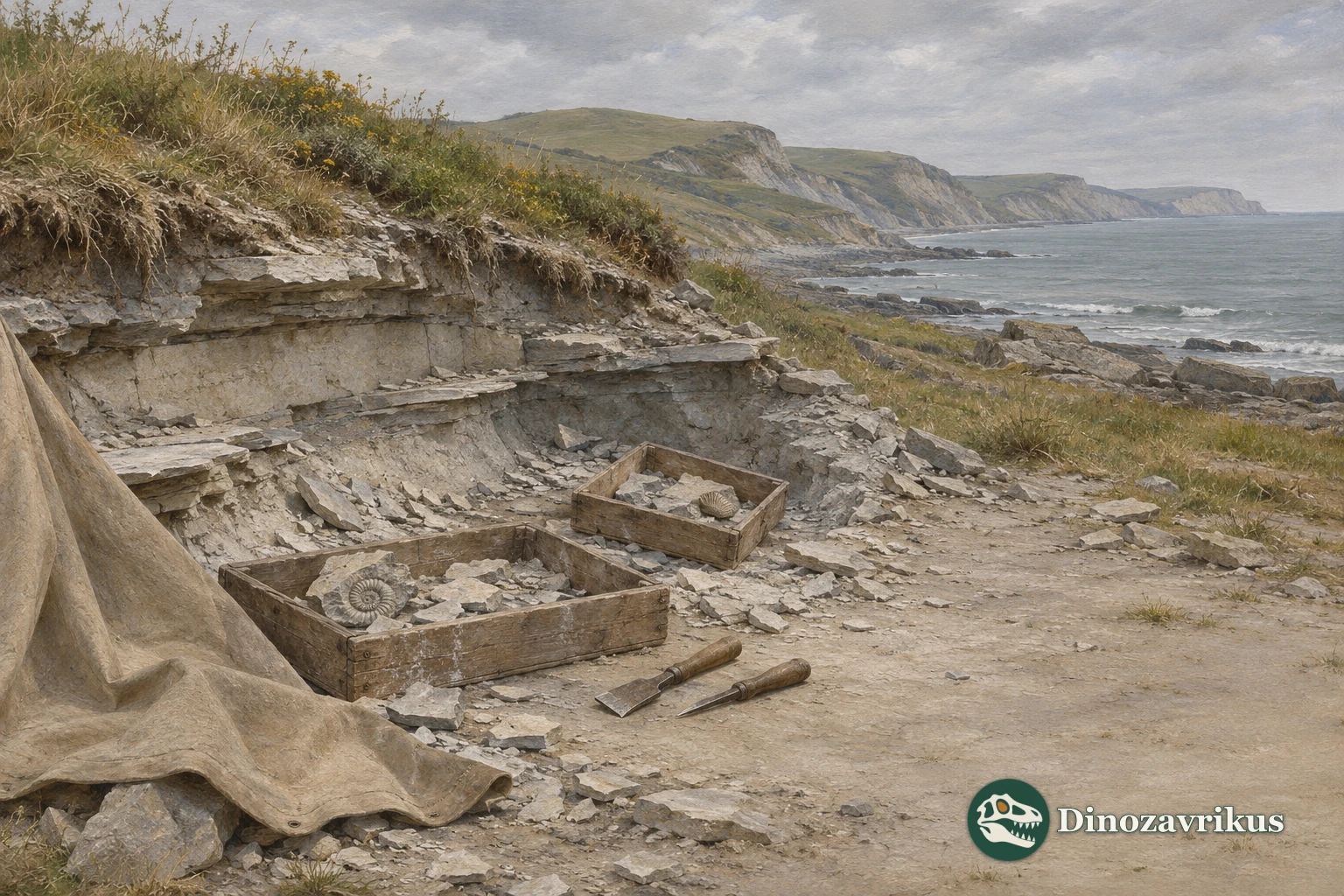
Samuel Beckles excavated at Durlston Bay in 1857. The site became known for its early mammal fossils, and more remains were exposed during the preparation of slabs from his collection. In 1879 Owen named Nannosuchus and discussed its co-occurrence with Theriosuchus, another Purbeck crocodile relative.
Owen referred to marl associated with what was then called the Feather Bed. Work on the Purbeck succession has shown how difficult it is to match the wording of the old records to a precise bed in the modern section. The freshwater setting and Early Cretaceous age are firmer than the identification of a particular layer.
The type skull and the larger jaw
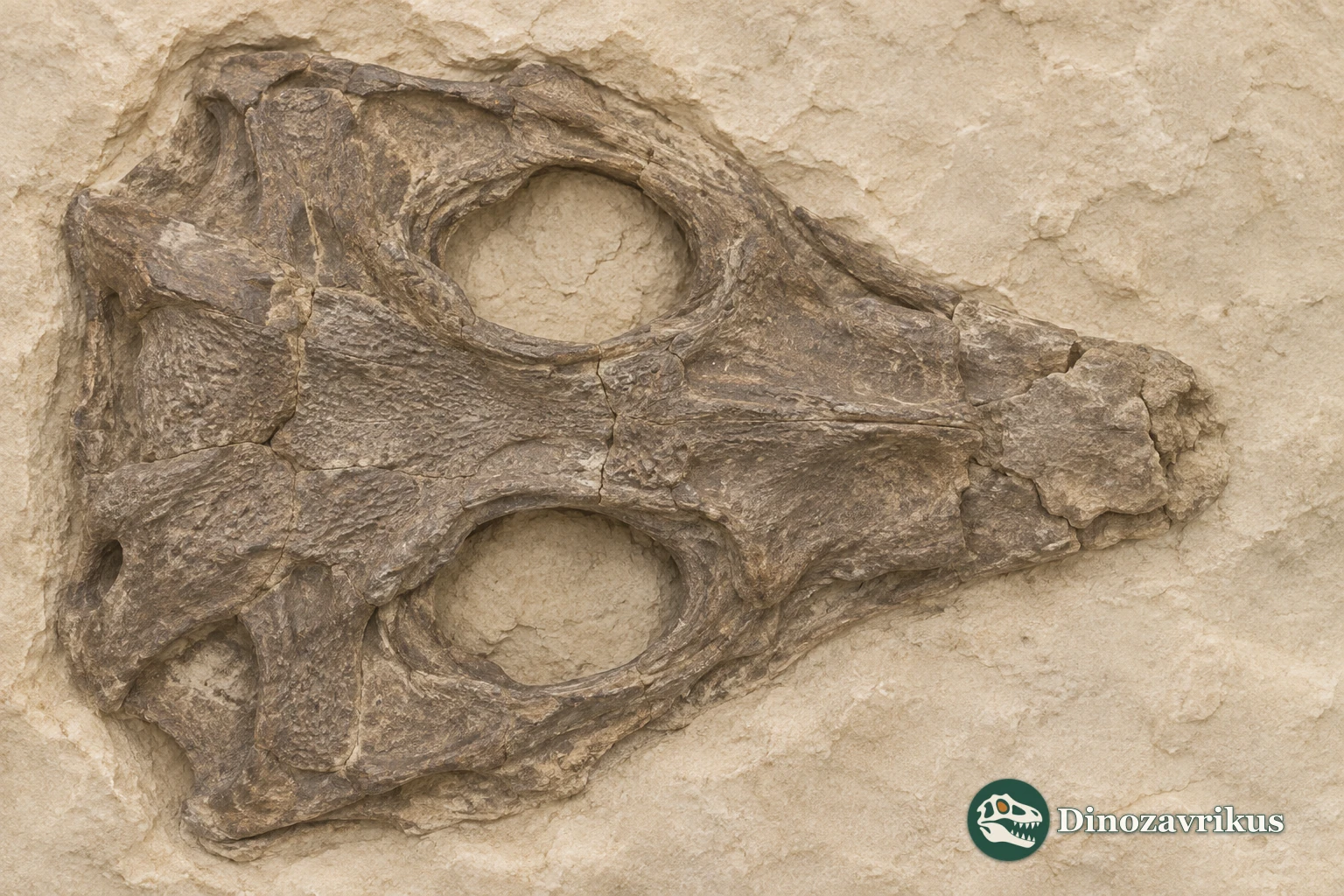
Owen included a skull, BMNH 48217, and part of a lower jaw, BMNH 48301, in his description. Steven Salisbury estimated that the lower jaw would fit a skull about one and a half times longer. In 2002 he made BMNH 48217 the lectotype, leaving the larger jaw without a secure species identification.
Owen thought the small Purbeck crocodile relatives might have preyed upon the mammals found alongside them. Their occurrence in the same deposits shows that they were part of the same fossil assemblage. Direct evidence of that diet is lacking.
An immature animal and the question of its genus
In 1967 Joffe argued that the skull proportions pointed to immaturity. Salisbury kept the species as distinct in 2002 but placed it within Goniopholis. A 2011 analysis by Marco de Andrade and colleagues placed the young specimen among European goniopholidids, outside the cluster of sampled Goniopholis species.
That study retained the original name Nannosuchus gracilidens and noted that some of the skull features could be age-related. Adult size and the full extent of its anatomical differences from other goniopholidids are both uncertain.
Frequently asked questions
Where was Nannosuchus found?
At Durlston Bay in Dorset, southern England, in the Purbeck Limestone Group.
Was Nannosuchus a dwarf?
The type skull is small and came from an immature animal. The size of an adult is unknown.
What is the lectotype?
It is the skull BMNH 48217, selected in 2002 from the original material as the name-bearing specimen.
Was it a young Goniopholis?
That has been proposed, but a 2011 analysis did not link the type skull to any sampled species of Goniopholis.