

Navajodactylus boerei is a Late Cretaceous pterosaur named from a diagnostic fragment of a wing finger found in New Mexico. Its type fossil preserves part of the first elongated wing phalanx, not a complete wing or skeleton. The original authors estimated a wingspan of about 3.5 metres by comparison with another pterosaur, while its family placement remains uncertain. This fragmentary animal is included in the pterosaur catalogue with those limits kept visible.
Quick facts
| Scientific name | Navajodactylus boerei Sullivan & Fowler, 2011 |
|---|---|
| Group | Pterosauria, Pterodactyloidea; family uncertain |
| Age | Late Campanian, about 75 million years ago |
| Place | Hunter Wash Member, Kirtland Formation, New Mexico |
| Holotype | SMP VP-1445, part of a wing finger |
| Wingspan | About 3.5 m in the original comparative estimate |
| Diet | Unknown; jaws and feeding traces are not known |
What can the fossils tell us?
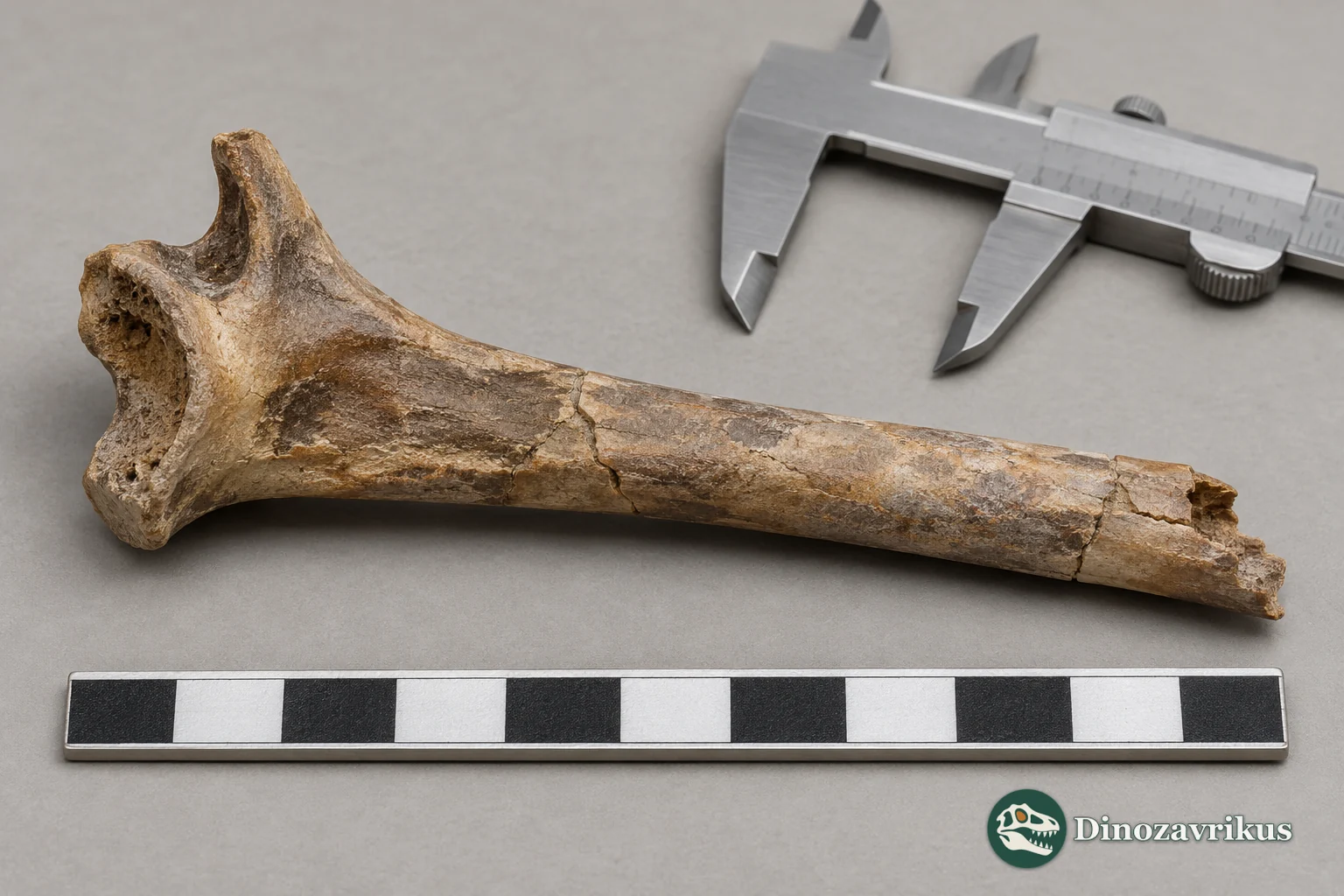
SMP VP-1445 preserves most of the proximal end of a right first wing phalanx and shaft fragments. Its extensor tendon process helped diagnose the genus, but the rest of the wing is missing.
The specimen came from the Hunter Wash Member of the Kirtland Formation, between dated ash beds. This constrains the age to roughly 75 million years; it does not give the date when the animal died.
Two Alberta phalanges were first referred to Navajodactylus. A 2019 reassessment placed them with Cryodrakon, so they do not securely extend the known range of Navajodactylus into Canada.
A name based on a wing bone
Robert Sullivan and Denver Fowler named Navajodactylus boerei in 2011. The holotype SMP VP-1445 was collected in 2002 by Arjan Boer at Denver's Blowout, in the Ah-shi-sle-pah Wash area of the San Juan Basin. It was first mistaken for a theropod leg bone. Re-examination identified it as most of the proximal end of the first phalanx of a right wing finger, together with two shaft fragments.
The specimen is held by The State Museum of Pennsylvania. A nearby proximal fragment of an ulna, SMP VP-1853, was also referred to the animal, but it is less diagnostic and does not turn the material into an associated skeleton. The difference between a type fossil and a referred fossil matters: the name is anchored to SMP VP-1445.
What makes the phalanx distinctive
The original diagnosis focused on the extensor tendon process at the proximal end of the wing phalanx. The process occupies much of the joint surface, alongside a raised upper edge and a shallow, open depression. Sullivan and Fowler considered this combination distinct among the pterosaurs they compared.
That diagnosis can support a genus from a small piece if its features are genuinely distinctive. It cannot reveal a skull, neck, pelvis or full wing shape. Family placement is especially difficult because many of the traits used to recognise azhdarchids occur elsewhere or are absent from this bone. The authors therefore treated an azhdarchid relationship as provisional.
Age and setting in the San Juan Basin
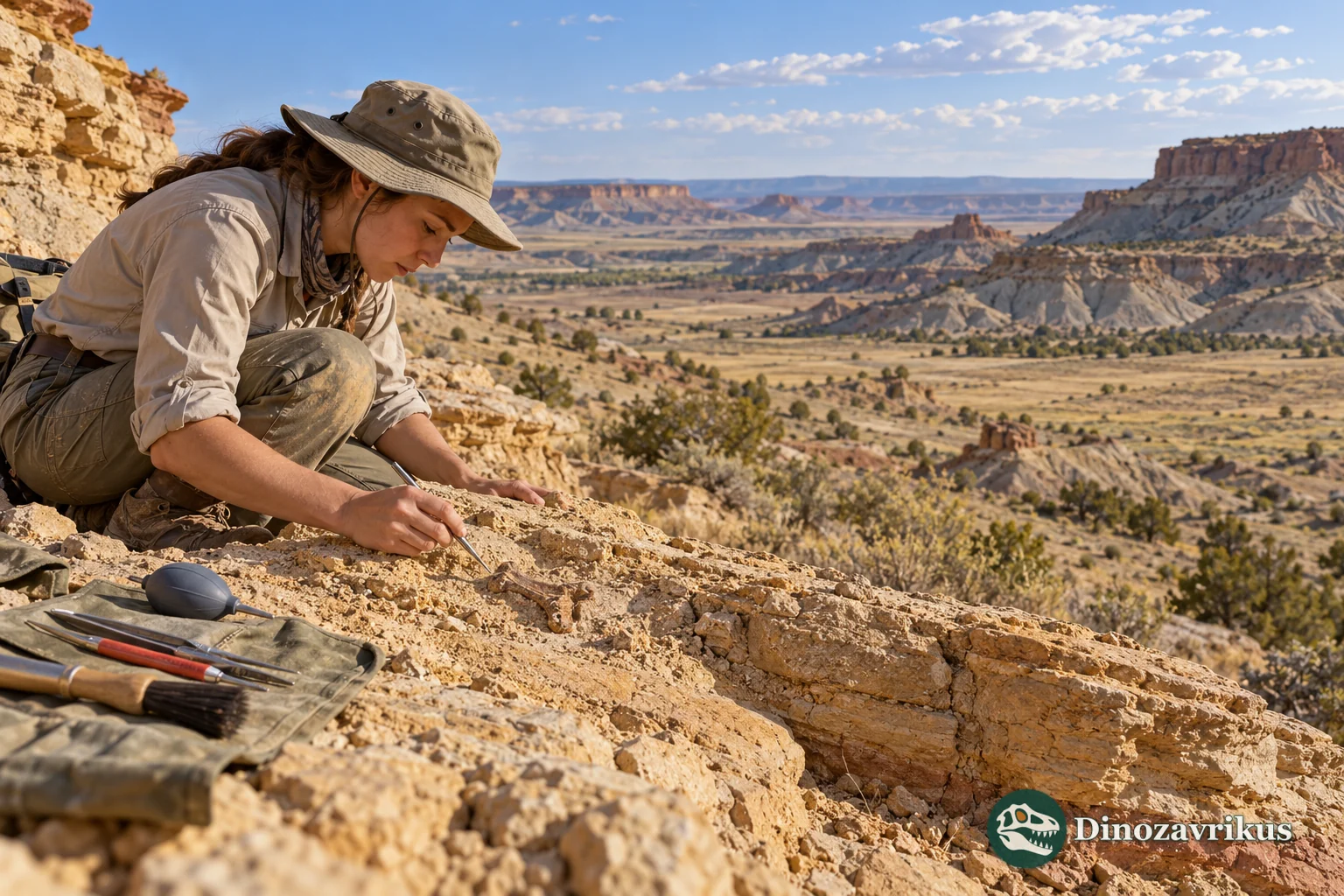
The type specimen came from the lower part of the Hunter Wash Member of the Kirtland Formation in north-western New Mexico. Its position between volcanic ash beds provides a Late Campanian age close to 75 million years. The ash dates constrain the sedimentary sequence, not the exact moment of the animal's death.
The Kirtland Formation records a continental landscape of rivers, floodplains and lakes. That setting helps describe the environment represented by the rocks, but one bone cannot establish whether this individual nested beside water, hunted over a river, or regularly used any particular habitat.
How large was Navajodactylus?
The 2011 description proposed a wingspan of about 3.5 metres. The estimate scales the first wing phalanx against the proportions of Montanazhdarcho minor; it is not a measurement of a complete wing. A different assumed relative could produce a different result, so the figure should be treated as an approximate model rather than a precise measurement.
Long necks and large heads shown in reconstructions usually come from comparisons with azhdarchids or other pterodactyloids. None of those parts is preserved in the holotype. The cover is therefore a plausible artistic reconstruction of a flying pterosaur, not a full skeletal restoration based on this genus.
The Canadian referral and Cryodrakon
The original description also referred two wing phalanges from Alberta's Dinosaur Park Formation to Navajodactylus. They appeared to broaden its geographic and temporal range. After Cryodrakon boreas was described in 2019, those bones were reassigned to that azhdarchid. The Alberta fossils should not be counted as secure evidence for a Canadian occurrence of Navajodactylus.
The best-supported record remains the New Mexico type material. A diagnostic bone can distinguish a named taxon without revealing the whole animal, but isolated fragments should not be grouped by superficial resemblance alone. Future discoveries from the same region could test whether additional bones belong to the genus.
Flight and diet remain unknown
The wing phalanx confirms the characteristic elongated fourth finger of a pterosaur wing. On its own, it cannot establish wing loading, flight speed, take-off style or soaring behaviour. Those questions require a more complete skeleton and defensible estimates of body mass.
No jaws, teeth, stomach contents or feeding traces are known for Navajodactylus. Its diet cannot be narrowed to fish, small vertebrates or invertebrates. Ideas borrowed from better-known azhdarchids remain comparisons, especially while its own family assignment is unsettled.
What the fossil record supports
Navajodactylus boerei is a named pterosaur based on a specific wing bone, not a footprint or an informal label. Its holotype records a distinctive part of the wing, and its geological position places it in the Late Campanian of New Mexico. The original wingspan estimate is comparative, while the family assignment and much of the animal's appearance remain uncertain.
The Canadian bones once assigned to the genus are now attributed to Cryodrakon. Until diagnostic material beyond the wing phalanx is found, claims about its full skeleton, food and flight should remain restrained.
Compare this fragmentary genus with better-known flying reptiles in the pterosaur catalogue.
Frequently asked questions
What is Navajodactylus?
It is a genus of Late Cretaceous pterosaurs known from New Mexico. Its type and only named species is Navajodactylus boerei.
Where was the type fossil found?
Holotype SMP VP-1445 came from the Hunter Wash Member of the Kirtland Formation in the San Juan Basin of New Mexico.
How wide were its wings?
The original description proposed about 3.5 metres by comparison with Montanazhdarcho. No complete wing preserves that span directly.
Why is its azhdarchid classification uncertain?
The type wing phalanx lacks the diagnostic skull and neck features used to identify azhdarchids. The proposed family placement remains provisional.