

Neolicaphrium was a South American litoptern of the extinct family Proterotheriidae. Its best-known species, N. recens, was named by Joaquín Frenguelli in 1921 and is documented chiefly by jaws and teeth from Argentina and Uruguay. Its late occurrence matters because many other proterotheriids had disappeared earlier. Coat color and soft tissues in the cover are artistic interpretation.
Litopterns were a distinctive South American mammal lineage. Macrauchenia belonged to a different litoptern family. Resemblance to a horse or deer describes a possible outline, not close kinship with either living group.
Quick facts
| Group | Litopterna, Proterotheriidae |
|---|---|
| Best-known species | Neolicaphrium recens Frenguelli, 1921 |
| Age | Pleistocene; late Pleistocene Uruguayan finds |
| Range of secure finds | Argentina and Uruguay |
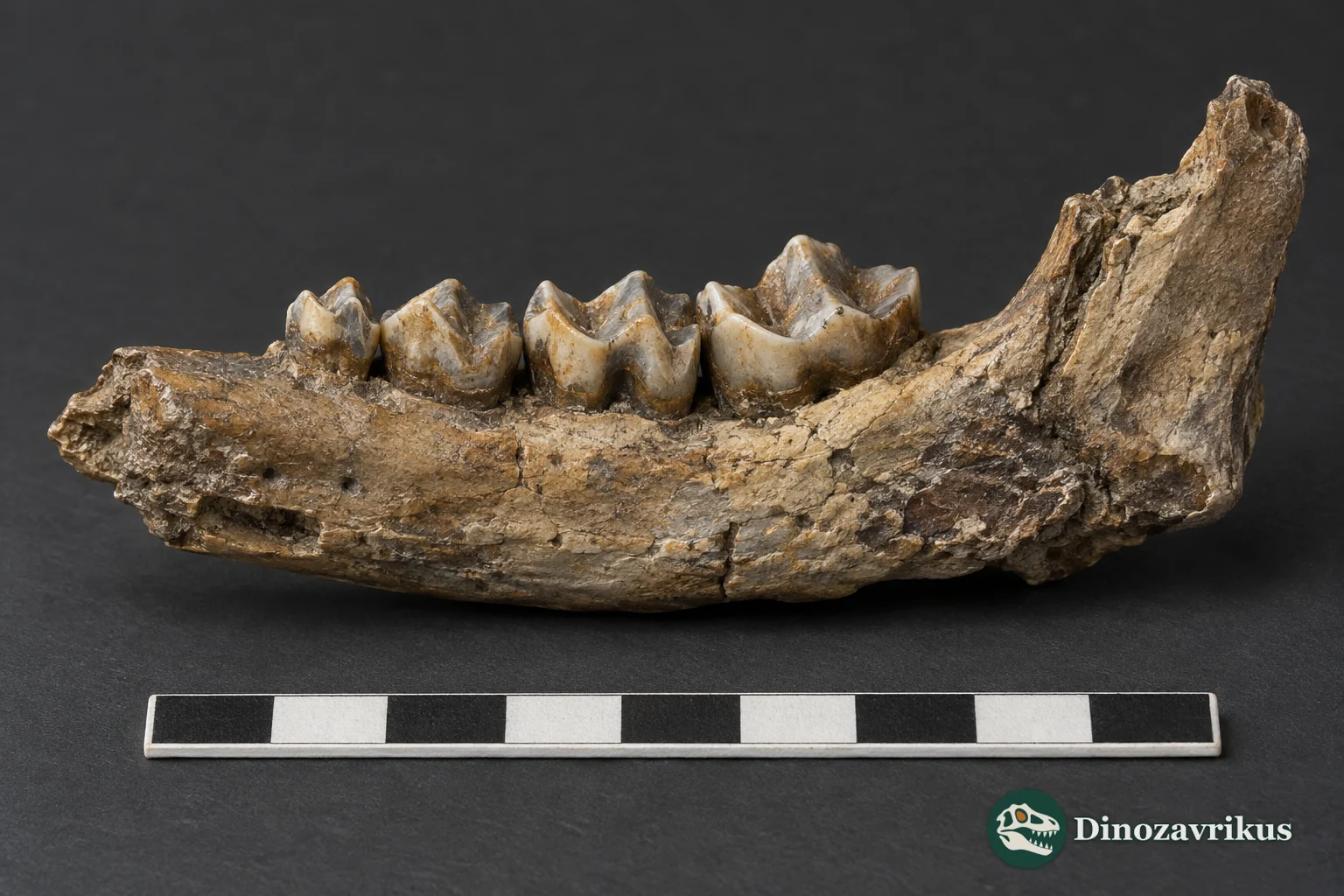
| Fossils | Jaws and teeth, with a reported femur |
| New Uruguay sites | Paso Buey Negro, Paso del Potrero and El Caño Creek |
What can the fossils tell us?
The type and later jaws are compared through cheek-tooth form and lower-jaw structure. A life illustration cannot replace those characters.
The Sopas and Dolores formations provide northern and southern occurrences. Each layer's age is evaluated from its own geological context.
Tiny marks on chewing surfaces can suggest food texture, not a complete list of plants consumed over a lifetime.
Jaws and a growing map of finds
The original species description was based on an incomplete lower jaw. Later studies compared additional jaw fragments and cheek teeth with that reference. Durable enamel preserves useful characters, but an isolated tooth cannot reconstruct a whole body or always settle a difficult species assignment.
A 2024 review described new Uruguayan occurrences at Paso Buey Negro on the Arapey Chico River and Paso del Potrero by Arerunguá Creek, both in the Sopas Formation. El Caño Creek in the Dolores Formation provides a southern locality. The assignments depend on fossil morphology as well as the place and age of each deposit.
A femur and the limits of body estimates
A study of body-mass methods reported the first described femur of N. recens from late Pleistocene sediments in Uruguay. It allows models based on limb bones to be compared with tooth-based estimates. Results vary with the living mammals chosen as analogues; none is a direct weighing of the extinct animal.
The species is often given a slender, horse-like outline because of its family. Yet the exact gait, speed and limb posture remain difficult to specify from a limited skeleton. The rare femur matters precisely because postcranial evidence had been scarce.
Diet, deposits and survival
Researchers studied dental microwear on several specimens. Scratches and pits can be compared with those on living herbivores to discuss the texture of recently eaten plants. This cannot identify every plant, every season or the diet of every population.
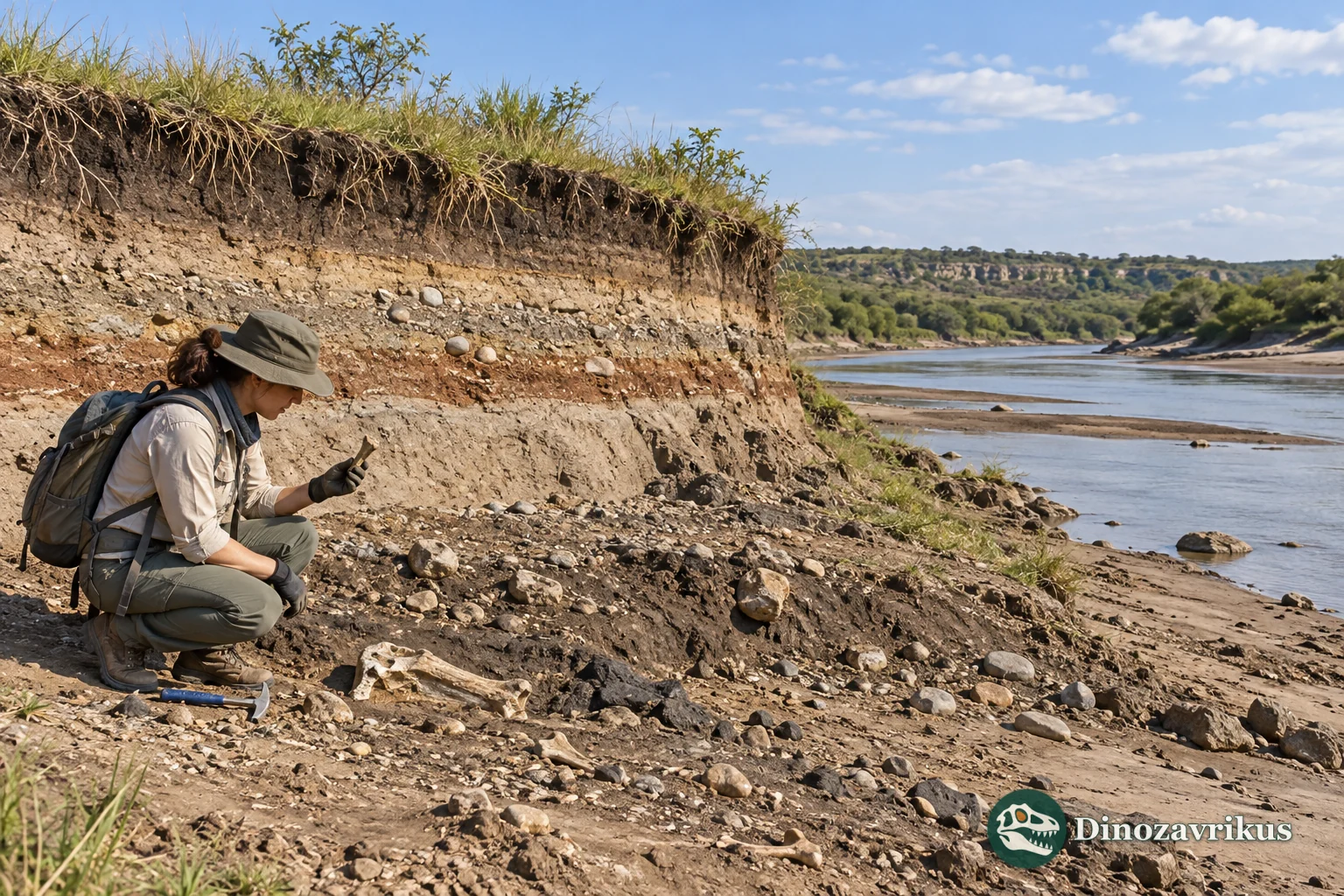
Late Pleistocene Uruguayan fossils show that this proterotheriid lineage survived long after many relatives. Poorly constrained finds cannot establish an exact extinction date. River sediments tell us where bones were buried, not every habitat used by the living animal. The field scene is a generic interpretation rather than a record of a named excavation.
Frequently asked questions
Was Neolicaphrium a horse?
No. It was a South American litoptern. A horse-like outline does not make it a member of the horse family.
What fossils identify N. recens?
Lower jaws and teeth form the main evidence. A femur from Uruguay has also been described.
Can a femur give its exact weight?
It can support estimates from comparative models, but these depend on the chosen analogues and are not direct measurements.
Do we know everything it ate?
No. Microwear on a few teeth samples recent feeding and cannot reveal a complete plant list across seasons.