

Neoplagiaulax was a multituberculate mammal, a member of a long-lived extinct lineage distinguished in part by complex cheek teeth and enlarged incisors. Paleocene fossils assigned to the genus are known from Europe and North America, but many are isolated teeth or partial jaws. The animal's detailed appearance and daily life are therefore much less certain than its dental anatomy.
Some Alberta material is unusually informative because teeth and parts of the skull occur together. It helps researchers test identifications that would be less secure if based on a lone tooth. Neoplagiaulax is included in the ancient mammal catalogue, where it can be compared with other extinct mammals without implying that all records represent one population.
Quick facts
| Scientific name | Neoplagiaulax Lemoine, 1882 |
|---|---|
| Type species | N. eocaenus, first described as Plagiaulax eocaenus |
| Group | Multituberculata; Neoplagiaulacidae |
| Age | Paleocene; records vary by species and locality |
| Range | Europe and North America |
| Key material | Incisors, cheek teeth, jaws and partial skulls |
| Distinctive evidence | A lower blade-like fourth premolar and enlarged incisors |
| Diet | Plant processing is inferred from teeth; exact diet is unknown |
What can the fossils tell us?
The type material of N. eocaenus is a jaw fragment with p4–m2 from Cernay, France. It anchors the name but does not preserve a full skull, body or behaviour.
Enlarged incisors and the blade-like lower fourth premolar are diagnostic parts of the dentition. Their shape helps compare species and infer processing mechanics, but not a complete diet.
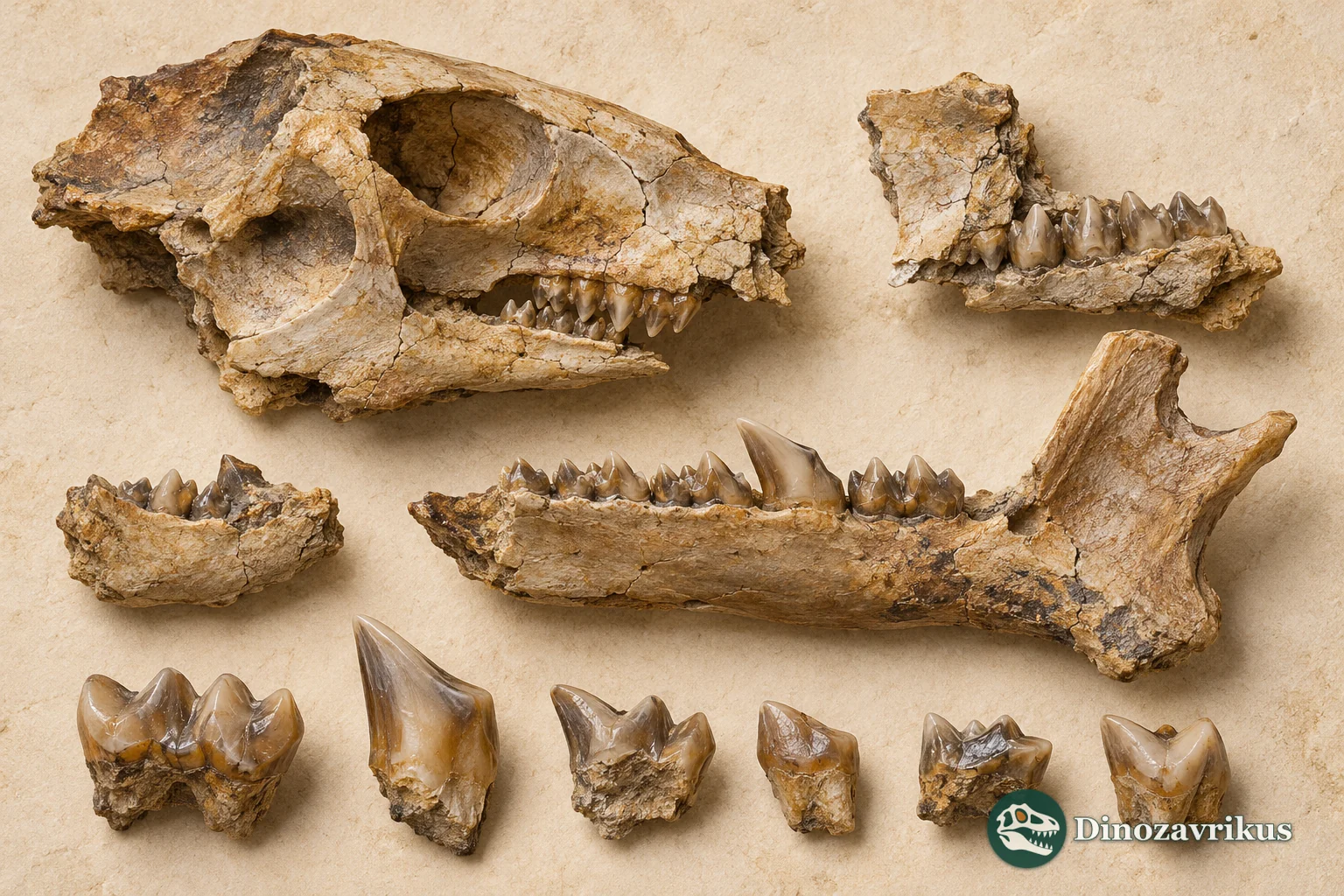
Paskapoo Formation material includes unusually informative associated cranial and dental remains. In N. paskapooensis, teeth preserved in position clarify relationships among upper and lower tooth rows.
A rostrum and palate assigned to N. cimolodontoides preserve evidence of incisor replacement. It is direct evidence for that specimen, not a complete model of growth for every species.
From a French jaw to a wider genus
The species now called Neoplagiaulax eocaenus was first described in 1880 under the name Plagiaulax eocaenus. Lemoine established the genus Neoplagiaulax in 1882. Its type material from Cernay, France, is a lower jaw fragment preserving the fourth premolar and molars. This fragment anchors the name, but it cannot show the whole animal's skull or body proportions.
Later discoveries expanded the genus record and added new species. That growth in named material does not mean every isolated multituberculate tooth belongs here. Researchers compare tooth position, cusp pattern, enamel and wear, and assignments can remain provisional when the diagnostic parts are missing. European and North American species may resemble one another without necessarily documenting direct migration or a single uninterrupted lineage.
Why the incisors and p4 matter
Multituberculates often had enlarged incisors and a blade-like lower fourth premolar, called p4. These features are conspicuous in neoplagiaulacids. The tooth surfaces preserve anatomy that can be compared across species, while wear may offer clues about how food was processed. A sharp-looking tooth does not prove a particular plant menu, and the same mechanical feature can be used on more than one kind of food.
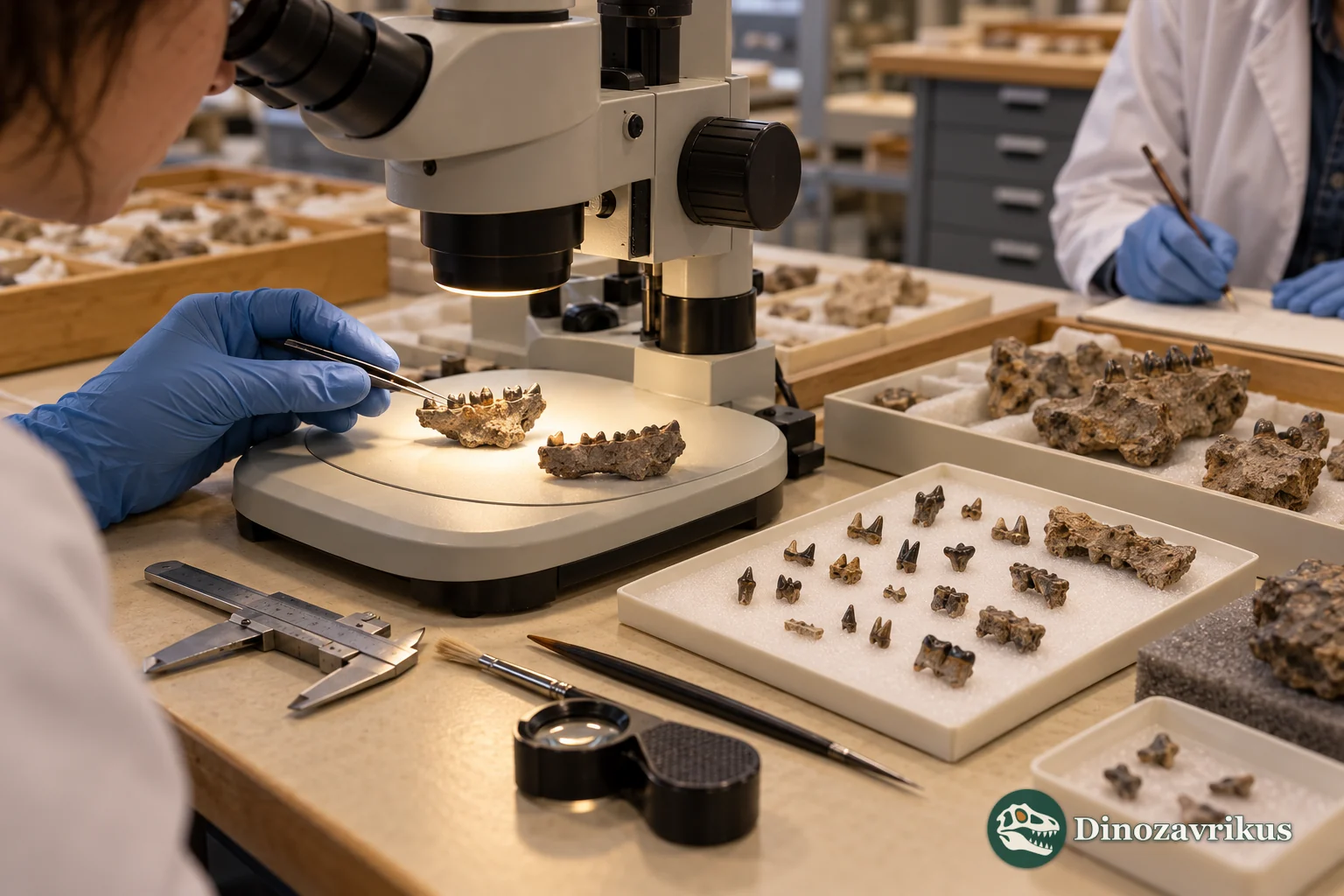
Small mammals are commonly recovered by washing and sorting sediment, which helps explain why teeth outnumber associated skeletons. A tooth can be diagnostic even when it is detached, but identification quality depends on preservation and the exact tooth position. It is safer to say what the fossil is and how it was identified than to assign the animal a detailed behaviour unsupported by the sample.
What the Alberta fossils add
Scott and Fox's study of neoplagiaulacids from the Paleocene Paskapoo Formation of Alberta described material from Blindman River localities. The authors noted that N. paskapooensis was then the most dentally complete neoplagiaulacid known, with upper incisors in place alongside cheek teeth and associated lower dentition. Associated parts make tooth-row comparisons more reliable than comparing isolated crowns collected from unrelated beds.
Another species, N. cimolodontoides, preserves a rostrum and palate with evidence of incisor replacement. That rare developmental observation is valuable because replacement patterns can help distinguish relationships. Yet it applies to the preserved specimen; it cannot by itself reveal the animal's lifespan, reproductive biology or the complete sequence of tooth growth.
A cautious picture of a Paleocene mammal
The dentition supports an animal capable of processing food with enlarged incisors and complex cheek teeth. A plant-heavy diet is plausible for many multituberculates, but the exact foods eaten by each Neoplagiaulax species are not directly preserved in the material discussed here. Nor do the teeth alone establish whether an individual lived mostly in trees, on the ground or in both settings.
Fossils assigned to the genus span multiple Paleocene localities and species. They should not be assembled into a single composite specimen without labeling which features come from which taxon. The broader Palaeogene Period provides the temporal setting; the type jaw, associated Alberta dentitions and rare replacement evidence each answer different questions.
Frequently asked questions
What was Neoplagiaulax?
It was a genus of Paleocene multituberculate mammals in the family Neoplagiaulacidae.
What is the type fossil of Neoplagiaulax eocaenus?
A lower jaw fragment from Cernay, France, preserving the fourth premolar and molars anchors the type species.
What do its large incisors prove about its diet?
They preserve feeding anatomy, but do not identify an exact menu. A plant-processing role is an inference from tooth form, not a preserved meal.
Why are the Alberta specimens important?
Some preserve associated upper and lower teeth, and one specimen documents incisor replacement, giving researchers evidence beyond isolated crowns.