

Nesiotites was an extinct shrew genus on the Balearic Islands. A succession of Mallorcan fossil forms runs from the Pliocene into the Holocene. The late N. hidalgo was much larger than earlier relatives, yet its limbs still indicate mainly ground-level movement. The coat on the cover is an artistic choice, not a preserved feature.
Its teeth are useful for tracing lineage changes; a new analysis of its limb bones tests what the animals could do without treating size increase as proof of an entirely new way of life.
Quick facts
| Group | Shrews, Soricidae; Nectogalini |
|---|---|
| Type species | Nesiotites hidalgo Bate, 1944 |
| Islands | Mallorca and Menorca, Balearics |
| Time | Pliocene to Holocene across the island lineage |
| Late body mass | Estimated about 28–41 g in studied N. hidalgo samples, depending on predictor |
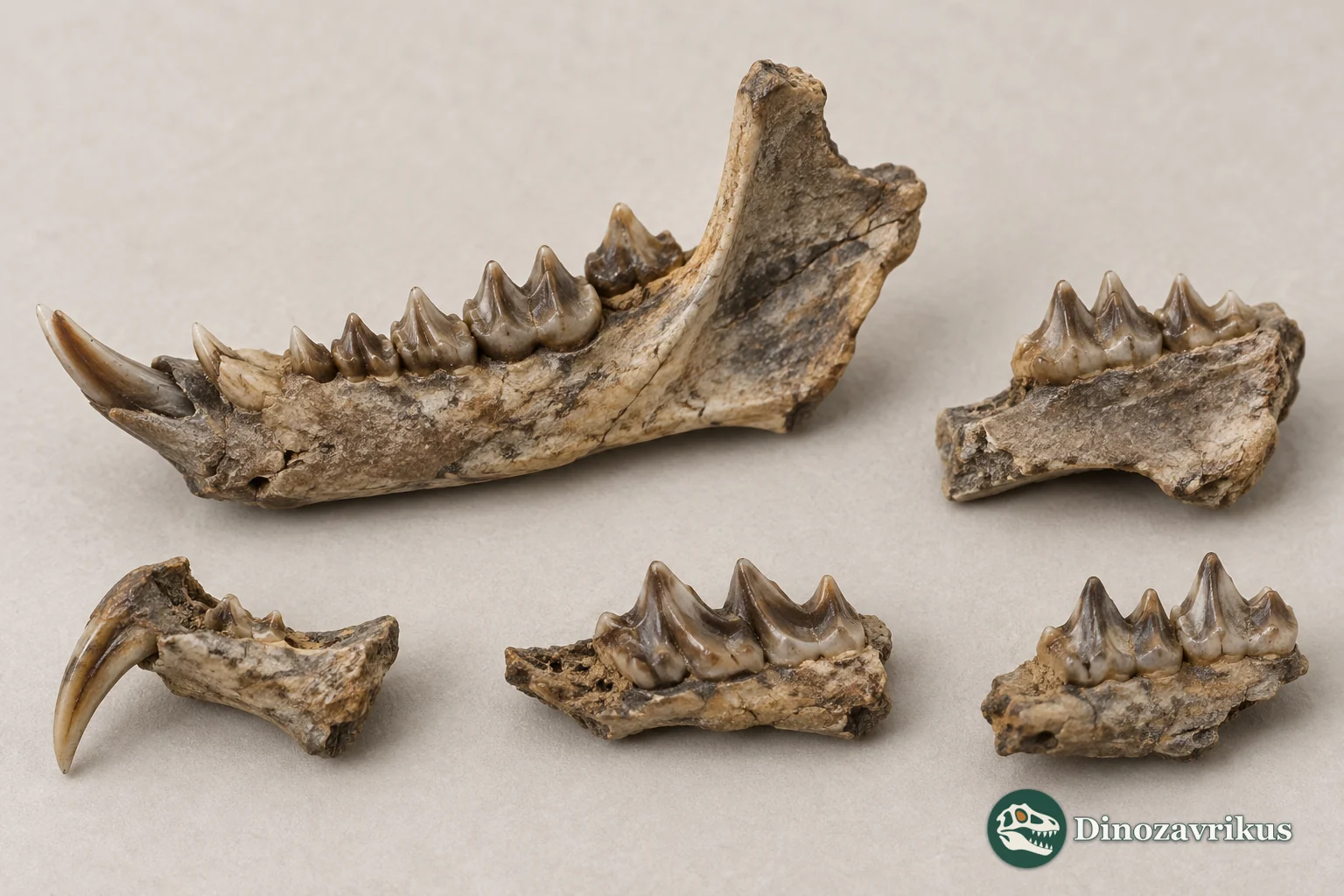
| Material | Teeth, jaws, limb bones and parts of the pelvis |
| Locomotion | Mostly ground-active, without a clear swimming or digging specialization |
What can the fossils tell us?
Comparative teeth help separate Pliocene N. ponsi from later N. hidalgo. A single crown does not measure body length or document movement between islands.
A 2026 study compared humeri, ulnae, femora and tibiae with living shrews. The fossils fall within the range of terrestrial, ground-active forms rather than specialized swimmers or diggers.
Regressions calibrated on living shrews gave roughly 28–41 g across late N. hidalgo samples and predictors. These are estimates, not fossil weighings.
Recognizing successive island forms
Dorothea Bate described N. hidalgo in 1944. Later workers separated older Mallorcan forms, including Pliocene N. ponsi and Early Pliocene N. rafelinensis. The status of the earliest named species has been debated because some teeth closely resemble later forms. Fossils from different deposits provide a sequence, not one continuously sampled population.
An ancestral form is related to Asoriculus. Material at Na Burguesa on Mallorca is dated to about 5.3–5.0 Ma. That is an age estimate for the deposits, not necessarily the first appearance of the genus Nesiotites. Tooth size and crown details change through the record, but one worn tooth cannot map every evolutionary step.
Limb bones test how it moved
Alejandro Valenzuela and colleagues compared fossil humeri, ulnae, femora and tibiae from several stages of the Mallorcan lineage in a 2026 study. They measured these against living shrews and calculated functional limb indices. Late N. hidalgo bones were relatively robust, but limb proportions remained within the range of ordinary ground-active shrews.
The team found no convincing skeletal specialization for swimming or digging. This is an inference from comparative anatomy and a classification model, not direct observation of an extinct animal. Pelvic material also preserves characters useful in identifying adult males, without revealing breeding behavior.
Growing larger on Mallorca
Fossil shrews were not weighed. Researchers estimated body mass using regressions calibrated on living species and measurements of jaws and long bones. Across late N. hidalgo samples, different predictors yielded about 28–41 g; the earlier N. ponsi generally produced about 25–29 g in the same study. The trend of increase is more secure than one exact number for an entire species.
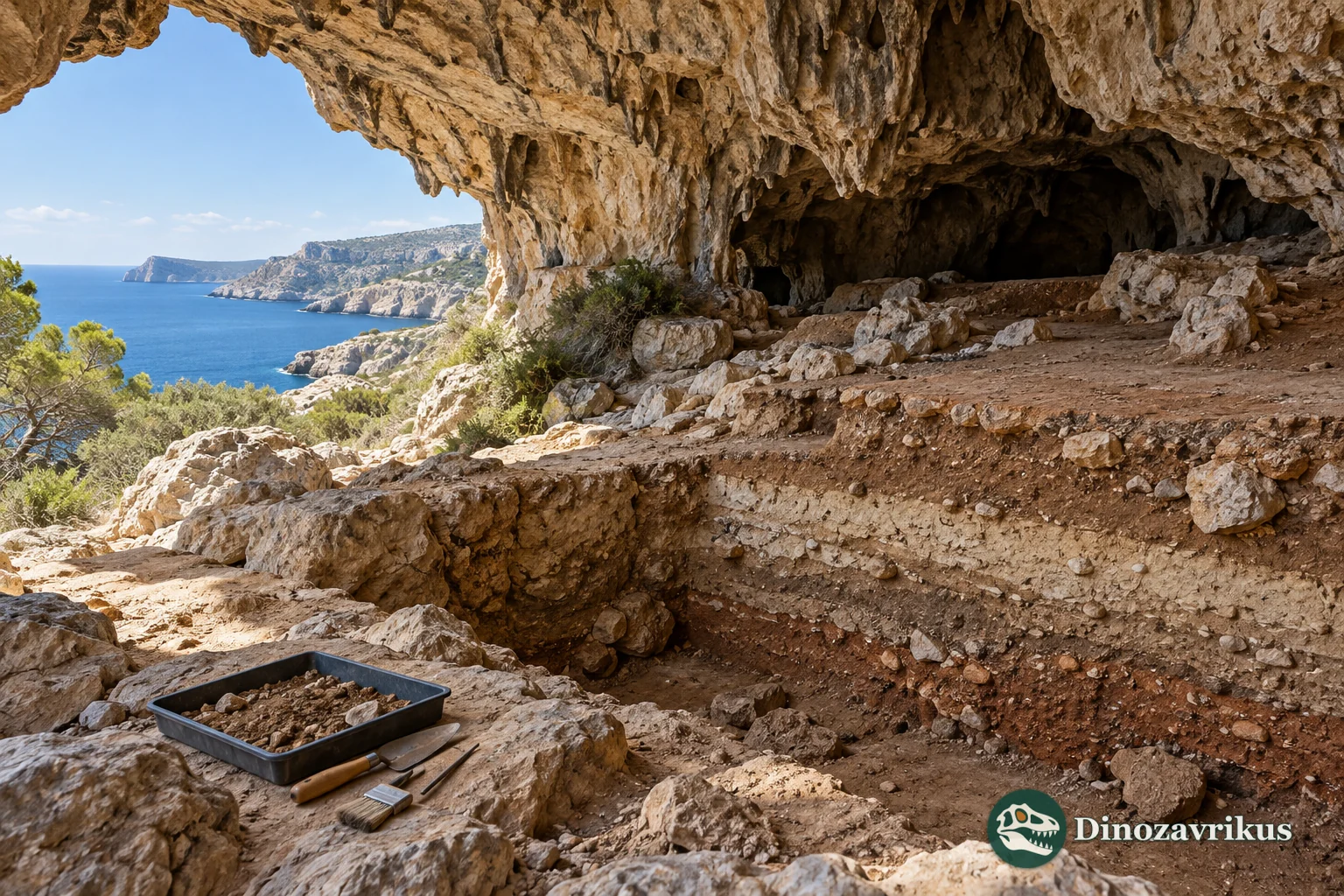
Late samples include Cova Estreta, Cova de Canet and Cova des Garrover, which represent different times including the Holocene. Menorcan fossils have prompted competing dispersal scenarios. Similar Early Pleistocene samples on Mallorca and Menorca support a later crossing from Mallorca, but do not document a journey itself.
The end of an island lineage
Late N. hidalgo fossils belong to the Quaternary, including the Holocene. Its extinction has been associated with ecological changes after people reached the islands, but a single bone does not identify an exact cause. Fossils do not preserve coat color or a complete menu of prey. Even the ground-active interpretation rests on skeletal comparison, not a fossil trackway.
Frequently asked questions
Was Nesiotites a mouse?
No. It was a shrew in Soricidae, not a rodent.
How big was late N. hidalgo?
Across the studied late samples, estimates from different bones are roughly 28–41 g. These are model-based values, not direct weights.
Did it swim or burrow?
The measured limbs show no strong specialization for either activity; researchers infer mainly ground-active movement.
When did the Balearic lineage end?
Late N. hidalgo remains are Holocene. Ecological changes after human arrival are discussed, but the precise cause of extinction is unresolved.