

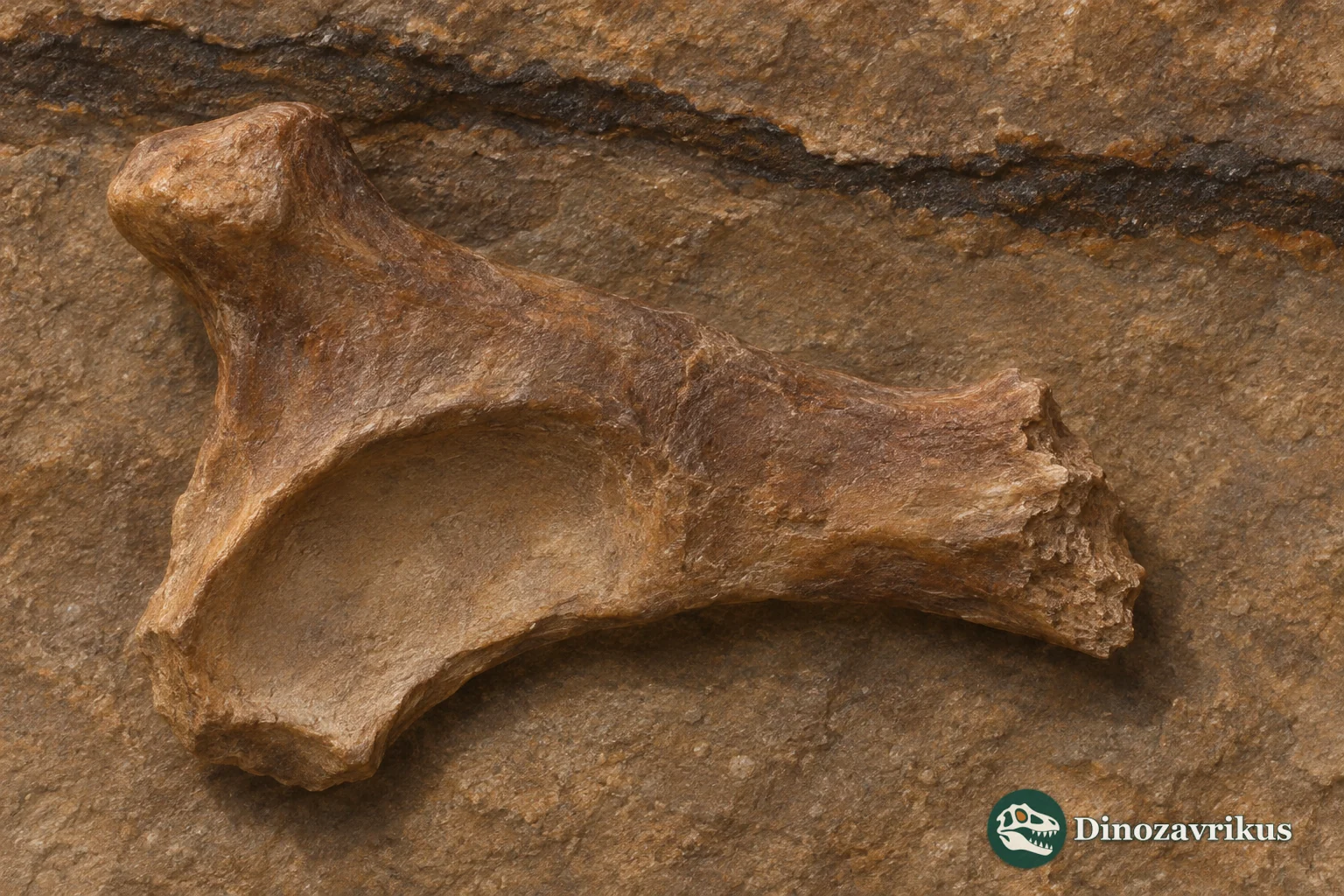
Nezpercius was a Late Cretaceous salamander from Montana. It is known from three incomplete ilia, bones that form part of the pelvis. The 2001 description interpreted them as frog fossils. A subsequent examination found that they fit salamander anatomy more closely.
Quick facts
| Group | Salamanders, Caudata |
|---|---|
| Age | Late Cretaceous, Campanian |
| Region | North America: Montana, United States |
| Type species | Nezpercius dodsoni |
| Scientific name | Nezpercius |
| Diet | Unknown |
What can the fossils tell us?
The holotype, FMNH PR 2078, and two other specimens came from the Judith River Formation. Each is missing part of the shaft or the joint region.
Researchers reassessed the orientation of each bone and compared its articular surfaces with those of frogs and salamanders.
Other salamander bones occur in the assemblage. Researchers cannot securely associate them with the three Nezpercius specimens.
Three finds from the Judith River Formation
Richard Blob and colleagues described Nezpercius dodsoni in 2001. The holotype, FMNH PR 2078, and the larger FMNH PR 2079 came from locality UC-913. FMNH PR 2080 came from UC-8303. Both sites are in north-central Montana near the Missouri River. They date to the Campanian stage of the Late Cretaceous.
The genus honours the Nez Perce people. The species name honours palaeontologist Peter Dodson for his work on the ecology of the Judith River fauna.
Why the identification changed
The first description emphasised an elongated bump near the base of the iliac shaft. A 2010 study reconsidered the orientation of the bones. The authors identified the type as a left ilium. It had originally been interpreted as a right one.
In a salamander the iliac shaft points mainly upwards. In a frog it points forwards. The orientation is harder to establish when the bones are isolated. In Nezpercius, the shape of the articular surface and the positions of ridges and projections together support the salamander interpretation.
What the material can establish
Late Cretaceous rocks in western North America also preserve well-established frogs, such as Hensonbatrachus, which can be identified from other parts of the skeleton. The known Nezpercius ilia support a salamander identification. They leave its family and overall appearance unresolved.
Frequently asked questions
Where was Nezpercius found?
Its fossils came from two Judith River Formation localities in Montana, United States.
What is preserved in the type specimen?
FMNH PR 2078 is an incomplete ilium. The 2010 review identified it as a left ilium.
Why was it originally interpreted as a frog?
The first description treated the bone’s shape and a bump near the base of its shaft as frog traits. Wider comparisons led to a different identification.
Can its overall appearance be reconstructed?
The three fragments allow comparisons of the pelvis. They do not establish the shape of the head, body or limbs.