

Nileus is an Ordovician genus of trilobites in the family Nileidae. Its members are not defined by dramatic spines: in several species, external furrows are subdued and the shell looks comparatively smooth. The diagnostic picture comes from the proportions of the head and tail shield together with structures on the underside.
The type species, N. armadillo, comes from Sweden. Early post-embryonic stages of another species, N. deynouxi, are known from Morocco’s Fezouata Shale. These records belong to different species and settings, so they cannot be combined into one population or a complete life history. Nileus is part of the ancient arthropod catalogue and lived in Ordovician seas.
Quick facts
| Scientific name | Nileus Dalman, 1827 |
|---|---|
| Type species | N. armadillo, first named Asaphus (Nileus) armadillo |
| Group | Trilobita; Nileidae |
| Age | Ordovician; individual species occupy different intervals |
| Type region | Östergötland, Sweden |
| Growth evidence | Early post-embryonic stages of N. deynouxi from Morocco |
| Diet | Not established directly for the genus |
What can the fossils tell us?
Nileus armadillo is the type species. Turvey recorded it from the upper Expansus Limestone and Asaphus expansus Biozone at Husbyfjöl, Östergötland. That nomenclatural role does not turn every similar fossil into this species.
Laibl and colleagues described early post-embryonic stages of N. deynouxi in the Tremadocian Fezouata Shale. Appendage remains in young N. deynouxi and Symphysurus ebbestadi inform development; digestive-tract remains belong to the latter, not Nileus.
Whittington emphasized the distinctive hypostome, glabellar organ and strong ventral axial ridges in Nileidae. External axial and pleural furrows may be shallow or absent, so a smooth dorsal surface is not the whole diagnosis.
Whittington argued that Nileidae may be closer to Illaenidae than to Asaphina. This is a phylogenetic interpretation of anatomical characters, not a change to the type species or a settled answer in every classification.
A Swedish trilobite fixes the name
Dalman introduced Nileus in 1827 as a subgenus of Asaphus. The type species was Asaphus (Nileus) armadillo, now called Nileus armadillo. Turvey’s 2007 systematic treatment places the type material in the upper Expansus Limestone, the Asaphus expansus Biozone, near Husbyfjöl in Östergötland, Sweden. Later biostratigraphic work also records the Swedish origin of the type species.
Historical combinations need care. A species once listed as Asaphus (Nileus) may reflect a change in generic rank or interpretation rather than a newly discovered animal. The type species anchors the name Nileus, but it does not decide whether distant fragments belong to that species.
What a smooth shell can conceal
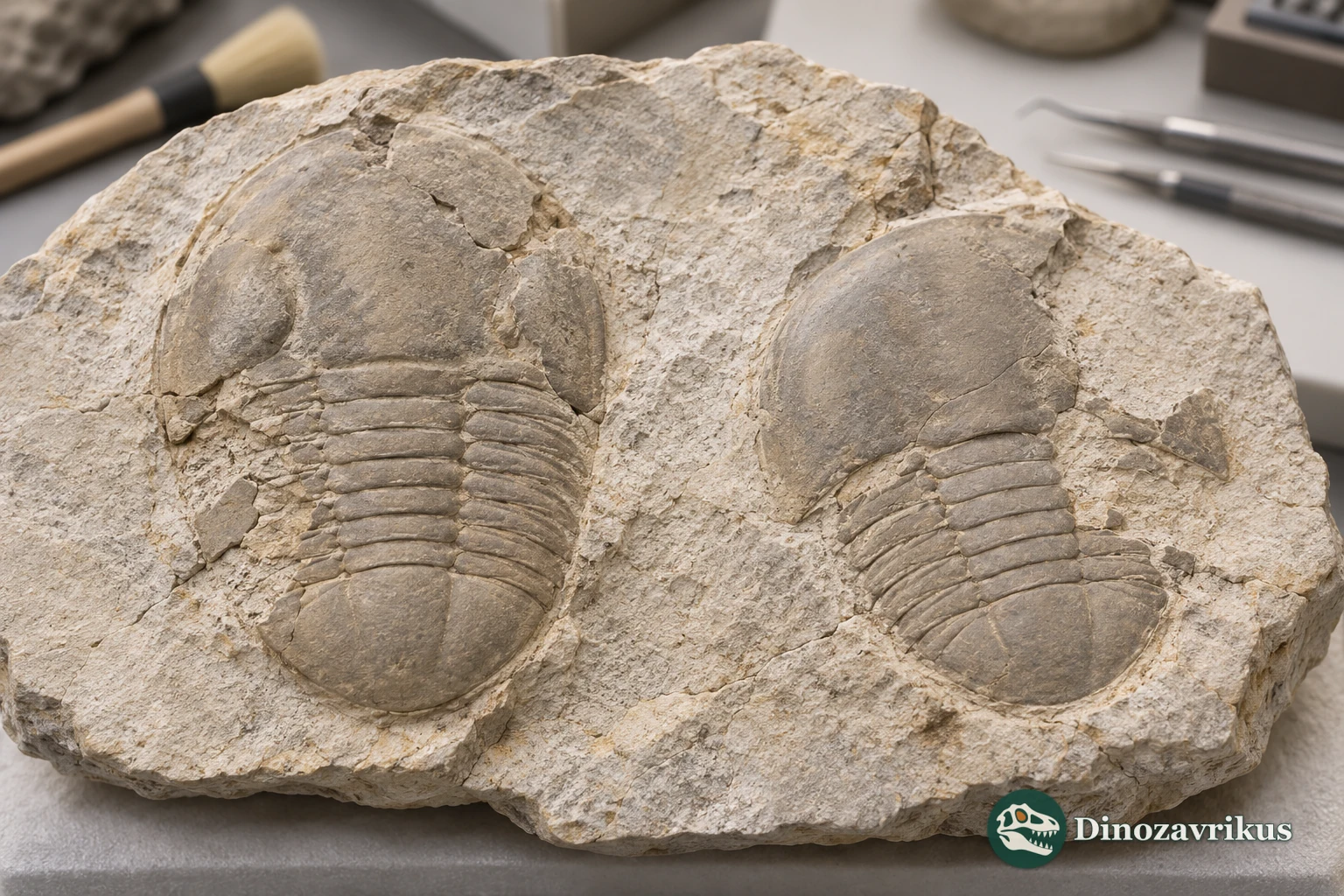
Like other trilobites, Nileus had a cephalon, segmented thorax and pygidium formed from fused rear segments. The central lobe of the head is the glabella. Species differ in the proportions of these shields and in details of their margins, furrows and eye regions.
In his 2003 revision, Harry Whittington highlighted the nileid hypostome, an internal glabellar organ and strong ventral ridges along the axial region. External furrows on the axial and pleural areas can be shallow or absent. A smooth upper surface therefore does not mean that the fossil is anatomically uninformative: useful characters may lie beneath the head or appear only as low relief.
Early development at Fezouata
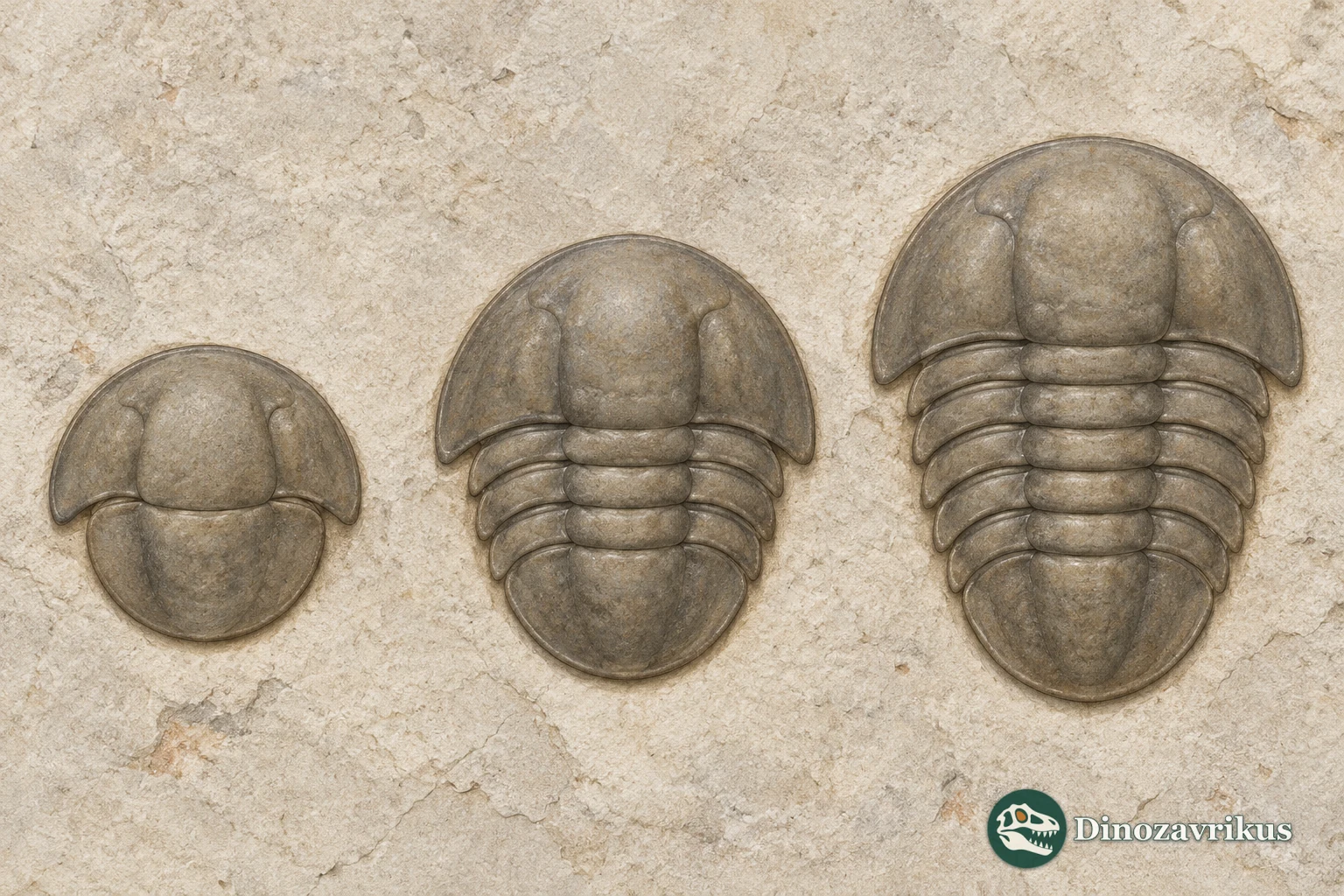
The Fezouata Shale of Morocco preserves an unusually rich Early Ordovician marine fauna. Laibl and colleagues described early post-embryonic stages of several trilobites there, including Nileus deynouxi. Small shields were compared among species and stages; they were not treated as a complete series from egg to adult for one individual.
Appendage remains in early N. deynouxi and Symphysurus ebbestadi help show that some immature trilobites already shared aspects of adult anatomy. The digestive-tract remains reported in that study belong to S. ebbestadi, not Nileus. Even exceptional preservation does not yet give the genus a complete reproductive or developmental record.
Classification and what cannot be reconstructed
Nileus is placed in Nileidae. Whittington’s 2003 review argued that the family might be closer to Illaenidae than to Asaphina, based on the hypostome and other anatomical characters. This is a specific phylogenetic proposal, not a change to the type species, and not every later classification has to use the same higher-level arrangement.
Fossils most securely preserve the mineralized exoskeleton. Soft limbs are known only from exceptional deposits and limited stages. Diet, colour, swimming speed and behaviour have not been directly established for the genus. A rounded outline alone cannot demonstrate that it rolled into a ball; that claim would require articulated fossils and a mechanically compatible joint system.
The cover is an artistic underwater reconstruction, not a photograph of an exact museum specimen. Colour and soft-body details are illustrative. The known species come from different Ordovician horizons and regions, not one single assemblage.
Frequently asked questions
When did Nileus live?
The genus is known from Ordovician rocks. Individual species have different records: the type species N. armadillo is from Sweden, while N. deynouxi is studied in the Early Ordovician Fezouata Shale of Morocco.
Which species is the type of Nileus?
The type species is Nileus armadillo, first named Asaphus (Nileus) armadillo. It anchors the generic name but does not make every similar fossil the same species.
What is known about young Nileus?
Early post-embryonic stages of N. deynouxi have been described from Fezouata. Some preserve appendages, but they do not provide a complete series from egg to adult.
What did Nileus eat?
The studies reviewed here do not provide direct evidence for a specific diet. Shell shape and taxonomic placement alone cannot establish its food or feeding behaviour.