

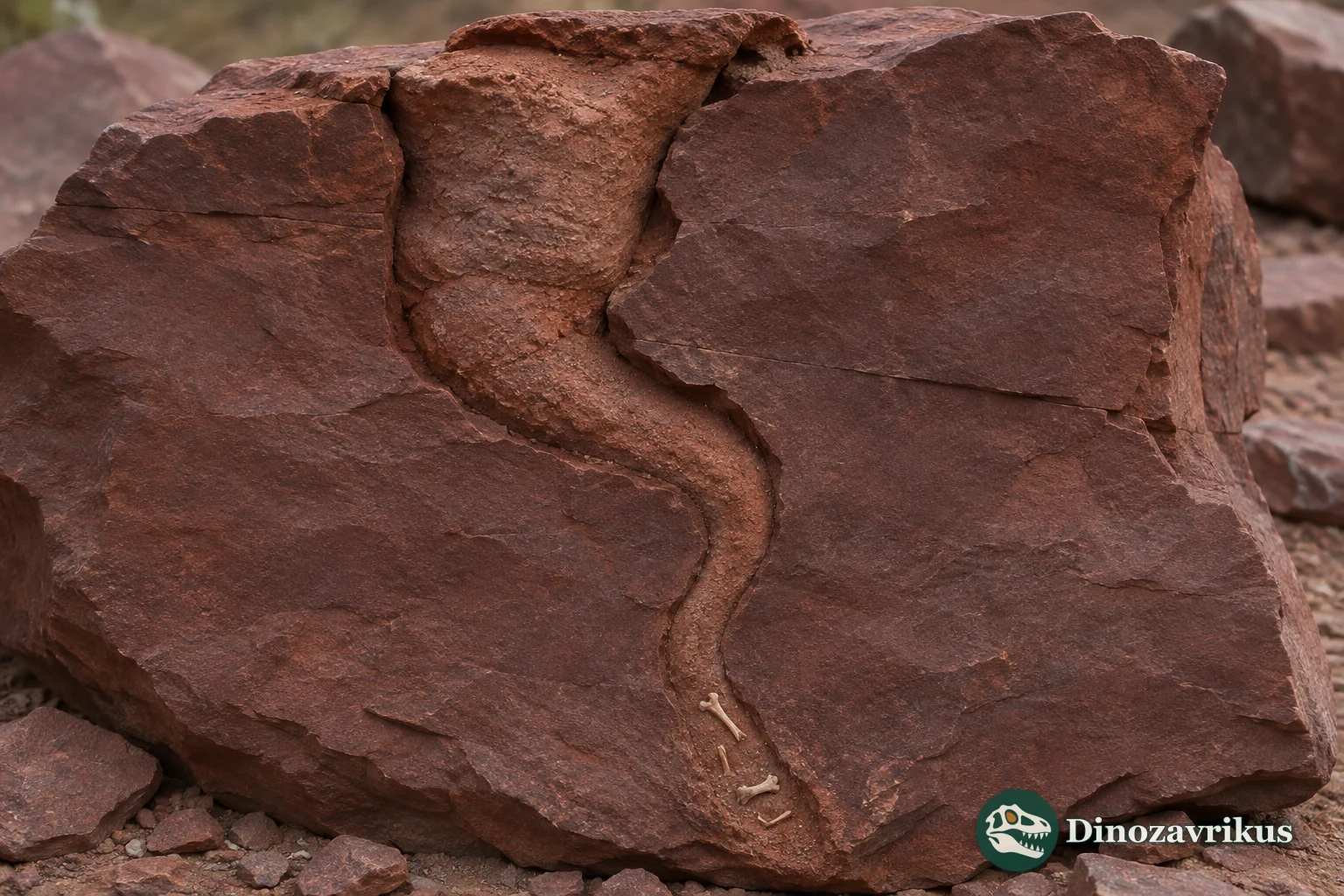
Ninumbeehan was a small temnospondyl that lived in what is now Wyoming in the Late Triassic. Its bones occur inside hardened casts of burrows. The placement of the skeletons, the shape of the skull and evidence that the river channel dried point to an animal that sheltered below ground during dry spells.
Quick facts
| Group | Temnospondyls, stereospondyls |
|---|---|
| Age | Late Triassic, Carnian |
| Region | North America, USA (Wyoming) |
| Type species | Ninumbeehan dookoodukah |
| Scientific name | Ninumbeehan |
| Diet | Exact prey is unknown |
What can the fossils tell us?
Holotype UWGM 7264 was found in a nearly complete cast. Other casts contain skeletal elements whose position can be examined with tomography.
The shafts extended into sediments in a seasonally variable river channel. The authors interpreted them as shelters for estivation, a period of inactivity during dry conditions.
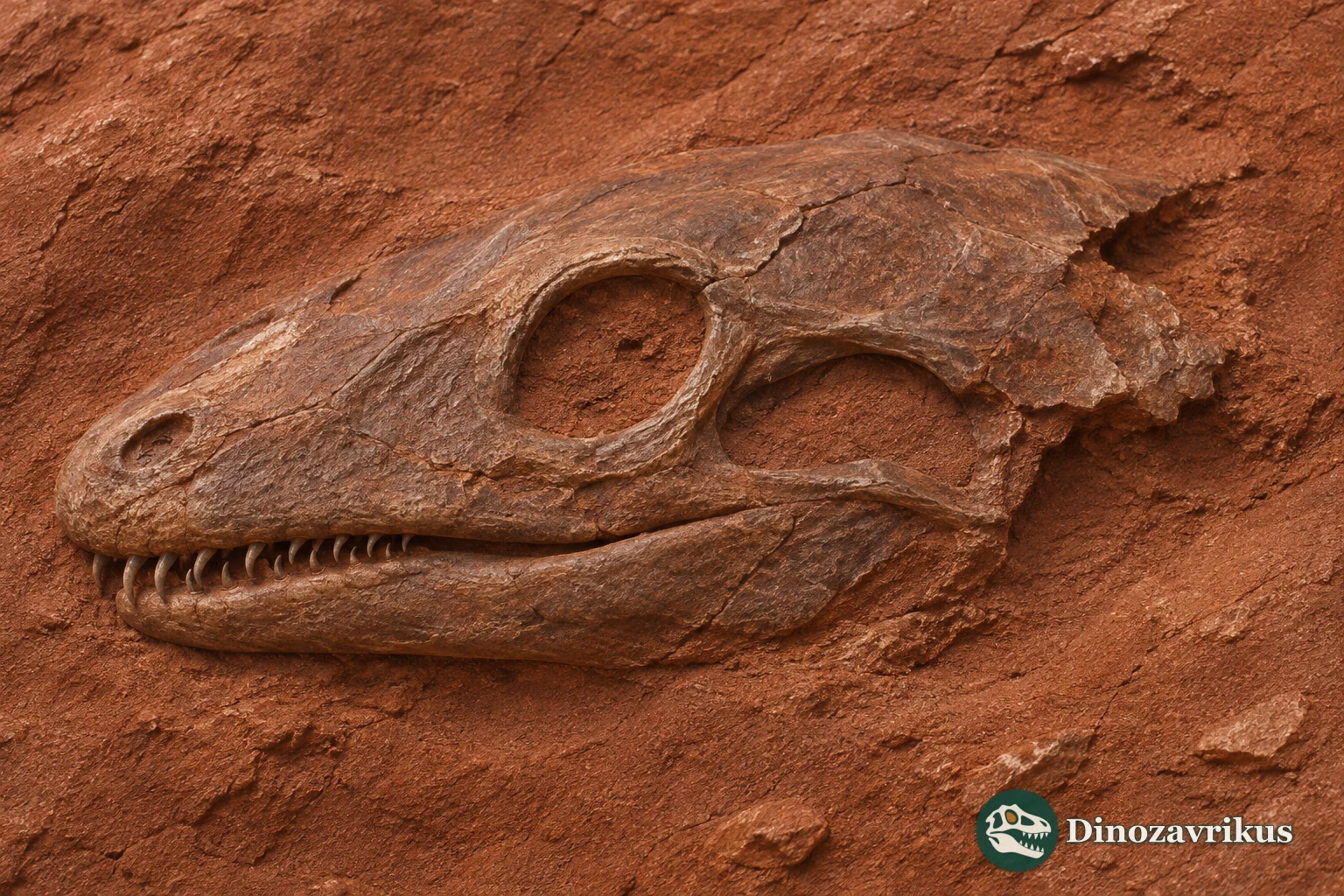
A wedge-shaped head may have helped it dig. The fossils give limited information about the motion of the head or the contribution of the limbs.
The Jelm Formation near Dubois
Cal So, David Lovelace and colleagues described the species in 2024. The specimens come from the Serendipity beds in the upper Jelm Formation near Dubois, Wyoming. Their stratigraphic position suggests an early to middle Carnian age. A more precise age for that horizon requires further dating evidence.
Burrows in a river channel
The team measured 88 representative casts from three sites. The shafts vary in width and are generally vertical or almost vertical. Some cut across one another, indicating repeated digging in the same area. Neutron and X-ray tomography revealed the positions of bones that remained hidden inside the cast sediment.
A wedge-shaped skull and an articulated forelimb
Holotype UWGM 7264 preserves the skull, lower jaws and parts of the shoulder girdle in articulation. It also retains the left upper arm, radius, ulna and part of the hand. The largest known skulls reach about seven centimetres long, small for a Triassic stereospondyl compared with a form such as Metoposaurus. Lateral-line grooves on the skull roof housed a system that detected water movements. A second row of teeth lined the inside of the lower jaw.
Surviving seasonal drought
River bend deposits and signs of drying indicate that conditions in the channel changed seasonally. The authors proposed that Ninumbeehan retreated into moist sediment as water levels fell and became inactive there during the driest interval, a behaviour called estivation. The wedge-shaped head may have helped it burrow, and the lateral-line grooves suggest that it spent much of its active life in water.
A name from the Eastern Shoshone language
The name was chosen in collaboration with Eastern Shoshone community members, including school students and elders. The genus name refers to the Little People of Shoshone tradition. The species epithet alludes to the sharp teeth. The name captures that striking feature of the fossils. The remains leave the identity of its prey uncertain.
Frequently asked questions
Where was Ninumbeehan found?
In the Serendipity beds of the upper Jelm Formation near Dubois, Wyoming.
What shows that the bones were inside burrows?
They are embedded within hardened casts of the shafts. Tomography confirmed the positions of bones inside several casts.
What is estivation?
A period of inactivity during hot or dry conditions. It is the proposed explanation for the use of burrows by this amphibian.
How large were the known skulls?
The largest known skulls are about seven centimetres long. This measures the head, and total body length is less well constrained.