

Ocyplonessa was described from fragmentary foot and wing bones in eastern Oregon. The foot resembles that of the living harlequin duck and prompted a transfer to its genus. The wing bone carries a feature that led to a different interpretation.
Quick facts
| Family | Anatidae |
|---|---|
| Age | Late Miocene |
| Locality | Malheur County, Oregon, USA |
| Holotype | F-11291 and F-10485, distal left tarsometatarsus |
| Formation | Upper Juntura Formation |
| Described by | Pierce Brodkorb, 1961 |
What can the fossils tell us?
The type specimen preserves the end of a foot bone. Its shape is close to that of the living harlequin duck, the main basis of a proposed transfer.
A referred carpometacarpus has a differently shaped projection near the wrist. This gives researchers a character unavailable in the type foot bone.
The 1961 paper referred to Pliocene deposits using the correlation of its time. Subsequent studies treat the local fauna as Late Miocene.
The Juntura fossils
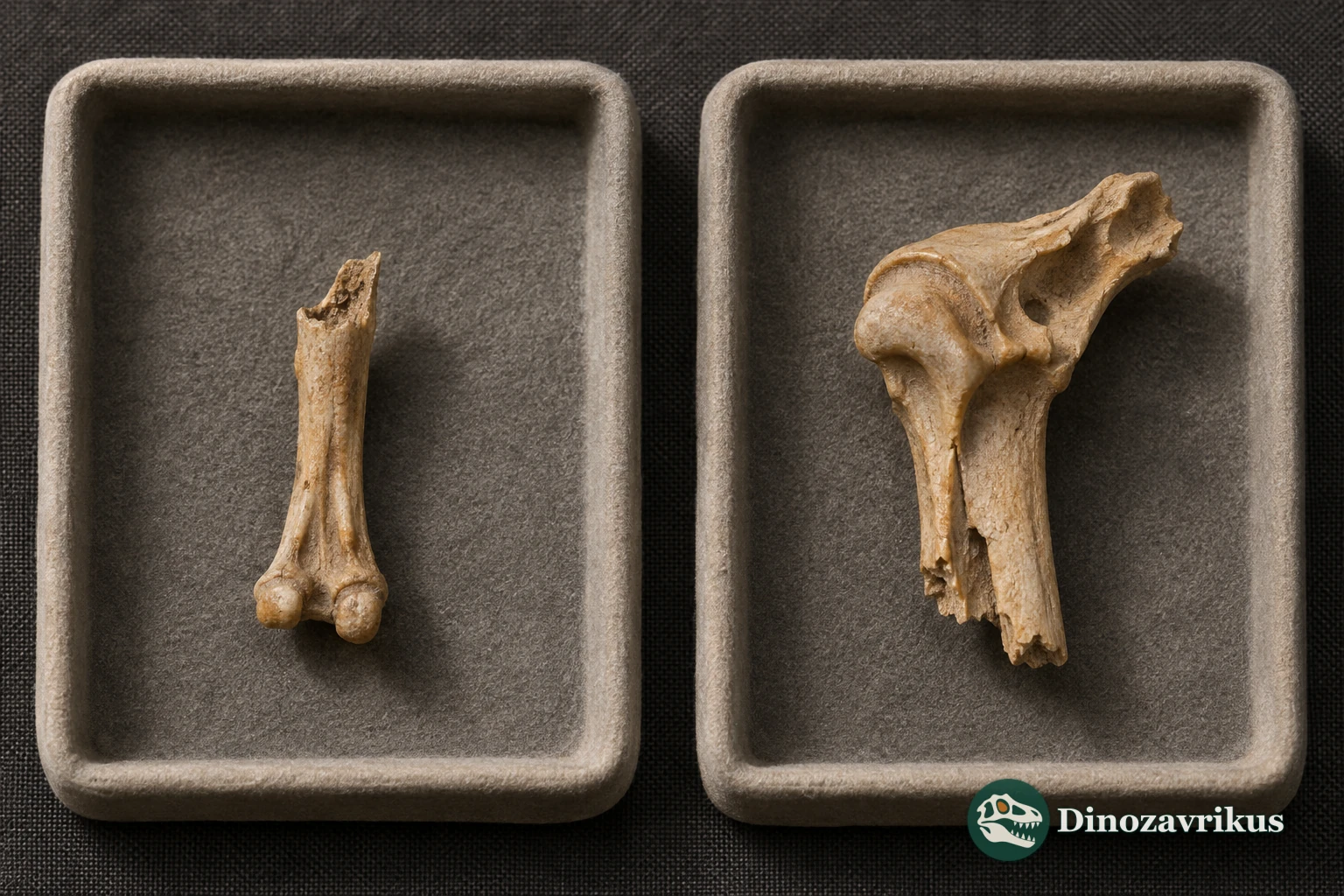
Pierce Brodkorb named Ocyplonessa shotwelli in 1961 from the upper Juntura Formation in Malheur County, Oregon. The University of Oregon’s type catalogue records F-11291 and F-10485 for the distal part of a left tarsometatarsus, collected by Shotwell in 1954. The original description also included part of a carpometacarpus, a bone in the hand of the wing.
Brodkorb’s paper used a Pliocene age for the deposits. Later work places that local fauna in the Late Miocene. The Juntura Formation also preserves Eremochen, a much larger member of a different waterfowl lineage.
Why the foot and wing led to different readings
Brodkorb pointed out similarities in the size and shape of the foot bone to that of the living harlequin duck, Histrionicus histrionicus. Storrs Olson and Pamela Rasmussen re-examined the type and proposed the combination Histrionicus shotwelli in 2001. They found the differences in the foot too slight for a separate genus. They did not discuss the anatomy of the wing bone in that comparison.
In 2023 Nikita Zelenkov drew attention to the shape of the extensor process of the carpometacarpus, a projection near the wrist. It differs from that of the harlequin duck and other sea ducks in his comparison. He supported retaining the fossil genus Ocyplonessa on that evidence.
What the fossils establish about its setting
The resemblance to the harlequin duck is a comparison of bones. Neither a skull nor plumage is known from the described material, and the limb fragments give no direct record of its diet. The freshwater setting of the deposits establishes where the material was buried. It does not identify the full range of places the bird inhabited.
Frequently asked questions
What fossil was used to name Ocyplonessa?
The distal end of a left tarsometatarsus, recorded as F-11291 and F-10485 in the University of Oregon catalogue.
What is Histrionicus shotwelli?
It is the combination proposed when this same species was placed in the living harlequin duck genus.
What supports a separate genus?
The distinctive extensor process on a referred wing bone prompted a later author to support the genus Ocyplonessa.
Why did the original paper call it Pliocene?
That was the age used for the deposits at the time. Later correlations place the Juntura fauna in the Late Miocene.