

Orohippus is an extinct genus of early equids known mainly from Eocene deposits of southwestern Wyoming. Its fossils include teeth and limb bones, and the amount of associated material differs by species. It often appears in simplified horse-evolution charts, but modern analyses describe early equid history as a branching tree.
The genus appears in the ancient mammal catalogue. Bridgerian fossils provide the best-known record; comparison with older equids tests relationships rather than proving a direct ancestor–descendant sequence.
Quick facts
| Scientific name | Orohippus Marsh, 1872 |
|---|---|
| Named species | O. pumilus (Marsh, 1871), among several historical assignments |
| Group | Perissodactyla, Equidae |
| Age | Mainly middle Eocene Bridgerian deposits |
| Range | Southwestern Wyoming; other referrals need checking |
| Material | Teeth, jaws, foot bones and partial skeletons |
| Diet | Herbivory inferred from teeth; exact foods unknown |
| Caveat | Direct ancestry of modern horses has not been established |
What can the fossils tell us?
Orohippus cheek teeth and jaws can be compared by enamel and cusp features. They do not identify exact plants eaten by an individual.
Metapodials and phalanges document early equid foot anatomy. The number and proportions of digits should be tied to species and specimen.
The best-known records are Bridgerian. Species, locality and formation should be kept separate rather than combined into one timeless population.
Phylogenetic studies compare many early equids. Orohippus lies among early branches; it is not a demonstrated direct ancestor of Equus.
How the name developed
Othniel Charles Marsh named Orohippus in 1872, following his earlier description of the small equid Lophiodon pumilus. Historical literature assigned several Wyoming species to the genus and discussed their relationships with Hyracotherium, Protorohippus and other early equids. Later anatomical studies revised these groupings.
The name is anchored by type material, but not every fossil historically labelled Orohippus is equally secure. A 1957 revision linked the genus to Bridger Formation deposits in southwestern Wyoming. Modern studies rework the broader early equid tree, so old species lists may not match current analyses.
Teeth and plant processing
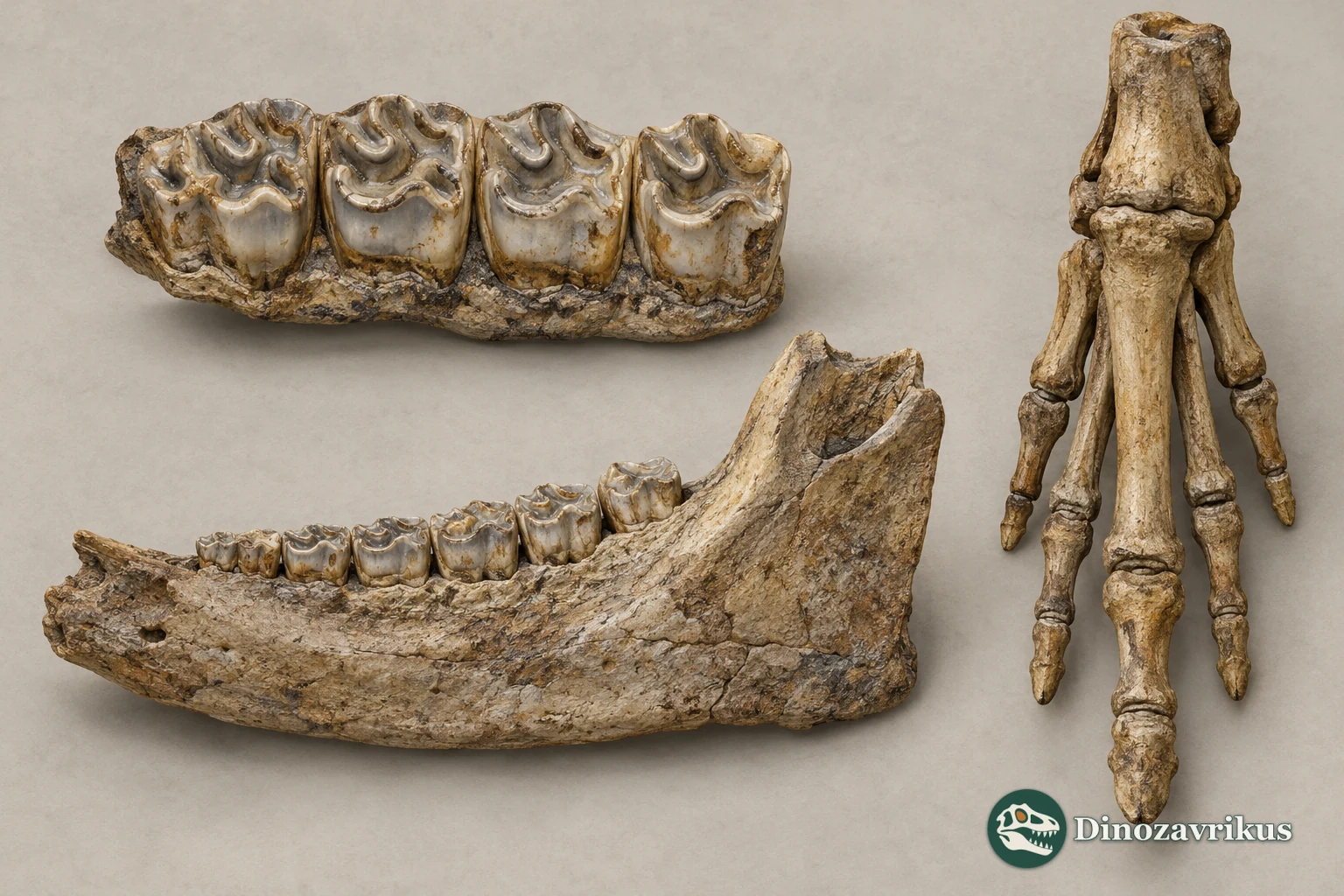
Cheek teeth and jaws supply many of the characters used to compare early equids. Researchers examine crown dimensions, enamel patterns and how far premolars resemble molars. Tooth position and wear matter: heavy wear can hide features visible on a younger crown.
The dentition is consistent with a plant-eating mammal but does not identify exact leaves or other foods. A claim that a particular change was driven by tougher vegetation needs comparisons across species and localities. Orohippus was not simply a modern horse in miniature.
Feet and movement
Early equids retained several functional toes, unlike the single hoof of living horses. Metapodials and phalanges preserve proportions that can be compared across species. Classic accounts describe Orohippus as a small multi-toed equid, but a composite display should not be used to infer one exact foot formula for every species.
Foot bones support inferences about load-bearing and terrestrial movement, not muscle, speed or routine gait. A light animal in wooded habitat is plausible, but there is no trackway securely tied to a named Orohippus species that fixes its stride.
Age and localities
The best-established records come from Bridgerian deposits of southwestern Wyoming, including the Bridger Formation. Species have been reported from different horizons. The older O. proteros was described from the Lost Cabin Member of the Wind River Formation and is known only from its type specimen; it should not be conflated with better-sampled Bridgerian fossils.
A formation covers more than one moment in time. Stratigraphic position, fossil mammals and regional correlations work together to date a specimen. “Eocene Wyoming” is safer than assigning one exact age to every tooth historically referred to the genus.
Taxonomy and a branching horse family
Early equid classification has changed repeatedly. Some species moved between genera or became synonyms when proposed distinctions did not hold under comparison. Froehlich's 2002 analysis evaluated many early equid taxa and characters and supported branching relationships rather than a simple ladder. In that analysis, Protorohippus venticolum was the sister taxon of Orohippus.
A sister relationship means two sampled branches share a closer common ancestor with each other than with other sampled taxa. It does not mean that one named species directly produced the other. Results also depend on the fossils and characters included.
Size, habitat and unknowns
Orohippus was small, but this profile avoids one precise mass or shoulder height because species and specimens differ, and not every sample is a complete skeleton. Such numbers are comparative estimates, not direct measurements of a living animal.
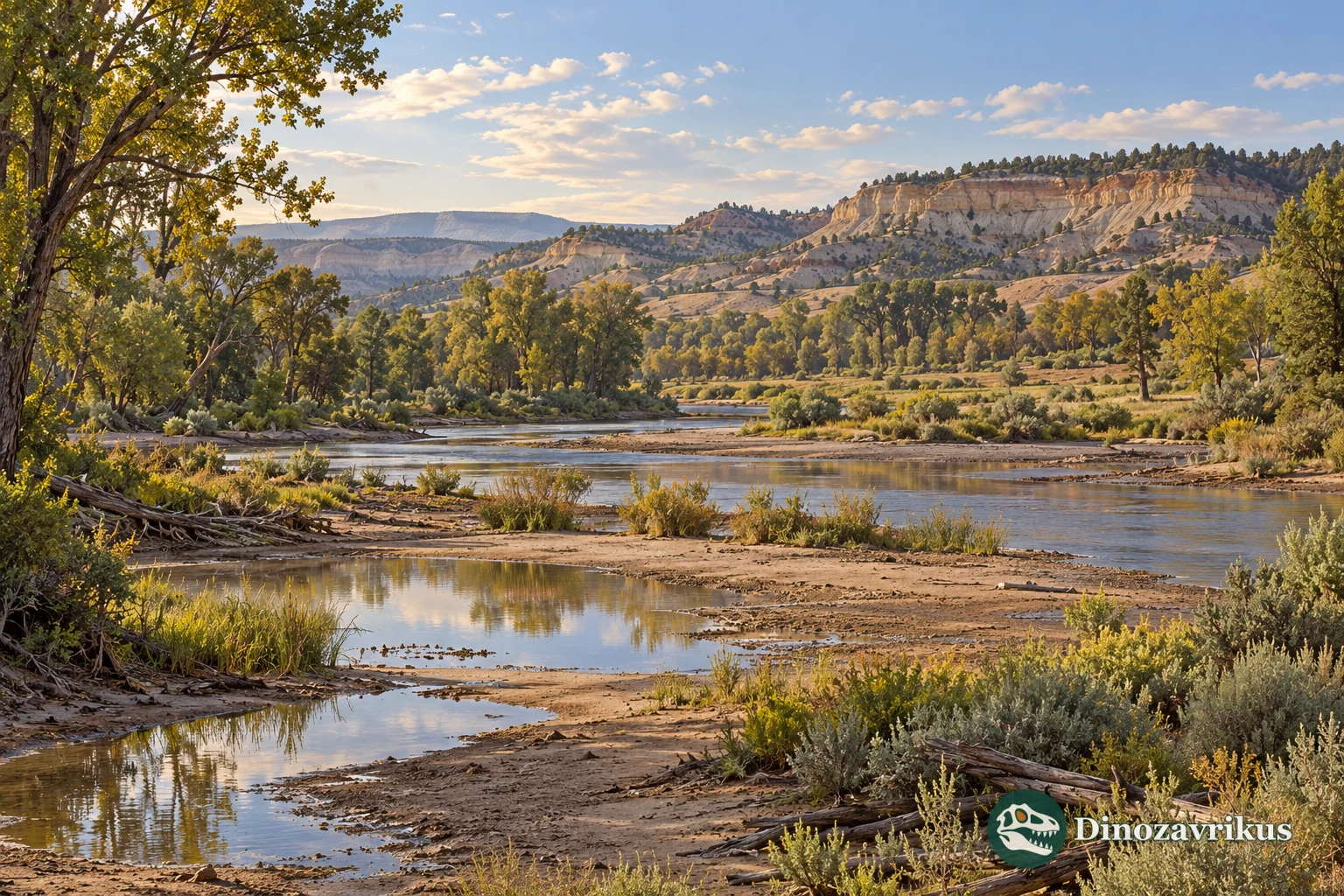
Middle Eocene Wyoming included wooded and floodplain environments, but a particular river scene is conceptual. Fossils do not preserve coat colour, migration, social structure or reproduction for Orohippus. Plant-eating and terrestrial movement fit the anatomy; detailed behaviour remains uncertain.
Frequently asked questions
When did Orohippus live?
Most established records are from middle Eocene Bridgerian deposits in Wyoming. O. proteros is known from an older horizon.
Was Orohippus a direct ancestor of modern horses?
No such direct link has been established. Analyses place it among branching early equid lineages.
How many toes did it have?
Early equids retained multiple toes, but evidence varies by species and specimen.
What did Orohippus eat?
Its teeth support herbivory but do not identify a precise menu.