

Oryctocephalus was a Cambrian trilobite. The first occurrence of one species in a reference section in China marks the base of the Wuliuan Stage. Shed shells from the same formation preserve clues to how the animal moulted.
Quick facts
| Group | Oryctocephalid trilobites |
|---|---|
| Age | Cambrian, including the Wuliuan Stage |
| Genus named by | Charles Doolittle Walcott, 1886 |
| Type species | Oryctocephalus primus |
| Boundary section | Wuliu–Zengjiayan, Guizhou |
| Shed exoskeletons studied | 88 specimens of Oryctocephalus indicus |
What can the fossils tell us?
Walcott described Oryctocephalus primus from isolated shields in the Pioche Shale.
At the Guizhou reference section, Oryctocephalus indicus first appears in bed 9, 52.8 m above the base of the Kaili Formation.
The trunk and tail often remain together, while pieces of the head are displaced forwards or separated.
The Nevada type and the Himalayan species
Charles Doolittle Walcott established the genus in 1886. The type species, Oryctocephalus primus, is known from separate head and tail shields in the Pioche Shale of Nevada. Frederick Reed described Oryctocephalus indicus in 1910 from Spiti in the Indian Himalaya. To compare similar species, palaeontologists consider the shape of the raised centre of the head, how its transverse furrows connect and the number of trunk segments.
The 52.8 metre marker
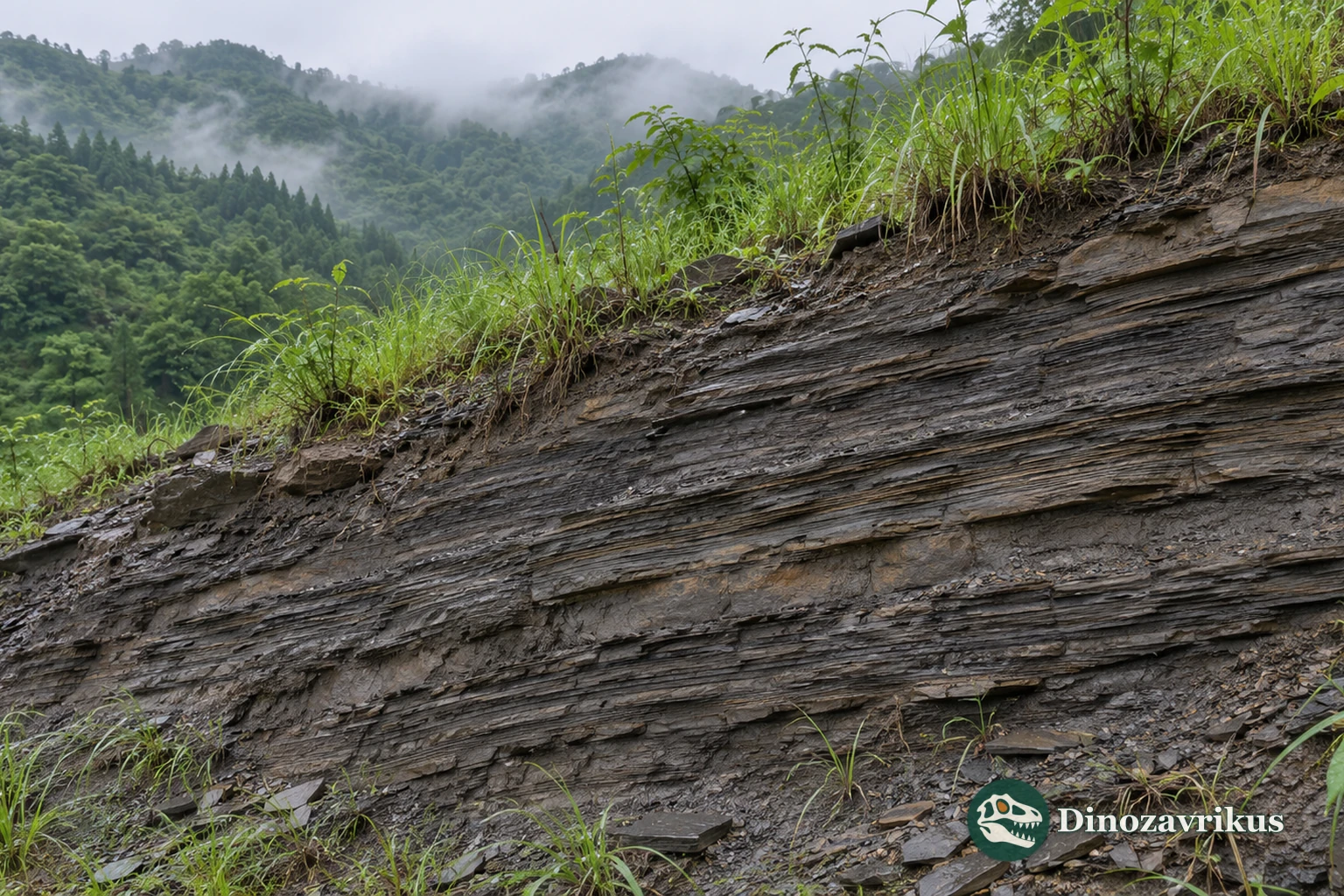
At the Wuliu–Zengjiayan reference section near Balang in Guizhou Province, the lowest occurrence of Oryctocephalus indicus is 52.8 m above the base of the Kaili Formation. The fossil comes from the base of a silty mudstone layer in bed 9. It is a cranidium, the central part of a head shield. Articulated exoskeletons occur higher in the same section.
This level defines the global base of the Miaolingian Series and its first stage, the Wuliuan. Correlating other sections requires checking that the rock record is complete and the fossils can be securely identified. The next stage, the Drumian, begins at a level marked by another trilobite, Ptychagnostus atavus.
How the shell opened during moulting
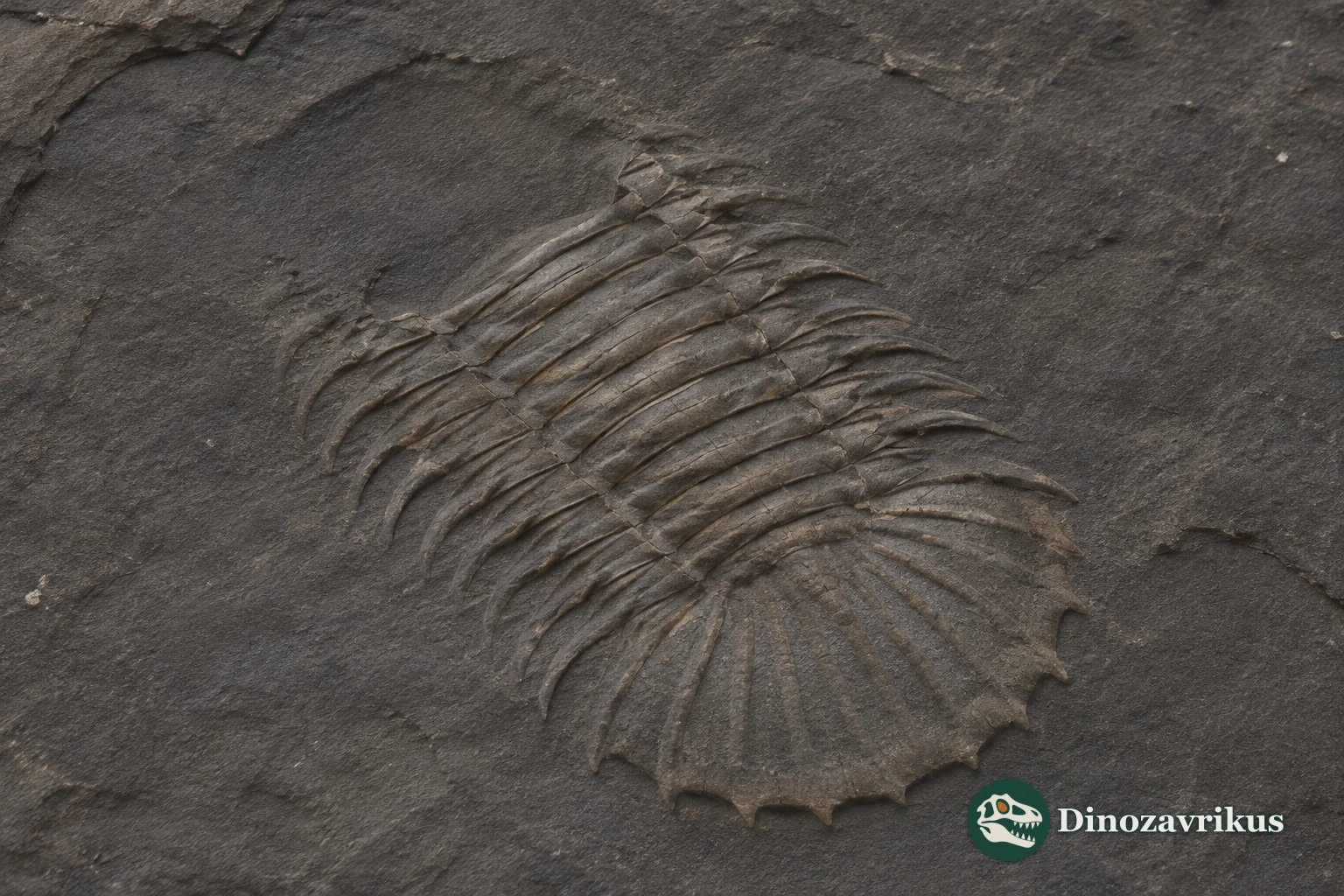
Researchers examined 88 shed exoskeletons from the Kaili Formation. In some specimens the free cheeks and a plate from the underside of the head remain joined ahead of the articulated trunk and tail. The cranidium is often missing.
From these arrangements the researchers inferred that the animal exited through a gap formed as the facial and rostral sutures opened or as the head separated from the trunk. Both mechanisms may have acted in some cases. Burial could shift individual shields further, which limits how much of the movement can be recovered from one fossil.
Frequently asked questions
What is the type species of Oryctocephalus?
Oryctocephalus primus. Walcott described it from Nevada shields in 1886.
Where is the base of the Wuliuan Stage defined?
At Wuliu–Zengjiayan in Guizhou, 52.8 m above the base of the Kaili Formation.
What fossil occurs at the boundary level itself?
A cranidium of Oryctocephalus indicus. Articulated shells of the species occur higher in the same section.
What evidence records moulting in Oryctocephalus?
The researchers studied 88 shed exoskeletons from the Kaili Formation. The sutures and positions of detached pieces indicate where an exit gap opened.