

Palaeoborus was a Miocene North American accipitrid. The type species has an associated partial skeleton with part of the head, giving it a more complete record than many birds from the same deposits. The two other named species are each known principally from one part of the skeleton.
Quick facts
| Type species | Palaeoborus umbrosus |
|---|---|
| Family | Accipitridae |
| Age | Early and middle Miocene |
| Records | New Mexico, Nebraska and South Dakota |
| Type skeleton | AMNH FR 1330 |
| Material of type species | Partial skull and skeleton |
| Comparisons | Old World vultures |
What can the fossils tell us?
The preservation of part of the skull and beak alongside limb bones makes AMNH FR 1330 an unusually informative Miocene bird specimen from the Española Basin.
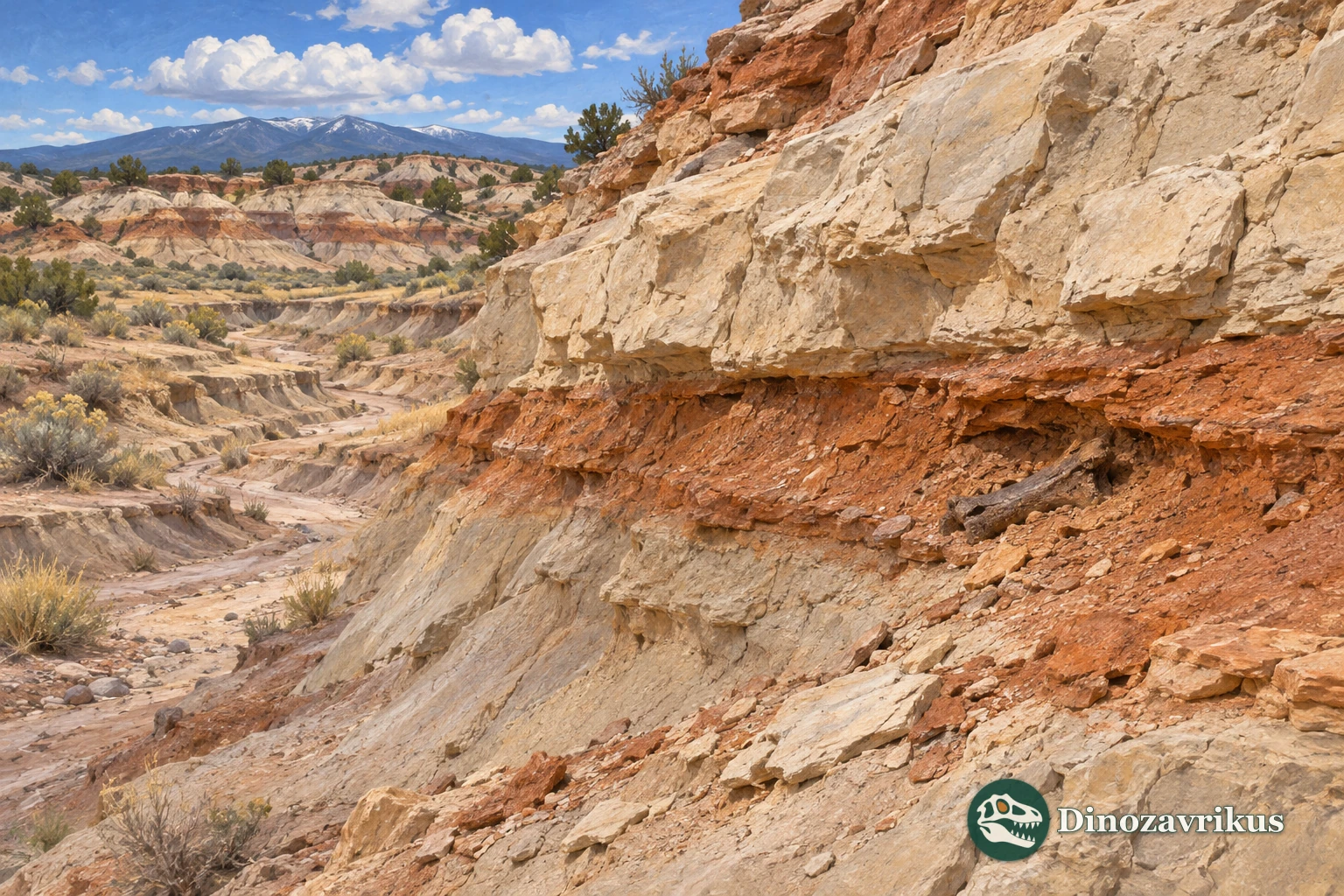
Work on Cope’s fossil sites links the collection to the Pojoaque Member of the Tesuque Formation. Dating the deposits gives the bird a geological context without fixing a precise age for the skeleton.
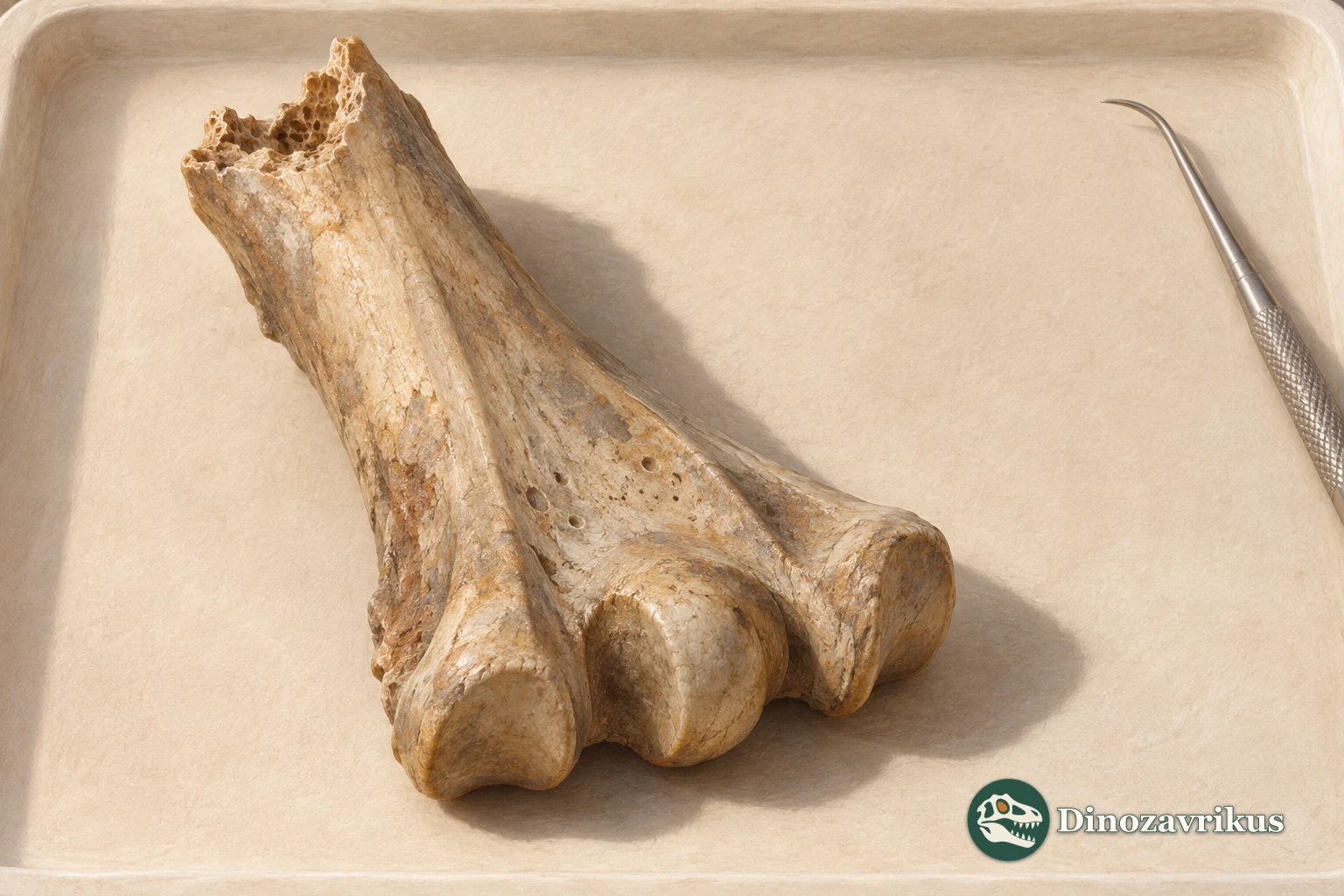
The distal right tarsometatarsus of Palaeoborus howardae has a proportionally larger middle trochlea than the corresponding bone of the type species. The fragment does not document the bird’s other limbs.
From Cathartes to Palaeoborus
Edward Drinker Cope described the type species as Cathartes umbrosus in 1874. He later used the combination Vultur umbrosus. Elliott Coues established Palaeoborus for the species in 1884. Comparative studies place it in Accipitridae among the fossil birds conventionally discussed with Old World vultures. North America once had other such birds, including Neophrontops. The family placement alone gives limited information about what individual birds ate.
The skeleton and its revised age
AMNH FR 1330 is held at the American Museum of Natural History. The specimen includes parts of the skull and left mandible, portions of both humeri, a series of vertebrae and bones of the hindlimb. Cope published the first description without illustrations and figured the material on two plates in 1877.
Later authors used an early Pliocene age for Palaeoborus umbrosus. In 2023, a reassessment of Cope’s material linked his 1874 collecting around the pueblos of Pojoaque and San Ildefonso to the Pojoaque Member of the Tesuque Formation. The regional land mammal assemblage places those deposits in the middle Miocene.
An ankle in Nebraska and a wing in South Dakota
Alexander Wetmore described Palaeoborus howardae in 1936 from specimen USNM V 13897, the lower end of a right tarsometatarsus collected by Theodore Galusha in Dawes County, Nebraska, in 1934. Its width across the trochleae is 20.4 mm. Relative to P. umbrosus, the central trochlea is larger and the outer groove between the trochleae is broader.
Alden Miller and Lawrence Compton described Palaeoborus rosatus in 1939, based on ulna material from near Martin in South Dakota. Its evidence comes from the forearm rather than the foot. It offers no equivalent ankle surface to compare with the specimen Wetmore named.
Frequently asked questions
How many named species are there?
The three named species discussed here are Palaeoborus umbrosus, P. howardae and P. rosatus.
What did Cope originally call the type species?
He named it Cathartes umbrosus. It was later used as the type of Palaeoborus.
What is the preserved part of Palaeoborus howardae?
Its type is the end of a right tarsometatarsus from Dawes County, Nebraska. It preserves the lower joint surfaces of the foot bone.
Can its wingspan be measured?
Neither a complete wing nor a published reliable wingspan estimate is available from the described material.