

Palaeocircus cuvieri is an Eocene bird of prey named from a fragmentary wing bone in the gypsum of Montmartre, Paris. The fossil prompted a comparison with ospreys. Disagreement over that comparison has kept the bird’s family uncertain.
Quick facts
| Species | Palaeocircus cuvieri |
|---|---|
| Group | Bird of prey, family uncertain |
| Age of the type | Late Eocene |
| Type locality | Montmartre, Paris |
| Type material | Right carpometacarpus, MNHN 7988 |
| Named by | Alphonse Milne-Edwards, 1871 |
What can the fossils tell us?
MNHN 7988 preserves part of a right carpometacarpus. Its size and structure can be compared with living birds, but the fossil cannot give a wingspan.
The shape of the bone led to an osprey identification. The longer unions between the second and third metacarpals provide a reason to question that placement.
The Hordle fossil attributed to Palaeocircus is an ungual phalanx. There is no corresponding palm bone in the English find to compare directly with the Paris type.
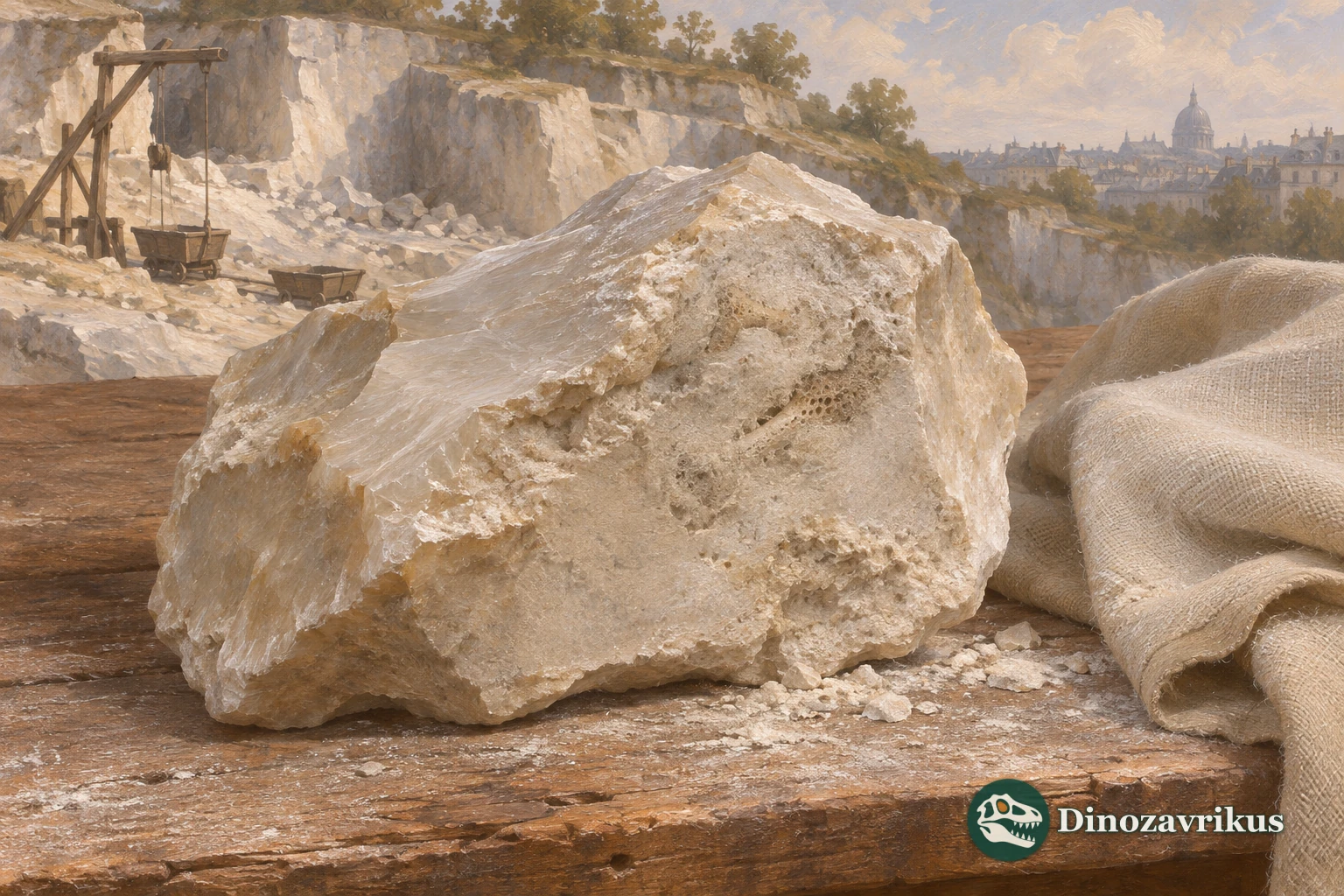
A name from the gypsum of Montmartre
Georges Cuvier illustrated the fossil and compared its size to that of an osprey. Alphonse Milne-Edwards established Palaeocircus cuvieri in 1871 and named it for Cuvier. The name-bearing specimen, MNHN 7988, is held in the Muséum national d’Histoire naturelle in Paris. A carpometacarpus is the fused bone of the hand that helps support the feathers at the end of the wing.
Some historical inventories also list toe bones. The information available on those bones falls short of a securely associated skeleton, so the wing and its joints are discussed from the incomplete carpometacarpus.
How the family assignment changed
Jean Brunet interpreted the French bird as an osprey in 1970. Storrs Olson pointed out that the unions between the second and third metacarpals extend farther than in living Pandion, at both ends of the bone. His 1985 review left the bird without a family assignment. An older placement among hawks and their relatives likewise provides little basis for estimating how it fed.
An Eocene claw bone from Hordle, England, has also been attributed to Palaeocircus. With different parts of the skeleton preserved in France and England, that identification cannot be checked by matching the same element. Milvoides, a separate Hampshire raptor known from a foot bone, presents another case where an isolated element gives limited evidence about family affinities.
Frequently asked questions
Did it take fish like an osprey?
No fossil establishes a fish diet. The osprey identification was proposed from an incomplete wing bone.
Where did the type come from?
The late Eocene gypsum historically quarried on Montmartre, in present-day Paris.
What does the species name commemorate?
The name cuvieri honours Georges Cuvier, who illustrated and discussed the fossil before it received its scientific name.
Which part of the wing survives?
The specimen is an incomplete carpometacarpus from the right hand, near the outer end of the wing.