

Palaeorhincodon is an extinct shark genus described from isolated teeth. Its fossil record now includes several regions and geological intervals, from the Palaeocene of North Africa to a Miocene site in Portugal. Those finds help track the history of the genus, but they do not preserve a body outline, total length or a direct record of its diet.
Quick facts
| Type species | Palaeorhincodon wardi Herman, 1974 |
|---|---|
| Genus established | Jacques Herman, 1974 |
| Placement | Orectolobiformes; family assignment has changed |
| Type locality | Brussels Sands at Woluwe-Saint-Lambert, Belgium |
| Type material age | Lutetian, Middle Eocene |
| Main evidence | Isolated teeth; no securely referred skeleton |
| Named species | Four, including a Miocene species from Portugal |
| Body size | Unknown; preserved teeth are millimetre-scale |
What can the fossils tell us?
The teeth show a principal cusp, variable lateral cusplets and a distinctive root. Their proportions differ among species and jaw positions; they cannot reveal the whole animal.
The type material is Lutetian in Belgium. Other teeth come from Palaeocene and Eocene deposits in Morocco; a species from Tortonian Portugal was described in 2025.
Herman placed the genus in Orectolobidae in 1974. The 2025 description of a Portuguese species places it in Rhincodontidae. Tooth resemblance alone does not demonstrate direct ancestry of the living whale shark.
A genus founded on a few teeth
Belgian palaeontologist Jacques Herman established Palaeorhincodon in 1974. He compared small teeth from the Brussels and Lede Sands with those of the living whale shark, but noted differences and proposed a separate genus. The type species is P. wardi. Its name honours British researcher David Ward, who had told Herman about similar British fossils; Herman did not examine those specimens for the original description.
The holotype of P. wardi is one tooth from the Brussels Sands near Woluwe-Saint-Lambert. Herman listed it as 88 E 129-1 in the fossil-vertebrate collection. Other teeth were assigned by comparing their shape and proportions, not because they formed one articulated set. Later descriptions drew on teeth from other regions, so each species and horizon has to be considered separately.
What the teeth preserve
Herman described a relatively low crown with one main cusp and a pair of lateral cusplets. Their development varies: they are nearly reduced on some upper anterior teeth, while teeth attributed to the lower jaw are more robust and retain more visible cusplets. The root has distinct lobes and a central groove. These characters help compare specimens, but the position of an isolated tooth in a jaw remains an interpretation.
The species P. fialhoi, named in 2025, has a different combination of features. Its anterior tooth is high, smooth and lacks lateral cusplets; a lateral tooth retains small cusplets near the cutting edges. Only two teeth were described as the type material. Their crowns are millimetre-scale, a measurement of teeth rather than of the shark's body.
From Belgian sands to Portugal
The type species P. wardi comes from Lutetian deposits of Belgium. The 2025 review lists P. daouii from the Thanetian of Morocco and P. dartevellei from the Ypresian of Morocco. The new species P. fialhoi was collected at Leixão dos Alhos, near Oura and Albufeira in southern Portugal. Its two teeth came from Bed 3 of the middle member of the Cacela Formation, assigned to the Tortonian of the Late Miocene.
The Portuguese material is the first published Miocene record for the genus and extends its known time range. The age comes from the containing stratum, not from the tooth shape. The species did not necessarily overlap in time or use the same habitat. The Cacela assemblage as a whole is interpreted as a shallow neritic subtropical, probably tropical, marine fauna; that is an environmental inference from the community, not a direct measurement for one shark.
Classification, feeding and the missing body
The genus's classification changed as researchers interpreted the teeth differently. Herman assigned it to Orectolobidae in 1974; the 2025 paper places it in Rhincodontidae. The name and comparison with the whale shark do not mean that Palaeorhincodon was its direct ancestor. Other fossil sharks such as Pararhincodon and Palaeohypotodus likewise show why close tooth comparisons need diagnostic characters.
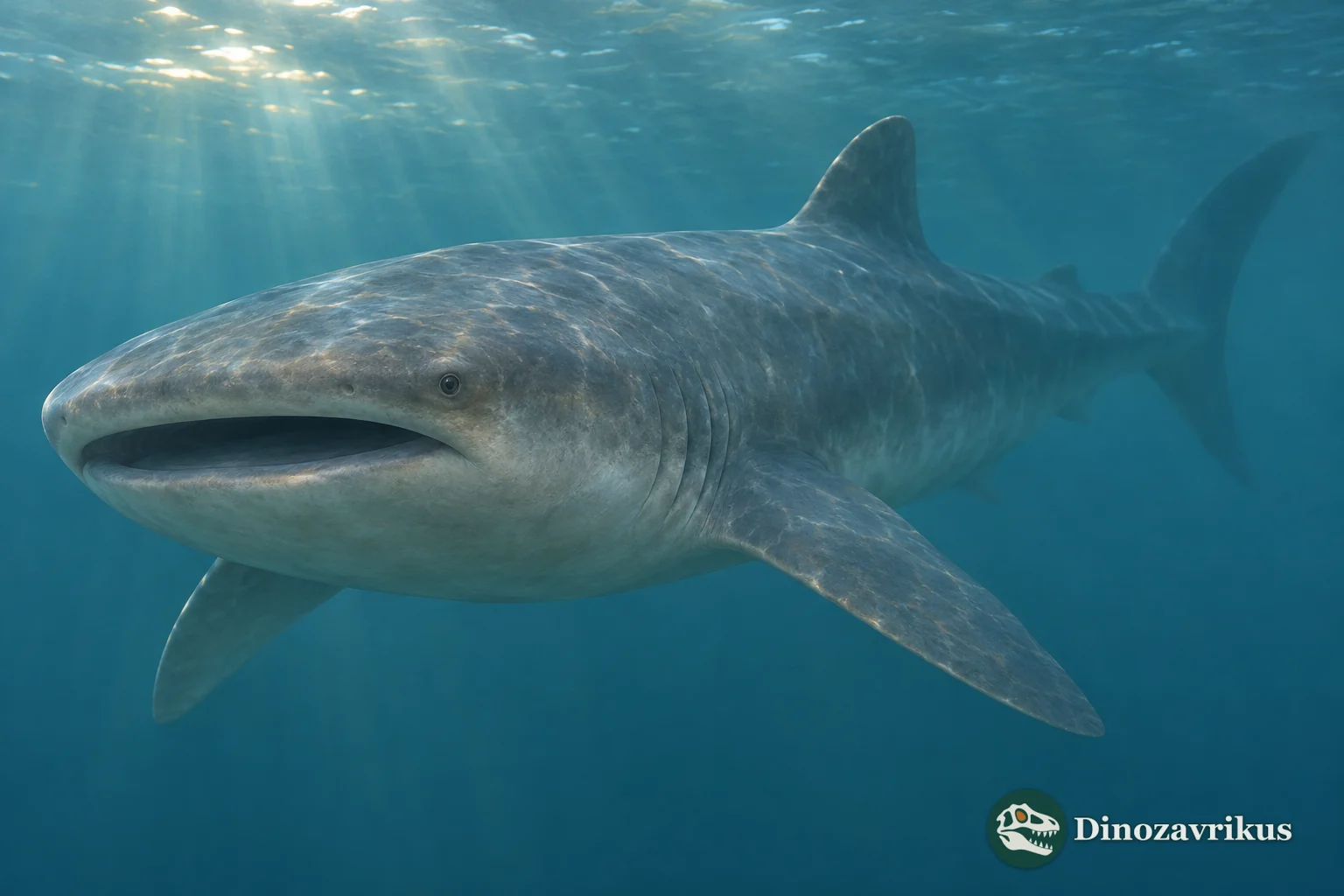
No articulated skeleton securely fixes body proportions, fin shape or total length. Teeth do not establish colour, age, speed or social behaviour. Nor do they prove filter feeding: a resemblance to a living whale shark is not direct dietary evidence. The cover shows one possible shark-like outline, while its soft tissues and detailed anatomy remain artistic choices.
Frequently asked questions
Where was the type specimen of Palaeorhincodon found?
The holotype of Palaeorhincodon wardi is an isolated tooth from the Brussels Sands near Woluwe-Saint-Lambert, Belgium, in Lutetian strata of the Middle Eocene.
Is Palaeorhincodon known from a complete skeleton?
No. The descriptions discussed here are based on teeth. No securely referred skeleton establishes the genus's dimensions or body proportions.
What changed with the Portuguese species?
A 2025 paper described P. fialhoi from two teeth in the Tortonian Cacela Formation. It is the first published Miocene record for the genus.
Was Palaeorhincodon an ancestor of the whale shark?
That has not been established. Researchers compared their teeth, and family-level classifications have changed; a direct ancestor-descendant relationship is not demonstrated.