

Paleotomus is a Paleocene genus of eutherian mammals known chiefly from isolated teeth and small jaw fragments in western North America. Its fossil record has prompted repeated changes in names and family placement: a species first described in another genus was later transferred, and additional tooth-based species were recognised at separate localities.
The genus belongs in the ancient mammal catalogue. The available teeth permit comparisons of crowns and chewing surfaces, but they do not provide a complete skull, postcranial skeleton, dependable body length or mass.
Quick facts
| Scientific name | Paleotomus Van Valen, 1967 |
|---|---|
| Type species | P. senior, first named Palaeosinopa senior |
| Group | Eutheria; family assignment has varied |
| Age | Paleocene; local ages differ among species and sites |
| Range | Montana, Wyoming and Alberta, North America |
| Type material | AMNH 33990, an isolated lower molar from Scarritt Quarry |
| Additional record | P. junior from Cochrane 2 includes several tooth positions |
| Main limitation | No complete skeleton or reliable whole-body size estimate |
What do the Paleotomus fossils show?
Paleotomus senior is based on AMNH 33990 from Scarritt Quarry, Montana. The crown can be compared with other molars, but the specimen is not a jaw, skull or skeleton.
The holotype of P. junior, UALVP 28556, is a left m3 from the Paskapoo Formation in Alberta. Other teeth from the locality were referred to the species; they do not reveal body proportions.
The history includes Palaeosinopa simpsoni, which Gingerich treated as a synonym of P. senior. Several other named species remain associated with distinct, mostly dental samples.
Different authors placed the genus among palaeoryctids, pantolestids or cimolestids, while later work left family placement uncertain. The available material is mostly teeth, so these hypotheses remain dependent on character interpretation.
From Palaeosinopa to Paleotomus
George Gaylord Simpson described Palaeosinopa senior in 1937 from an isolated molar, AMNH 33990, collected at Scarritt Quarry in Montana. Leigh Van Valen established the genus Paleotomus in 1967 and transferred the species to its current combination, P. senior. The name-bearing specimen is a tooth, commonly identified as a lower molar; it does not preserve the jaw that would confirm its position in a row.
The naming history includes another tooth-based form. Van Valen called upper teeth from Scarritt Quarry Palaeosinopa simpsoni; Philip Gingerich later treated that name as a synonym of Paleotomus senior. A synonymy is a taxonomic judgment that the names refer to one species, not a second fossil or a second animal discovered at the site.
Other species names were proposed from separate localities and samples. Their existence should not be mistaken for a complete record of the genus: a name based on one or a few teeth carries less information than an associated jaw or skeleton.
Cochrane 2 and Paleotomus junior
In 2002, Craig Scott, Richard Fox and Gordon Youzwyshyn described Paleotomus junior from Cochrane 2 in Alberta's Paskapoo Formation. The holotype, UALVP 28556, is a left third lower molar. The authors also referred additional isolated teeth and deciduous teeth from the same local fauna, expanding the set of dental positions available for comparison.
Cochrane 2 is assigned to the earliest Tiffanian using its associated mammal fauna. That regional biochronologic age applies to the locality and its assemblage; it is not a precise calendar date for an individual Paleotomus. Scott and colleagues also found the teeth of P. junior smaller than those of several other named species. This is a tooth-size comparison, not a measurement of total body size.
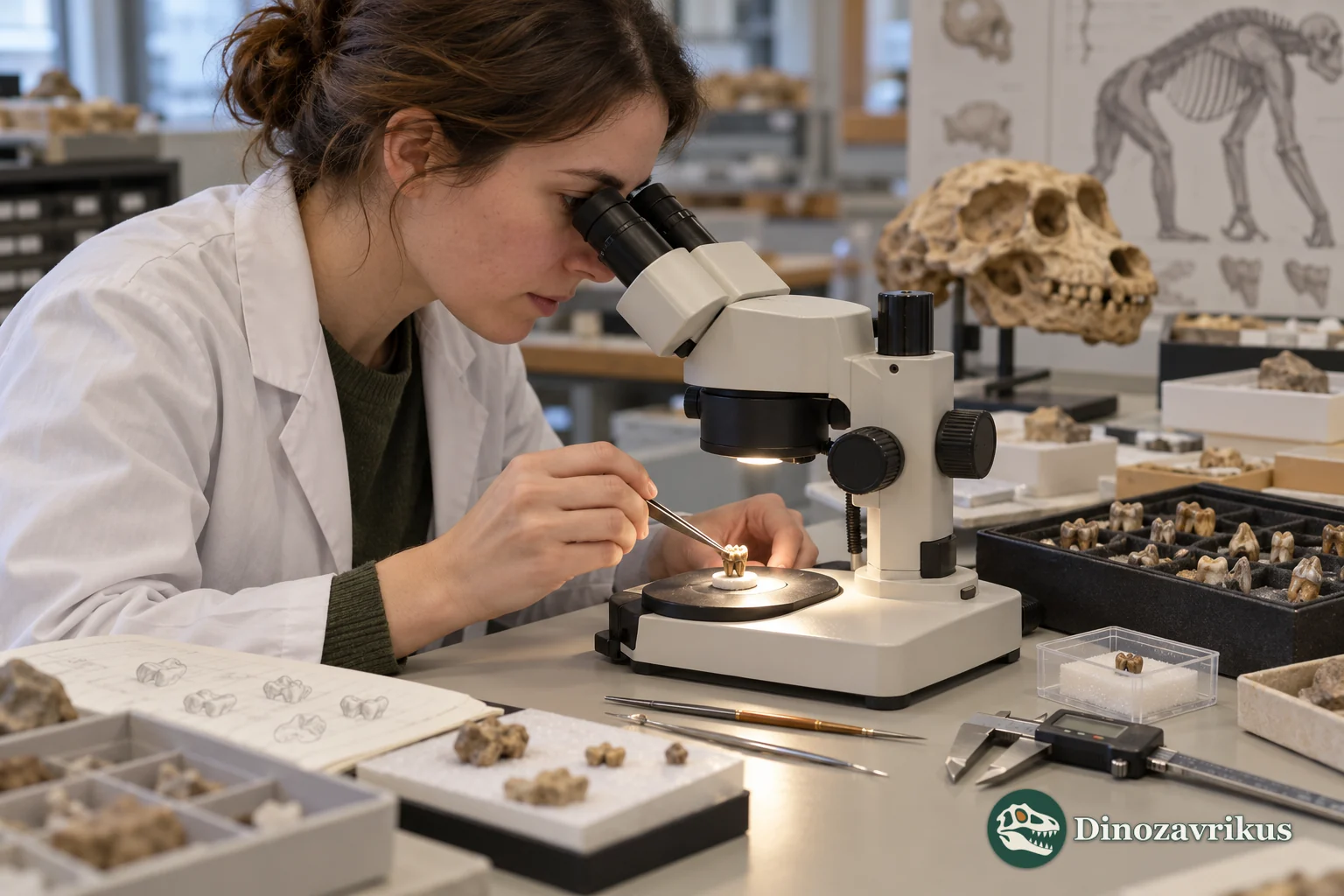
Dental anatomy and the limits of a diet inference
Researchers distinguish the genus by combinations of features on upper and lower molars, including the arrangement and relative height of cusps and the shape of the talonid basin. Those structures show how the teeth could meet and process food. Similar dental patterns can evolve in unrelated mammals, however, so a resemblance is a character to test rather than proof of close ancestry.
Shearing crests and cusp geometry have been interpreted as compatible with processing animal matter, but no stomach contents, prey remains, or direct feeding traces identify a Paleotomus menu. Tooth form alone cannot decide how much of the diet was insects, other small animals or plant material. It also cannot establish activity patterns, habitat preference or social behaviour.
Species names and changing classification
The literature has used names including P. senior, P. milleri, P. carbonensis, P. radagasti and P. junior. These names come from different fossil samples and historical taxonomic treatments. Their list is not a guarantee that every species is equally well diagnosed or that all authors accept identical boundaries.
Family placement has shifted as classifications changed. Paleotomus has been discussed among palaeoryctids, pantolestids and cimolestids; Scott and colleagues placed P. junior among Eutheria of uncertain family. The stable statement is narrower: it is an early eutherian genus recognised mainly through dental anatomy, while its deeper relationships remain unresolved.
That uncertainty also matters when comparing its evolutionary position with living placentals. Eutheria includes the lineage leading to placentals and extinct relatives outside the crown group. A tooth-based assignment to Eutheria does not by itself show that Paleotomus was a member of crown Placentalia.
Localities, environment and reconstruction
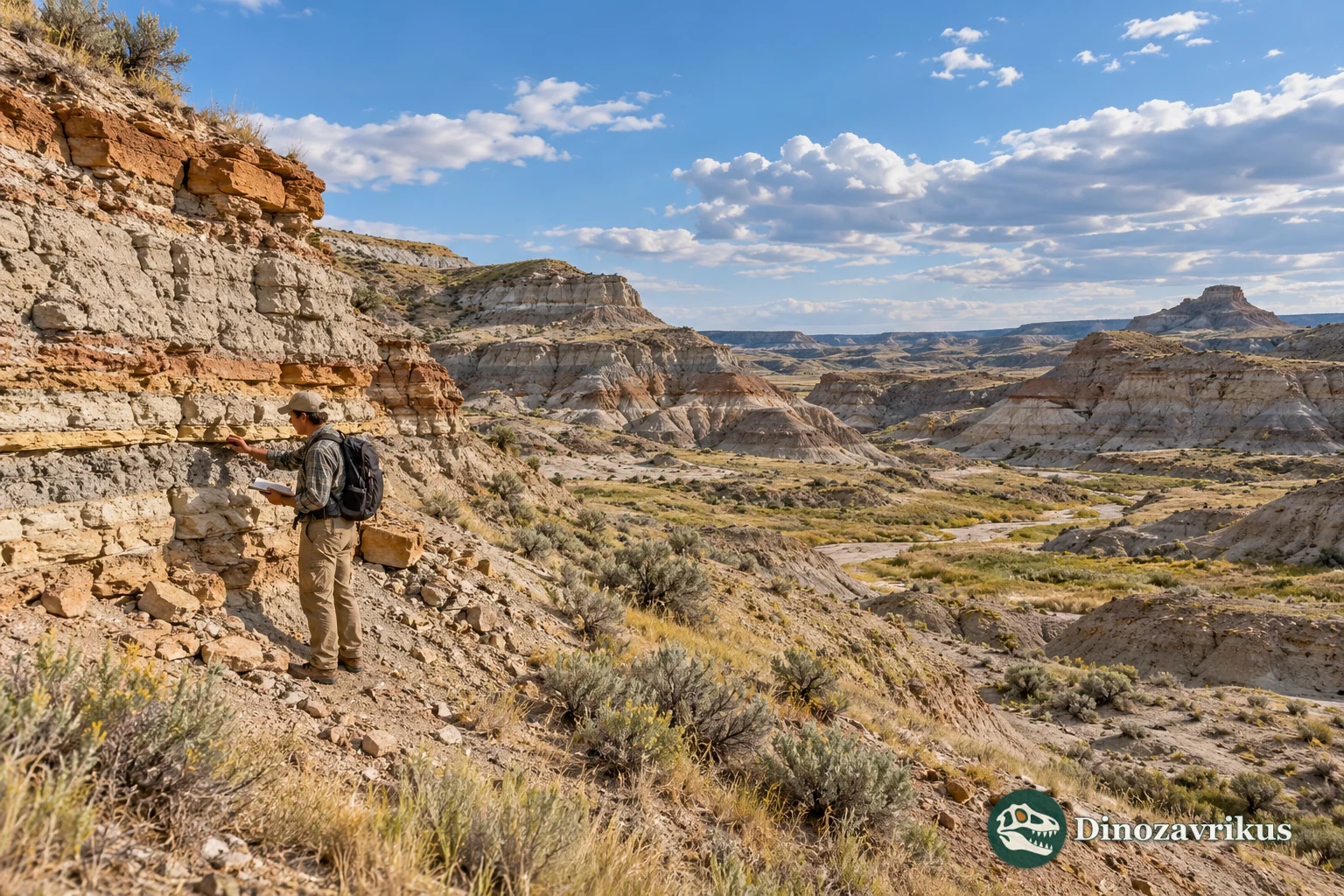
Reported occurrences come from Paleocene localities in the western interior of North America, including Scarritt Quarry in Montana, other Wyoming material, and Cochrane 2 in Alberta. The formations and local faunas have their own stratigraphic contexts. Combining those records into one continuous range can hide both age differences and uncertainty in tooth referrals.
At Cochrane 2, Paleotomus occurred within a diverse mammal community preserved in the Paskapoo Formation. The site and its associated fossils supply the environmental and age framework; the animal's isolated teeth do not independently reconstruct a specific habitat or landscape. A generalized Paleocene scene is therefore contextual artwork, not a portrait of the quarry or a documented encounter.
With no skull or limb bones, an artist must borrow a body plan from other small mammals. Fur, ear shape, tail, gait, colour and body length are unpreserved for Paleotomus. Such images can help readers imagine a small mammal, but they cannot be used as evidence about this genus.
Frequently asked questions
Is a complete Paleotomus skeleton known?
No. The name-bearing and referred material is primarily isolated teeth, with some small jaw fragments; no complete skeleton establishes the animal's proportions.
How large was Paleotomus?
A dependable body length or mass has not been established. Published measurements compare teeth, which cannot be converted into a precise body size without suitable associated bones.
What did Paleotomus eat?
The molars have been interpreted as compatible with shearing food, but no direct contents or feeding traces identify a specific diet.
Why has its family placement changed?
Most of the evidence is dental, and similar tooth features can occur in several early eutherian lineages. Authors have proposed different family placements or left it uncertain.