

Paludititan nalatzensis lived in what is now Romania in the Maastrichtian, when the Hațeg Basin lay on an island. Its only confidently identified skeleton preserves parts of the back, tail and pelvis. Re-examination confirmed its identity as a distinct titanosaur while revising several characters proposed in the original description.
Quick facts
| Group | Sauropods (Titanosauria) |
|---|---|
| Age | Late Cretaceous (Maastrichtian) |
| Region | Europe (Hațeg Basin, Romania) |
| Diet | Herbivore |
| Type species | Paludititan nalatzensis |
| Holotype | UBB NVM 1, a partial skeleton |
| Locality | Nălaț-Vad, lower Râul Mare beds |
| Estimated length | About 3.5–4 m, based on vertebral comparisons |
What can the fossils tell us?
Some of the tail vertebrae were articulated and other bones were nearby. Their distribution and anatomical consistency underpin the association.
An apparent extra plate on a dorsal vertebra was interpreted as displacement during burial. The shapes of some vertebral joints and pelvic structures still support the species diagnosis.
The vertebral arches and centra had fused, suggesting an advanced stage of growth. A microscopic study of the bone would help establish whether growth had ended.
The skeleton in floodplain sediment
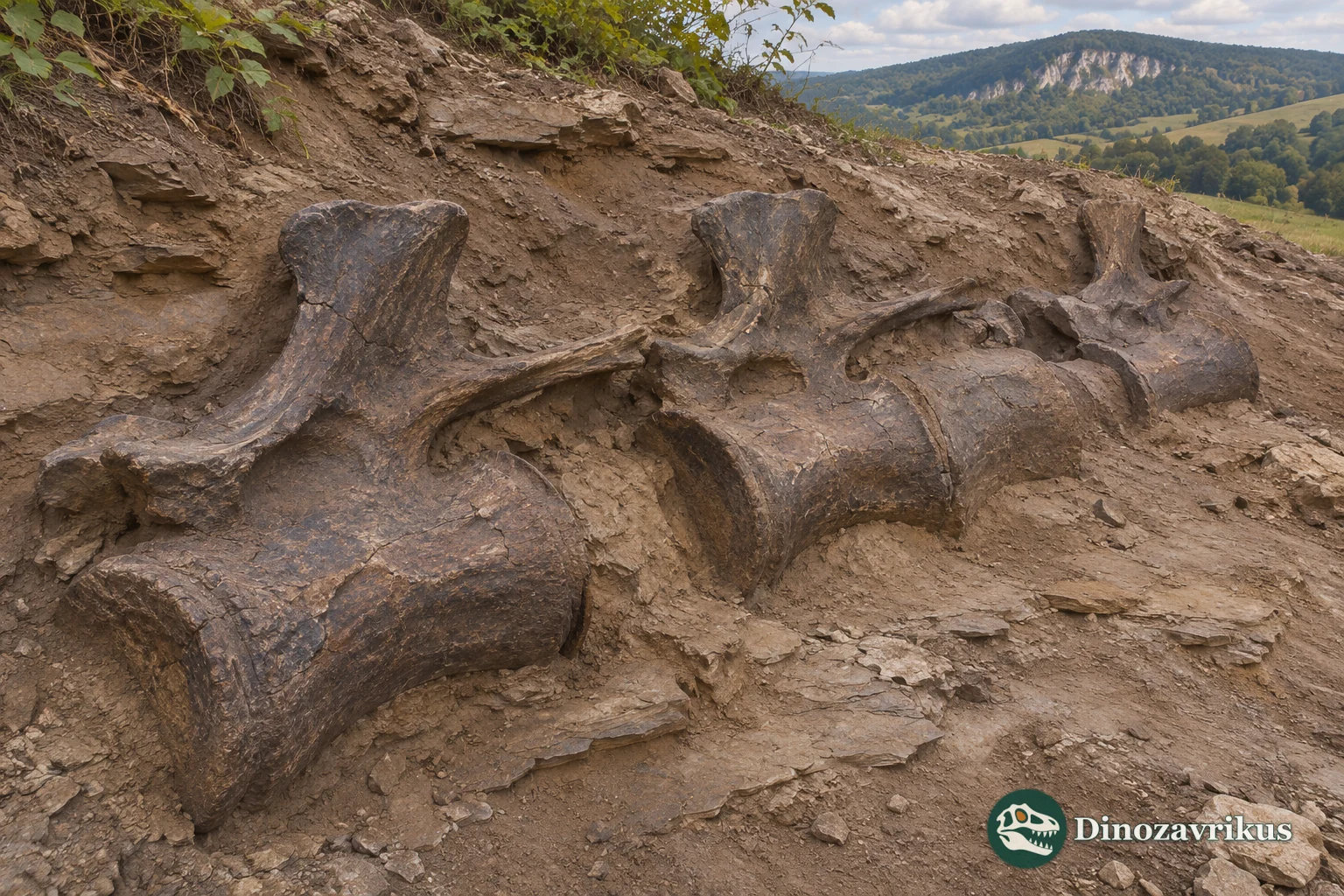
Zoltán Csiki, Vlad Codrea, Cătălin Jipa-Murzea and Pascal Godefroit named Paludititan in 2010. Its species name refers to Nălaț-Vad, the site where the bones were recovered. The Babeș-Bolyai University collection holds them under UBB NVM 1. The material includes three dorsal vertebrae, ribs, caudal vertebrae and chevrons, pelvic bones and part of a femur.
The 2025 revision correlated the locality with a dark ancient soil in the lower Râul Mare beds. The site falls within a regional interval from the later part of the early Maastrichtian into the early part of the late Maastrichtian. The floodplain context records where the bones were buried.
Revising the diagnosis
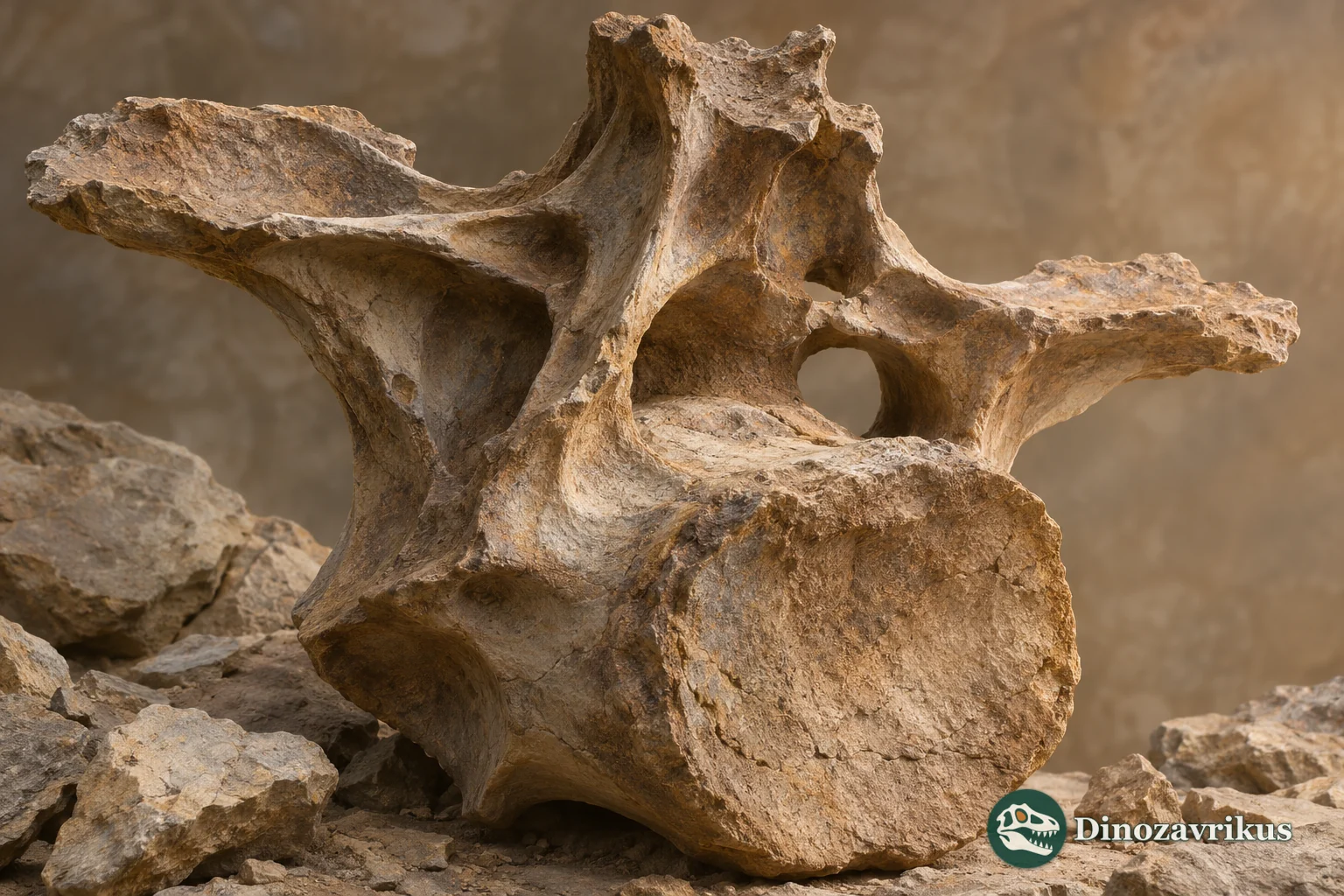
The original team recognised what looked like an extra bony lamina in the back. The 2025 team found it better explained by a genuine lamina displaced after burial. The revised diagnosis includes the weakly convex front ends of the dorsal centra and an unusually robust projection of the ilium that joins the ischium.
The middle of the tail includes flat-ended vertebrae among more usual ones with a front socket and rear projection. Additional finds have shown that this pattern occurs in other titanosaurs from the basin. It no longer suffices to assign a separate series of isolated tail bones to Paludititan.
Size and comparison with Magyarosaurus
The bones most directly comparable with those of Magyarosaurus are from the back and tail. The 2025 study estimated a length of about 3.5–4 metres for Paludititan from these comparisons. Fusion between the arches and centra suggests an advanced stage of growth. Histology has yet to establish whether the individual was fully mature.
The same revision concluded that Paludititan and Magyarosaurus were distinct. Most securely identified Magyarosaurus specimens are from older beds in the basin. Their small size alone provides little evidence about how closely they were related or whether they shared a floodplain at the same time.
Frequently asked questions
Is Paludititan another name for Magyarosaurus?
The 2025 revision retained Paludititan as a distinct genus and species. The most useful comparisons use corresponding bones, including the dorsal vertebrae.
Has the skull been found?
The securely identified specimen lacks skull bones. The shape of the head in illustrations is inferred from other titanosaurs.
What does nalatzensis refer to?
It refers to Nălaț-Vad, the fossil locality in the Hațeg Basin.
Was the individual an adult?
Fused parts of the vertebrae suggest an advanced growth stage. Examining bone tissue would help determine if growth had stopped.