

Panthasaurus was a Late Triassic temnospondyl from central India. Its skulls were assigned to several metoposaurid genera before comparisons of their bones supported a new name. Thin sections cut from its fossil bones later provided a different kind of evidence, recording changes in the pace of growth.
Quick facts
| Group | Temnospondyls, metoposaurids (Metoposauridae) |
|---|---|
| Age | Late Triassic, Carnian |
| Region | Asia, Pranhita–Godavari Basin (India) |
| Type species | Panthasaurus maleriensis |
| Scientific name | Panthasaurus |
| Diet | Exact prey is unknown |
What can the fossils tell us?
The holotype, ISI A 56, preserves parts of the skull roof and palate. Other specimens supplied material for comparison and histological study.
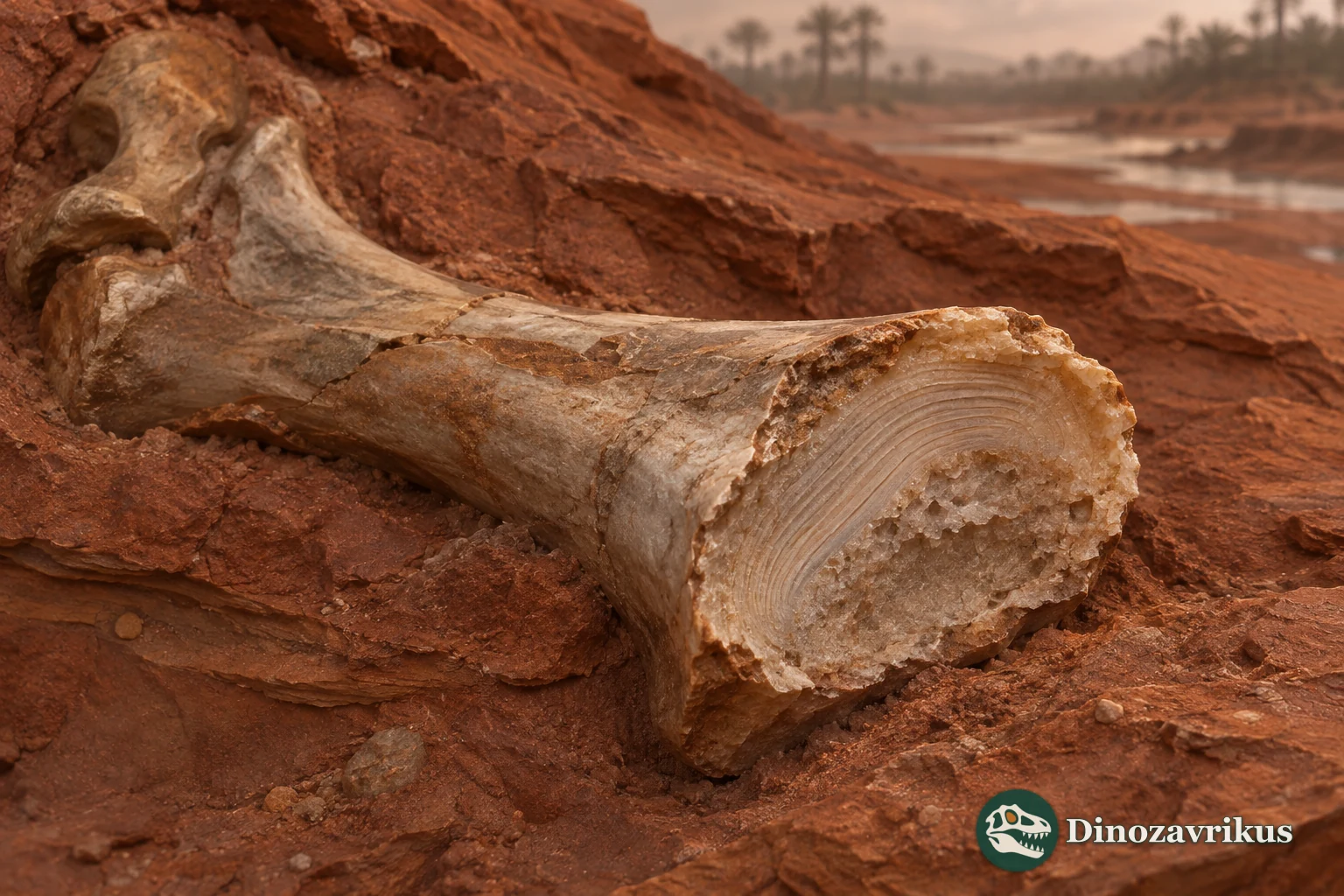
Changes in bone tissue mark shifts in the pace of growth. The pattern is consistent with growth varying over the course of a year.
Wet and dry seasons could have affected growth. An individual band cannot quantify climate or establish the length of either season.
Fossils from the Pranhita–Godavari Basin
The specimens come from the lower part of the Maleri Formation, which is assigned to the Carnian stage of the Late Triassic. The type skull, ISI A 56, preserves parts of the skull roof and palate. A series of cranial bones made it possible to compare the Indian animals with metoposaurids from other regions.
What the thin sections revealed
In 2020 researchers sampled eight skeletal elements, including upper arm bones, a femur, a partial ulna, a tibia, a rib, part of the hip and a vertebral element. Limb bone sections show alternating zones of faster growth and bands formed as growth slowed. Remodelling toward the interior of bones may remove part of the early record.
How the genus was named
The Indian species was first described in 1965 as Metoposaurus maleriensis and later placed in other genera. Sanjukta Chakravorti and Dhurjati Prasad Sengupta compared the shapes and measurements of several skull bones and proposed Panthasaurus. They evaluated combinations of characters because individual traits can vary. The position of the lacrimal bone at the eye socket is variable in European Metoposaurus, for example. Later researchers have continued to discuss how to classify the Indian species.
Seasonal growth
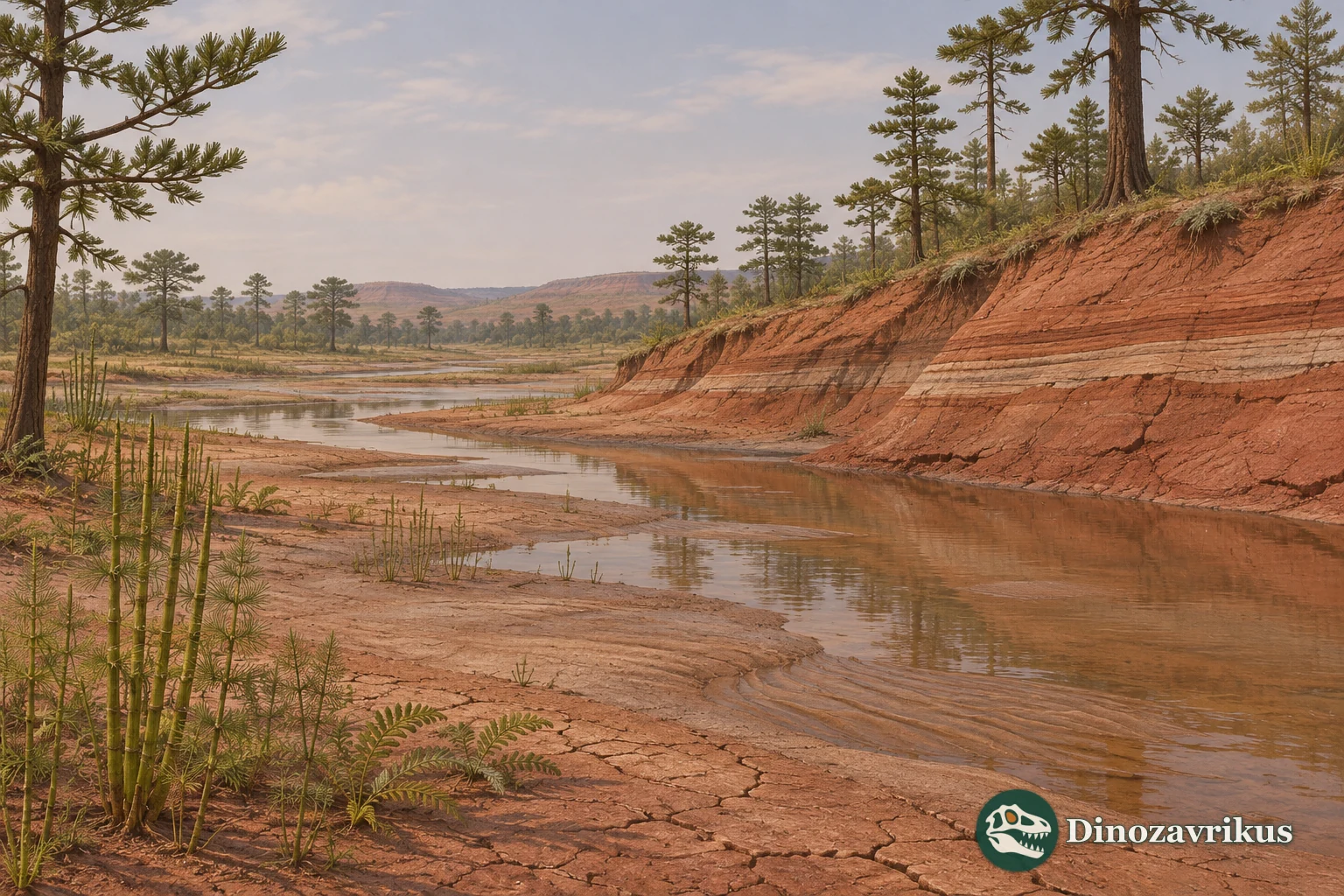
The palaeohistologists interpreted the repeated shifts in growth in the light of evidence for wet and dry seasons in the Maleri floodplain. The bands also vary with skeletal element and stage of growth, so they give only a partial account of the animal’s environment.
Frequently asked questions
Where did Panthasaurus live?
The known fossils are from the Pranhita–Godavari Basin in central India.
What was the species first called?
It was named Metoposaurus maleriensis in 1965. A later revision proposed Panthasaurus for the Indian species.
What did the bone sections reveal?
They show alternating zones formed at different growth rates. The authors proposed that seasonal conditions helped shape the pattern.
When did Panthasaurus live?
The fossils from the Lower Maleri Formation are assigned to the Carnian stage of the Late Triassic.