

Paracamelus was an extinct camelid known from late Miocene and Pliocene Eurasian fossils. The Spanish P. aguirrei is documented by teeth and limb bones at Venta del Moro. Separate Arctic fossils have been linked to the wider lineage, but not to the Spanish species. The cover suggests a possible outline; hump shape and coat color are unknown.
These fossils come from different times and habitats. They do not form one complete skeleton or record the journey of an individual camel.
Quick facts
| Group | Camelidae, camelid lineage Camelini |
|---|---|
| Spanish species | Paracamelus aguirrei |
| Site | Venta del Moro, Valencia, Spain |
| Site age | Late Miocene, about 6.23 million years |
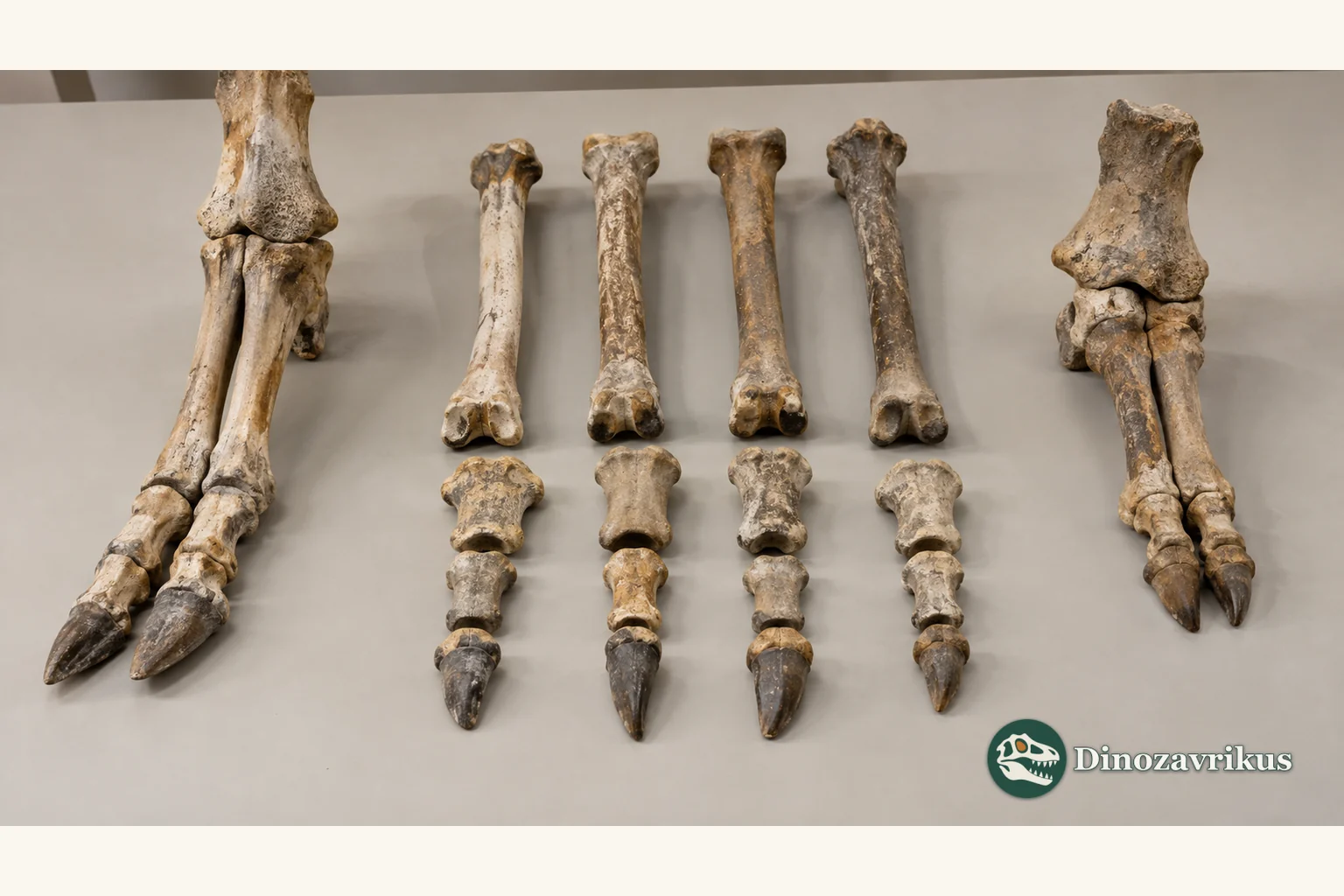
| Material | Teeth and wrist, metapodial, ankle and toe bones |
| Arctic fossils | Incomplete bones close to the Paracamelus lineage |
| Soft tissue | Hump size and coat are not preserved |
What can the fossils tell us?
Venta del Moro yielded P. aguirrei teeth and hand and foot bones. Their dimensions support comparisons, not a precise living height for every animal.
Old World fossils support dispersal of the lineage. Beringian movement and routes into Iberia are inferred from age and anatomy.
An incomplete Ellesmere Island tibia was linked to the Paracamelus line by form and collagen markers, not identified as the Spanish species.
The camel at Venta del Moro
Venta del Moro in Valencia is a late Miocene locality estimated at about 6.23 million years old. P. aguirrei was first defined from upper teeth, a lower third premolar and some other skeletal elements. A later study described additional wrist, metacarpal, ankle and toe bones.
Their measurements show a large camelid comparable to some giant fossil forms. This is a size comparison based on bones, not a measured height of a living animal. Variation might involve body size or sex, but individual bones cannot all be sexed. North American Procamelus helps frame camelid history without documenting a direct ancestor of each Spanish camel.
Dispersal across continents
Camelids originated in North America. Forms attributed to Paracamelus appeared in the Old World by the late Miocene, and Turkish finds have been compared with the Spanish species. Movement through Beringia and across Eurasia is inferred from sites and their ages. The exact route into Iberia remains debated.
Later North American Camelops is a different genus. Proteins and genomes help compare lineages, but time and locality must be assessed separately. A Yukon Pleistocene bone is not automatically P. aguirrei from Miocene Spain.
A warm High Arctic record
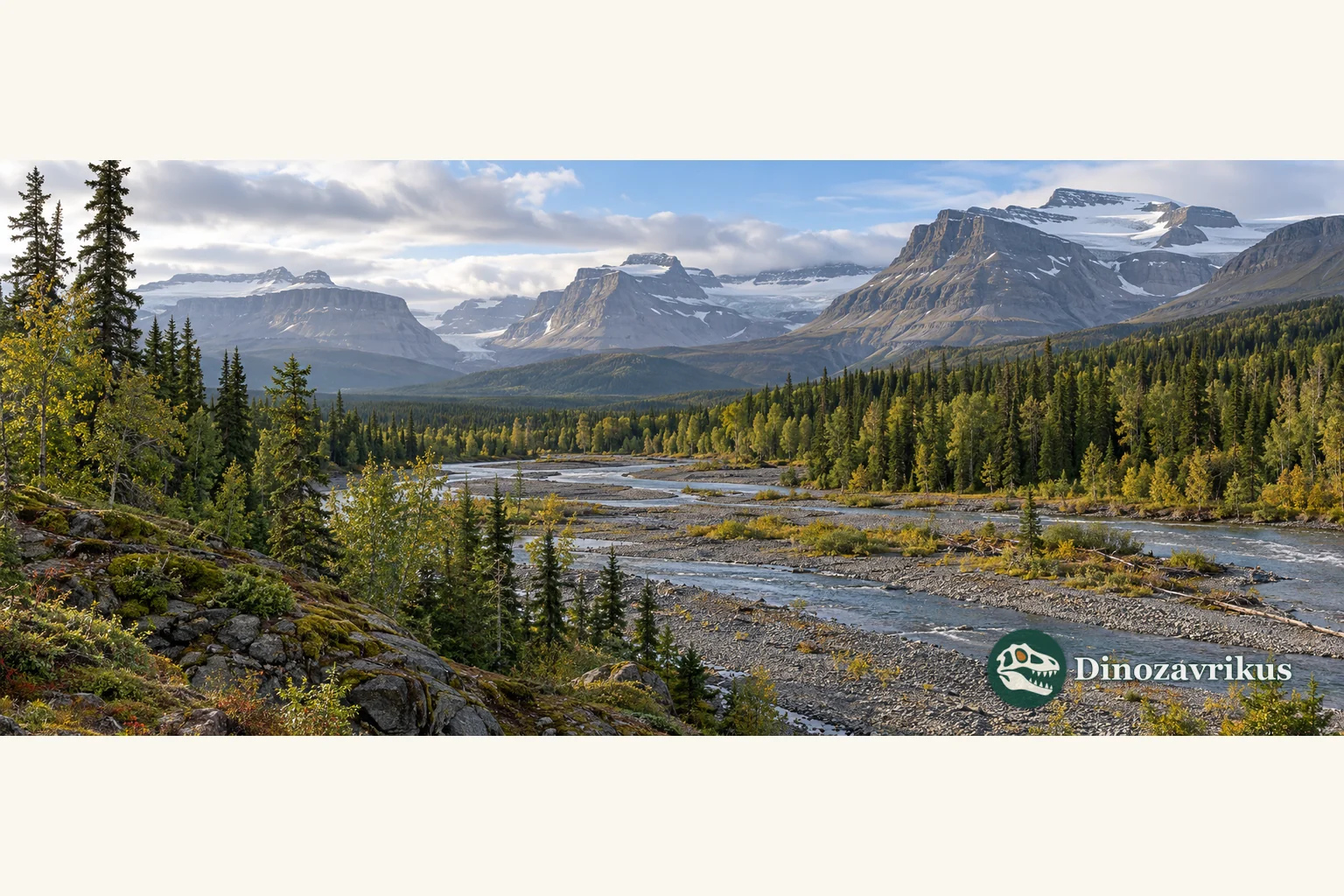
Fragmentary large camelid tibia remains from Ellesmere Island were recovered from mid-Pliocene deposits near 3.5 million years old. Anatomy and collagen peptide markers link the animal to the Paracamelus lineage. The fragments do not represent a whole skeleton and were not named as the Spanish species.
The mid-Pliocene Arctic supported a forested river landscape unlike today's tundra. Venta del Moro records a savanna-woodland mosaic instead. The sites should not be merged into one environment; younger northern camel fossils fall within the Quaternary.
Features the bones do not preserve
Teeth and limbs inform kinship, size and movement. They do not reveal hair thickness, fatty hump shape or seasonal travel. A place near the ancestry of modern Camelus is a phylogenetic interpretation, not an observed continuous family tree.
Frequently asked questions
Where was Spanish Paracamelus found?
P. aguirrei is documented at Venta del Moro in Valencia, where teeth and many foot bones were recovered.
How old is Venta del Moro?
The late Miocene site is estimated at about 6.23 million years, an age for the locality rather than each animal.
Was the Arctic camel the same species?
It was linked to the Paracamelus lineage, but incomplete Ellesmere bones were not identified as Spanish P. aguirrei.
Do fossils show its hump?
No. Teeth and limb bones do not establish the size or shape of a fatty hump.