

Paranyctoides is a rare Late Cretaceous eutherian genus represented chiefly by isolated teeth and incomplete lower jaws. The type species, P. sternbergi, comes from Alberta; additional names and referrals have been reported from other North American formations and from Central Asia.
The genus is included in the ancient mammal catalogue. Its record illustrates how small dental differences can drive taxonomic debate: published revisions disagree over the number of North American species and whether the Asian P. quadrans belongs in the same genus.
Quick facts
| Scientific name | Paranyctoides Fox, 1979 |
|---|---|
| Type species | P. sternbergi Fox, 1979 |
| Group | Eutheria; not necessarily a crown placental |
| Age | Late Cretaceous; Campanian records in North America |
| Type locality | Dinosaur Park Formation, Alberta, Canada |
| Type specimen | UALVP 14822, a fragmentary right dentary with teeth and alveoli |
| Known remains | Isolated teeth and lower-jaw fragments |
| Main limitation | No complete skeleton; species and Asian referrals remain debated |
What do the Paranyctoides fossils show?
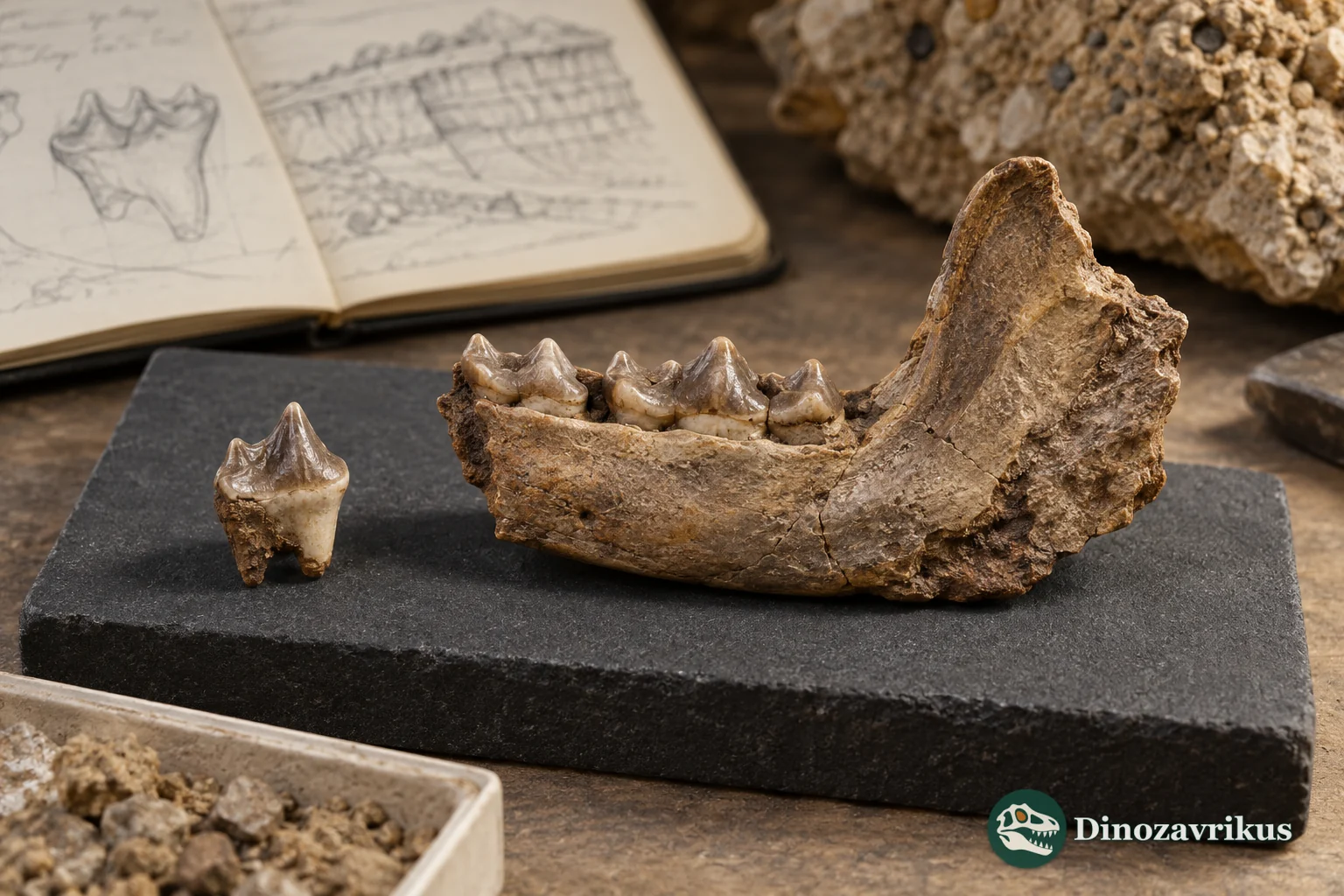
The holotype UALVP 14822 preserves a right lower-jaw fragment with the ultimate premolar and first molar, plus alveoli. It records part of a tooth row, not a whole skull or body.
Averianov and Archibald treated the North American sample as one species, P. sternbergi, including P. maleficus; Montellano-Ballesteros and colleagues recognised more species and questioned Asian referrals. These are competing assessments of incomplete samples.
Averianov and Archibald accepted the Asian P. quadrans as a congeneric species. Other authors disputed the attribution. The Asian teeth document a real eutherian record, but their generic identity remains contested.
Recent phylogenetic work places Paranyctoides outside crown Placentalia and proposes a close relationship to Zhelestidae. Those positions are analytical results based on preserved characters, not features directly visible in one fossil.
Discovery and the name-bearing material
J. David Fox named Paranyctoides sternbergi in 1979 from late Cretaceous mammal material in Alberta. The holotype UALVP 14822 is a fragment of a right dentary retaining the ultimate lower premolar, m1 and alveoli for neighbouring teeth. It is a small but important sample: it anchors the name and preserves a short sequence that can be compared with isolated crowns.
Later collections added teeth from other formations and localities. Fox named P. maleficus in 1984 from upper and lower dental elements in the Milk River Formation. Other authors described or referred further forms, sometimes on a single tooth or a limited set of isolated crowns. Each proposed occurrence needs evaluation against the characters actually preserved in the type material.
The genus was initially compared with Paleogene nyctitheriids, but later classifications changed its placement. This history is a reminder that a resemblance between teeth can suggest a hypothesis without proving that a Cretaceous form belongs inside a later crown group.
Teeth, jaws and what is missing
Lower molars assigned to Paranyctoides have been described with relatively low trigonids, distinct paraconids and broad talonids. Researchers also compare the final lower premolar and details of upper molars where those teeth are available. These traits help diagnose samples, but not every species preserves the same positions, and an isolated crown cannot show its relation to the rest of the jaw.
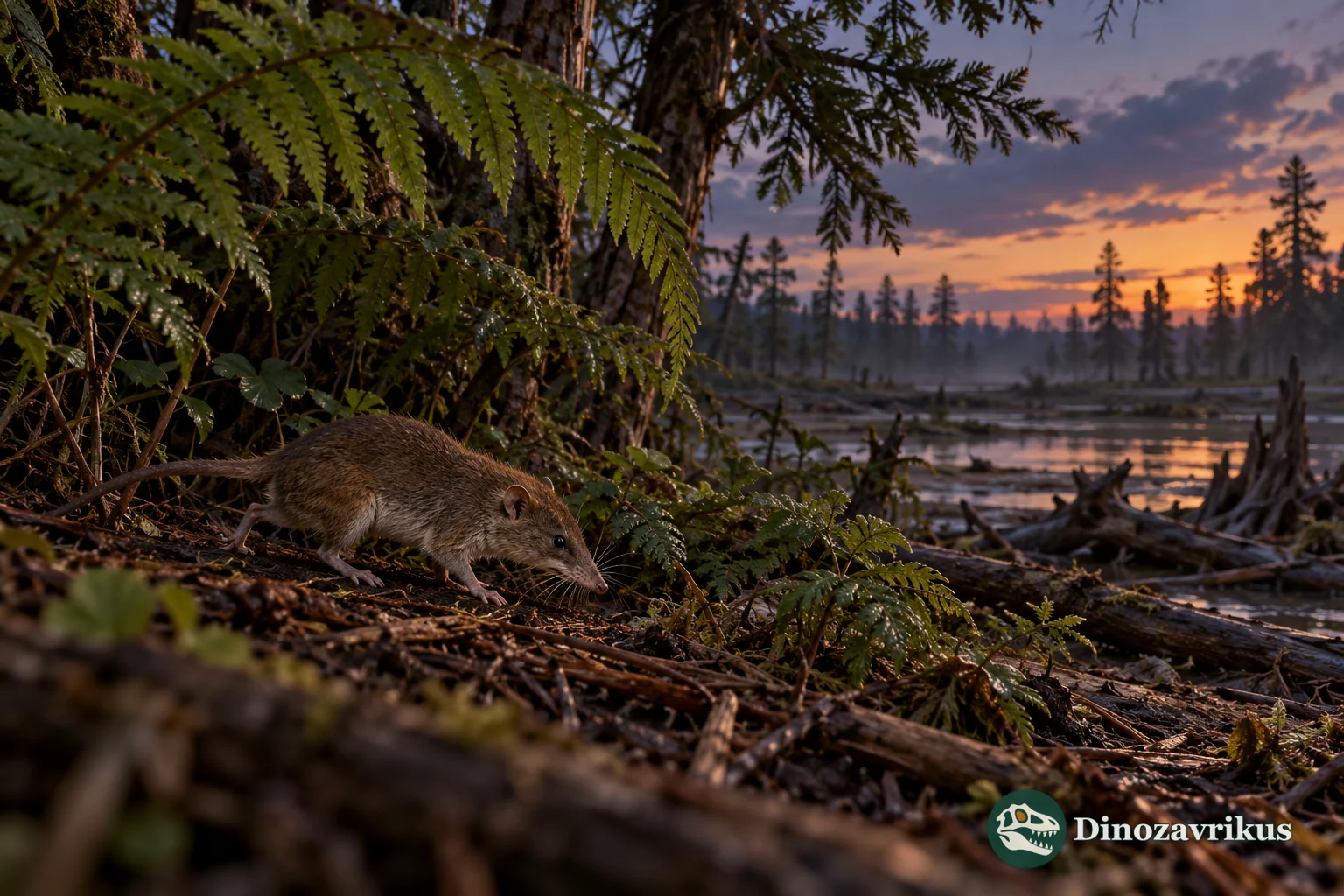
There is no complete skull or skeleton of the genus. Teeth and short dentary pieces do not establish its body length, mass, limb proportions, posture, coat or colour. Size comparisons with living shrews or other small mammals are visual analogies, not measurements derived from Paranyctoides bones.
Competing revisions of the species
Taxonomic disagreement is unusually visible in the 2013 literature. Averianov and Archibald analysed variation across the North American sample and concluded that it could not be clearly separated into species on morphological or morphometric grounds. They treated P. maleficus as a synonym of P. sternbergi and recognised the Asian P. quadrans as distinct.
In a separate study, Montellano-Ballesteros, Fox and Scott questioned whether the Asian material belonged to Paranyctoides and recognised a larger set of valid North American species. The two treatments therefore differ both in North American species boundaries and in the proposed intercontinental range. Their disagreement should be reported as unresolved, rather than silently choosing one roster as settled fact.
Averianov and Archibald placed Paranyctoides as a close relative of Zhelestidae in their analysis. Other work has treated it as a non-placental eutherian. Both the family-level placement and the exact mix of taxa depend on character scoring and on how incomplete teeth are grouped.
Age, localities and the proposed Asian connection
The type species is associated with the Dinosaur Park Formation of Alberta, deposited during the Campanian. The Milk River material named P. maleficus comes from older early Campanian deposits. Additional North American occurrences have been reported from the western interior, including Wyoming, Utah and New Mexico, but some are tentative referrals based on isolated teeth.
The Asian record centres on the Bissekty and related formations of Uzbekistan. P. quadrans was named from Central Asia and accepted as part of the genus by Averianov and Archibald. Montellano-Ballesteros and colleagues rejected that attribution. If accepted, the records suggest eutherians on both sides of the former Beringian region; if rejected, they represent separate lineages. The fossils do not themselves show migration or direct contact.
Formation ages and regional land-mammal ages describe particular strata, not a single exact lifespan for the genus. A tooth that resembles the type can extend a range only after its identification and stratigraphic position are independently supported.
Diet and life in a Cretaceous ecosystem
Tooth shape can constrain how opposing surfaces interacted during chewing. It does not identify a particular insect, prey species or plant, and no direct gut contents or feeding traces are known for Paranyctoides. Claims that it was insectivorous or occupied a specific forest niche go beyond the evidence of its isolated teeth.
Small mammals are part of a much broader fossil community, but the presence of other animals at the same formation does not establish direct ecological interactions. The safest reconstruction is limited: Paranyctoides was an eutherian mammal represented by dental remains in Late Cretaceous deposits, while its exact body form and way of life remain open.
Frequently asked questions
Was Paranyctoides a placental mammal?
It is an eutherian, but recent analyses place it outside crown Placentalia. Eutheria includes both placentals and extinct relatives on the stem leading to them.
Why do studies disagree about the number of species?
Most specimens are isolated teeth or short jaw fragments. The 2013 studies interpret variation in those incomplete samples differently, leading to different North American species counts.
Did Paranyctoides live in both Asia and North America?
North American fossils are secure, while the Asian species P. quadrans is contested. Its inclusion would support a shared genus-level record, but another revision rejects that referral.
Can its body size or diet be reconstructed?
Not precisely. There is no complete skeleton, and the teeth do not identify a specific menu. Any small-mammal body reconstruction is speculative.