

The Late Cretaceous lizard Parasaniwa is best known from its jaws. The tooth crowns are compressed from side to side, with longitudinal folds in the dentine at their bases. These features help distinguish its fossils from those of other lizards in western North America at the end of the Cretaceous.
Quick facts
| Group | Anguimorphs, early varanoid lineage |
|---|---|
| Age | Late Cretaceous, Maastrichtian for the type species |
| Region | North America, USA and Canada |
| Type species | Parasaniwa wyomingensis |
| Scientific name | Parasaniwa |
| Diet | Exact prey is unknown |
What can the fossils tell us?
USNM V 10797 is part of the left lower jaw with one tooth preserved.
Compressed cutting edges and folds at the tooth base help compare the fossils with those of early relatives of monitors.
The jaws preserve tooth form and attachment. They leave total body length and the kinds of prey unknown.
Hatcher's Lance Formation find
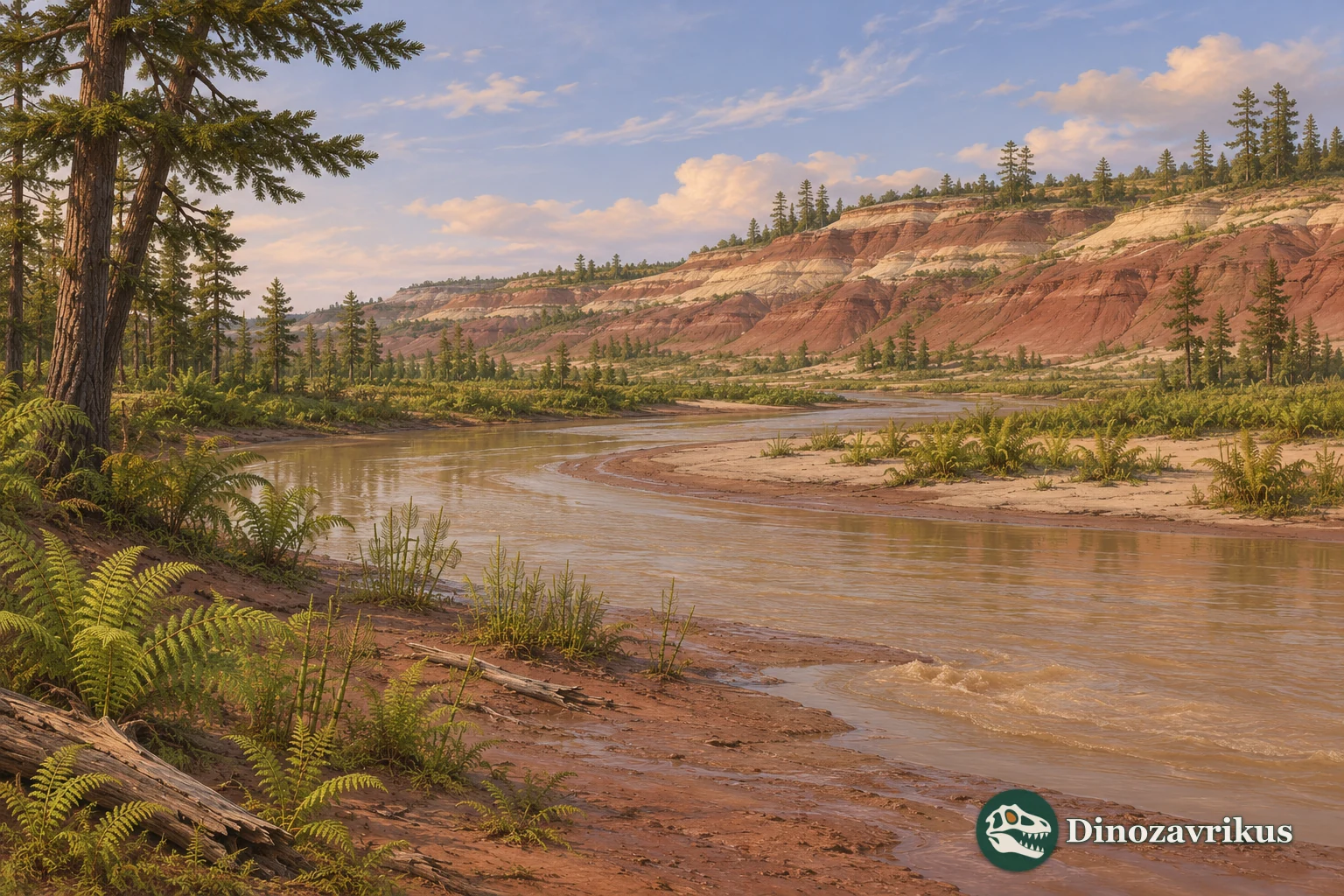
John Bell Hatcher collected the type material in 1892 in what is now Niobrara County, Wyoming. Charles Gilmore described it in 1928 as Parasaniwa wyomingensis. The Smithsonian's National Museum of Natural History holds the partial left dentary from the Lance Formation. These Maastrichtian deposits date to the closing part of the Cretaceous.
Cutting edges and tooth attachment
Parasaniwa has comparatively thin cutting edges without pronounced serrations. At the base the dentine folds inwards, a feature visible in some broken teeth. Researchers used those structures to compare the genus with older Campanian jaw fragments from Texas. They assigned the Texas fossils to the type species only tentatively.
The name and its relatives
Gilmore named another jaw fragment from the same formation Parasaniwa obtusa. The museum now lists its type, USNM V 10798, under P. wyomingensis as well. A phylogenetic analysis placed Parasaniwa near the base of the varanoid lineage. The living monitor lizards are part of that wider branch. Another extinct form near it is Palaeosaniwa, with more broadly expanded tooth bases.
Frequently asked questions
Where was the type specimen found?
It came from the Lance Formation of Wyoming.
What survives of the type?
Part of the left dentary, a bone of the lower jaw, with one tooth preserved.
What is distinctive about its teeth?
The crowns are laterally compressed. Folds in the dentine are visible at the bases of some teeth.
What prey did it eat?
The shape of the crowns offers clues to their cutting action. The material does not identify the prey.