

Parasolenopleura was a middle Cambrian trilobite first described from the Swedish island of Öland. Articulated specimens preserve the spine behind its glabella and a row of raised bumps along the front of its thorax. Comparing these fossils with isolated shields helped narrow what the genus includes.
Quick facts
| Group | Trilobites, Solenopleuridae |
|---|---|
| Age | Middle Cambrian, Miaolingian |
| Region | Europe (Sweden, Norway) and North America (Greenland) |
| Type species | Parasolenopleura aculeata |
| Scientific name | Parasolenopleura |
| Diet | Unknown |
What can the fossils tell us?
Articulated Swedish material shows raised nodes on the front eight or nine axial rings.
Geyer compared the glabella, frontal area and tail shield and concluded that only aculeata should remain in Parasolenopleura.
The fossils record differences in the external skeleton and provide no direct evidence of what the trilobite ate.
The material from Öland
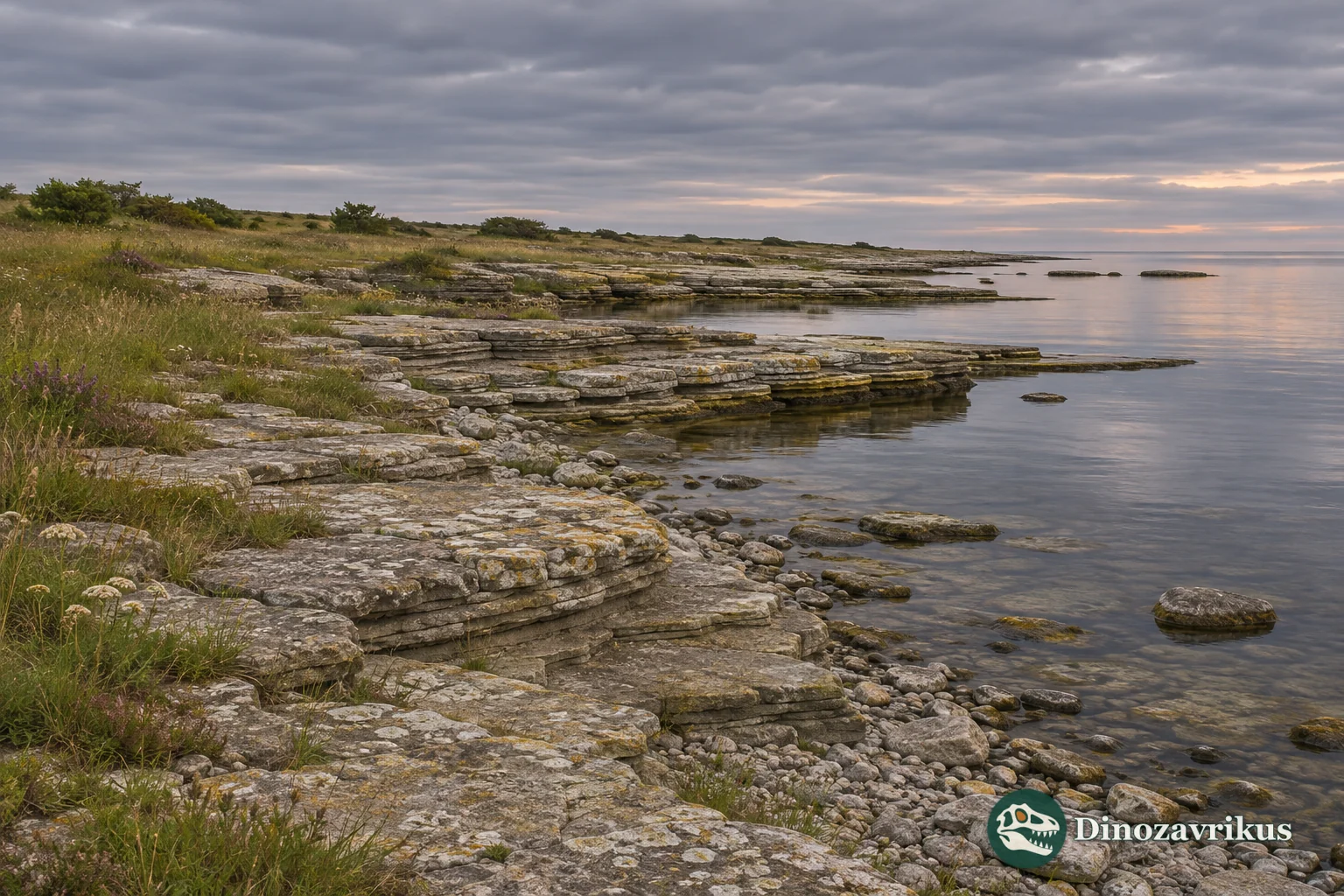
Nils Peter Angelin named the species Calymene aculeata in 1851. Axel Westergård established Parasolenopleura for it in 1953. The lectotype, Ar. 46143 a, is a cranidium from the Acrothele granulata conglomerate at Borgholm. Articulated fossils later studied from Swedish drill cores in Närke show more of the body than the original head material.
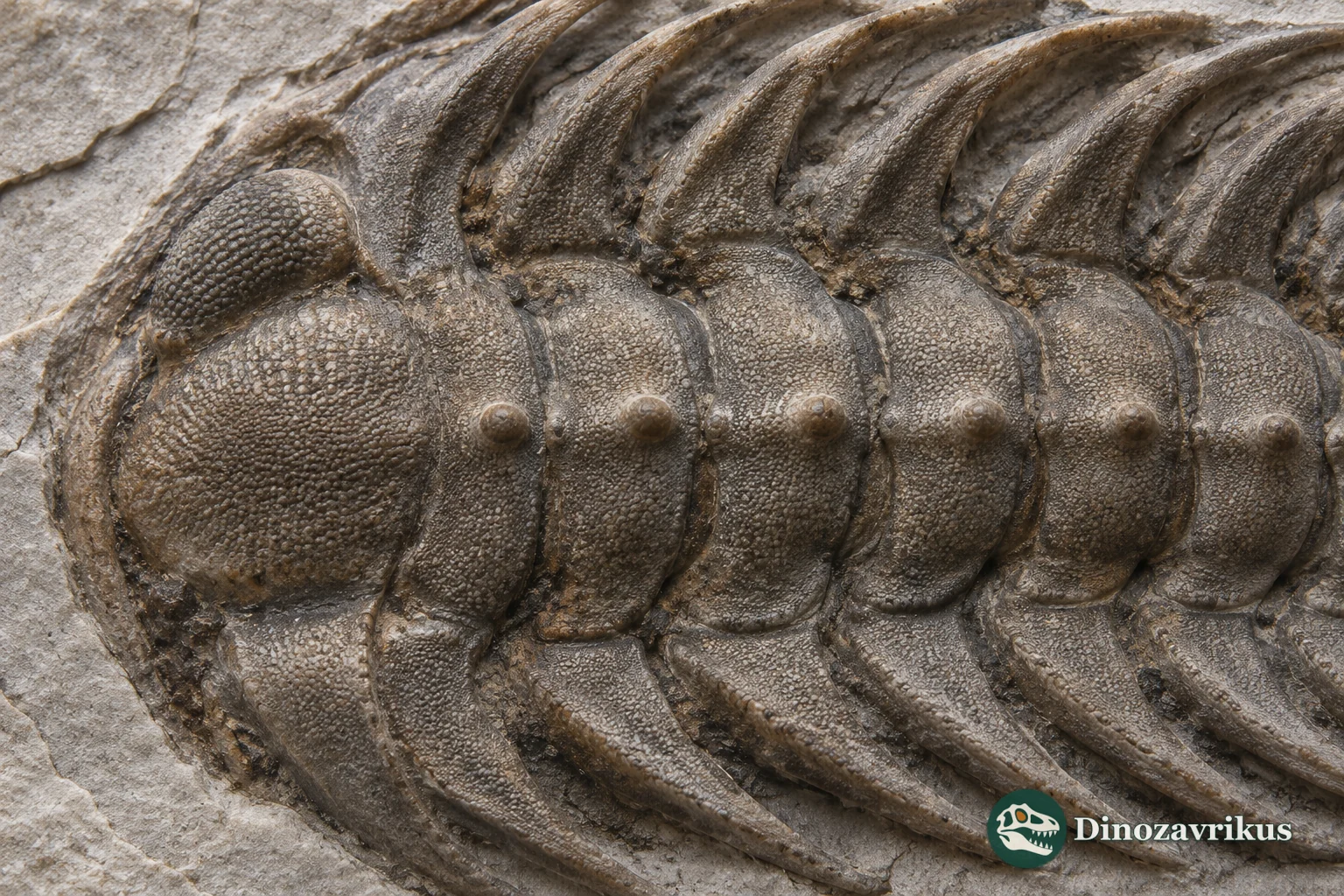
Nodes along the middle of the shell
The occipital ring behind the glabella bears a spine. Of the 14 thoracic segments, the front eight or nine carry raised nodes or spines along the midline. The rings nearer the tail are smooth. The front and middle segments have blunt outer tips, and the tail shield is short and broad.
The shell is generally flatter across the cheeks than in Solenopleura. Westergård used several characters together, including the cheek shape, the front rim and the furrows. Gerd Geyer later examined the material under magnification. In younger specimens the front of the glabella has two lobes that merge as the animal grows, giving adults a nearly straight leading edge.
Fossils on opposite sides of an ancient ocean
Swedish and Norwegian finds of P. aculeata occur in the Ptychagnostus gibbus Zone. In North Greenland, the species also occurs in the P. atavus Zone in the upper Henson Gletscher Formation of Nyeboe Land. The Greenland material extends the range from Baltica to Laurentia.
Geyer’s 2024 review restricted the genus to its type species. Some fossils previously called Parasolenopleura received other generic names, and others remain uncertain. The older, broader list of names therefore gives a different distribution from the revised genus.
Frequently asked questions
How many thoracic segments did the animal have?
The type species had 14 thoracic segments. Raised nodes or small spines occur on the first eight or nine axial rings.
Where did the lectotype come from?
It came from the Acrothele granulata conglomerate near Borgholm on the Swedish island of Öland.
Why is the genus restricted to one species?
The 2024 review distinguished its type species from other forms using details of the glabella, the frontal area and the tail shield.
Has it been found outside Scandinavia?
Yes. Confirmed material comes from the Henson Gletscher Formation of North Greenland.