

Parioxys ferricolus is an Early Permian temnospondyl from Texas whose classification changed as its skull was examined more closely. A 2022 redescription of museum material identified diagnostic proportions and palatal features, placing the species among dissorophoids with eucacopine affinities.
This profile appears in the ancient amphibian catalogue and focuses on P. ferricolus. Other named species historically assigned to Parioxys are based on less diagnostic material, so their anatomy should not be merged with the better-studied type species.
Quick facts
| Species | Parioxys ferricolus |
|---|---|
| Group | Dissorophoid temnospondyl |
| Age | Early Permian, Cisuralian |
| Region | North-central Texas, United States |
| Rock unit | Wichita Group; Petrolia Formation |
| Key study | Skull redescription published in 2022 |
| Body size | No dependable total length is established |
What can the fossils tell us?
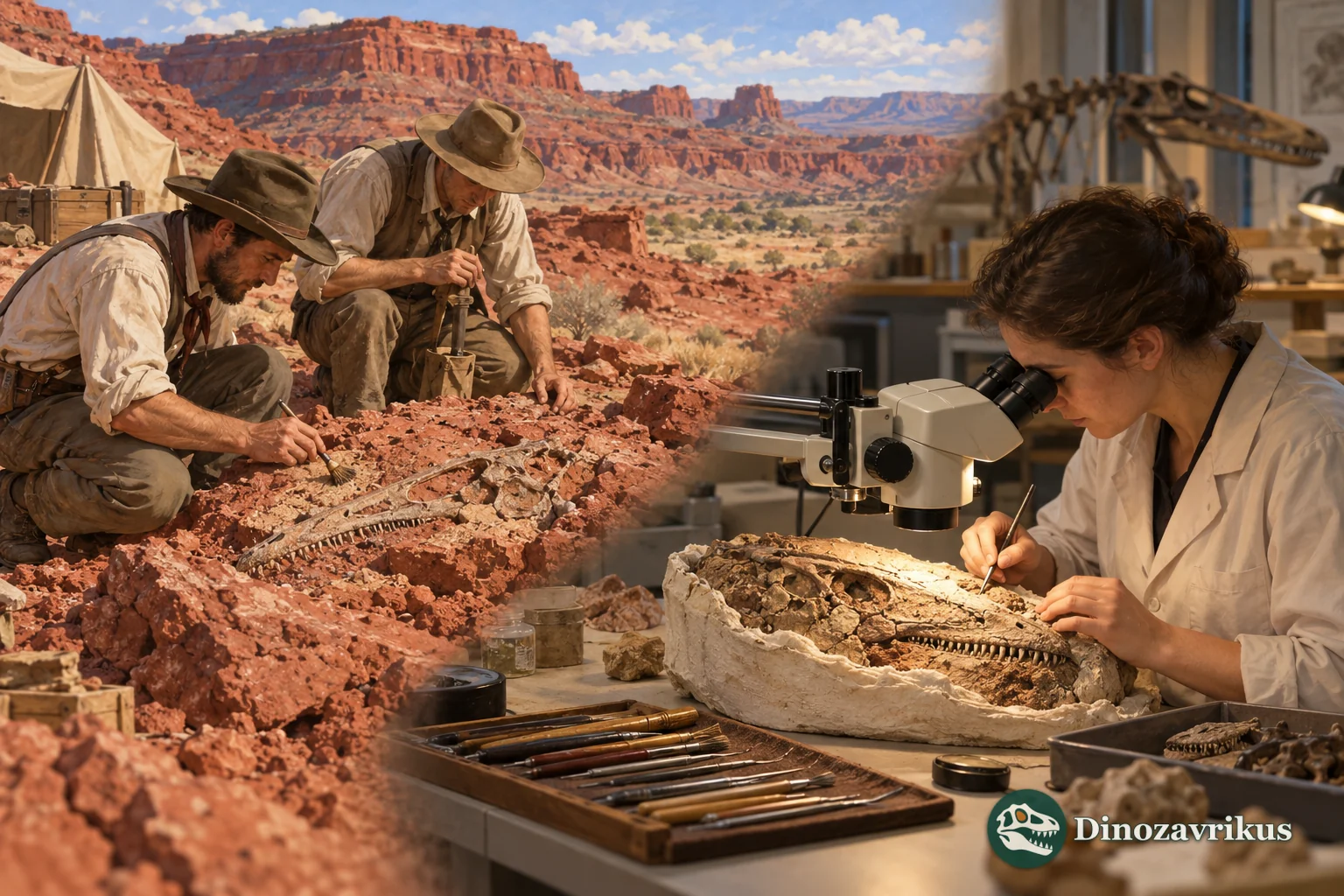
The study revisited the original material and prepared a previously undescribed specimen. It clarified cranial characters but did not reveal a complete articulated skeleton.
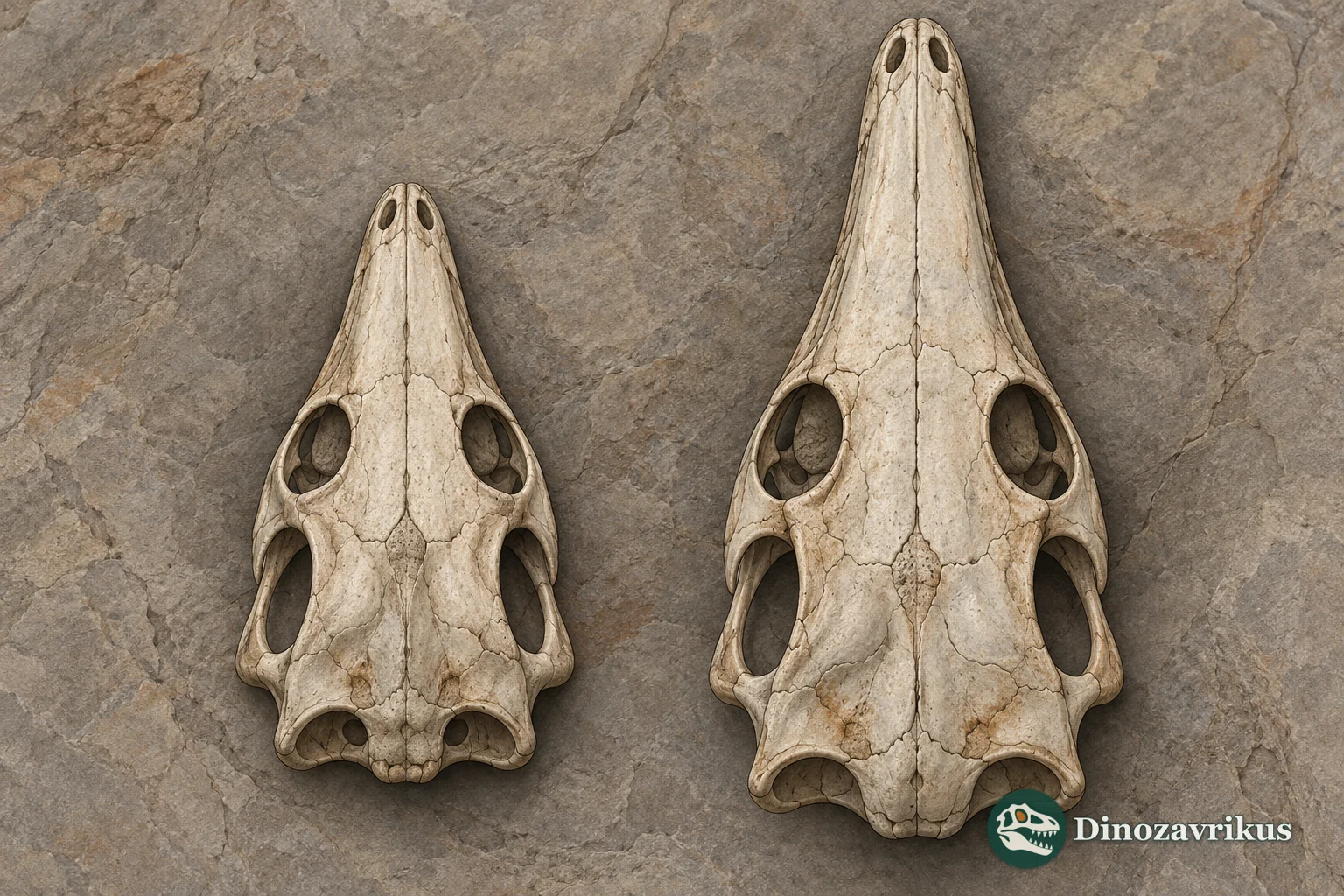
The preorbital length is about 1.5 times the posterior skull table in juveniles and about twice its length in adults. This ratio shows a cranial growth pattern, not the animal’s total body length.
Short interpterygoid vacuities, posteriorly extended choanae and a V-shaped median vomerine depression contribute to the diagnosis. A phylogenetic analysis places P. ferricolus near Kamacops within Eucacopinae; this is an analytical result, not direct ancestry.
P. romeri rests on an isolated humerus and is indeterminate, while P. bolli is represented by fragmentary postcranial bones with disputed affinities. The detailed 2022 diagnosis concerns P. ferricolus.
A Texas fossil revisited
Edward Drinker Cope named Parioxys ferricolus in 1878 from Early Permian material in Texas. The fossils entered museum collections and were interpreted in several different ways over the following decades. In 2022, Rainer Schoch and Hans-Dieter Sues re-examined the original material and prepared a previously undescribed specimen, allowing them to reassess the skull’s diagnostic features.
The result was a redescription, not the discovery of a pristine skeleton. Parts of the skull are preserved unevenly, and historical specimens differ in what they retain. The revised interpretation depends on a set of characters that can be compared across the available material.
Skull proportions change with growth
The preorbital region is elongated relative to the back of the skull. In juveniles it measures about one and a half times the length of the posterior skull table; in adults it is about twice as long. These published ratios describe cranial proportions and support an ontogenetic change as the animal grew. They do not provide a total body length.
Palatal anatomy and a revised family tree
The 2022 study also described short interpterygoid vacuities, posteriorly extended choanae and an enlarged V-shaped depression on the vomer. Considered with the skull proportions and other characters, these features support a dissorophoid interpretation. The phylogenetic analysis recovered P. ferricolus close to Kamacops acervalis within Eucacopinae.
Earlier analyses had treated the taxon as uncertain, with affinities discussed near other temnospondyl groups. A 2019 matrix revision even raised the possibility that referred material might combine different taxa. The 2022 redescription reassessed the type material and supported a clearer placement, while leaving room for future tests as specimens and matrices are revised. It does not make Parioxys a direct ancestor of Cacops or any living amphibian.
Why the name Parioxys needs care
The evidence is strongest for the type species, P. ferricolus. P. romeri was based on an isolated humerus and is regarded as indeterminate. P. bolli is known from fragmentary postcranial material and has disputed affinities. Those names have a history in the genus, but they do not provide equally secure anatomical or ecological information about P. ferricolus.
Early Permian Texas
The fossils come from the Wichita Group of north-central Texas, including deposits assigned to the Petrolia Formation. Red beds and associated sediments document continental settings, but the formation covers a span of environments. Geological context places the animal in an Early Permian ecosystem; it does not identify the exact water depth or behaviour of the specimen.
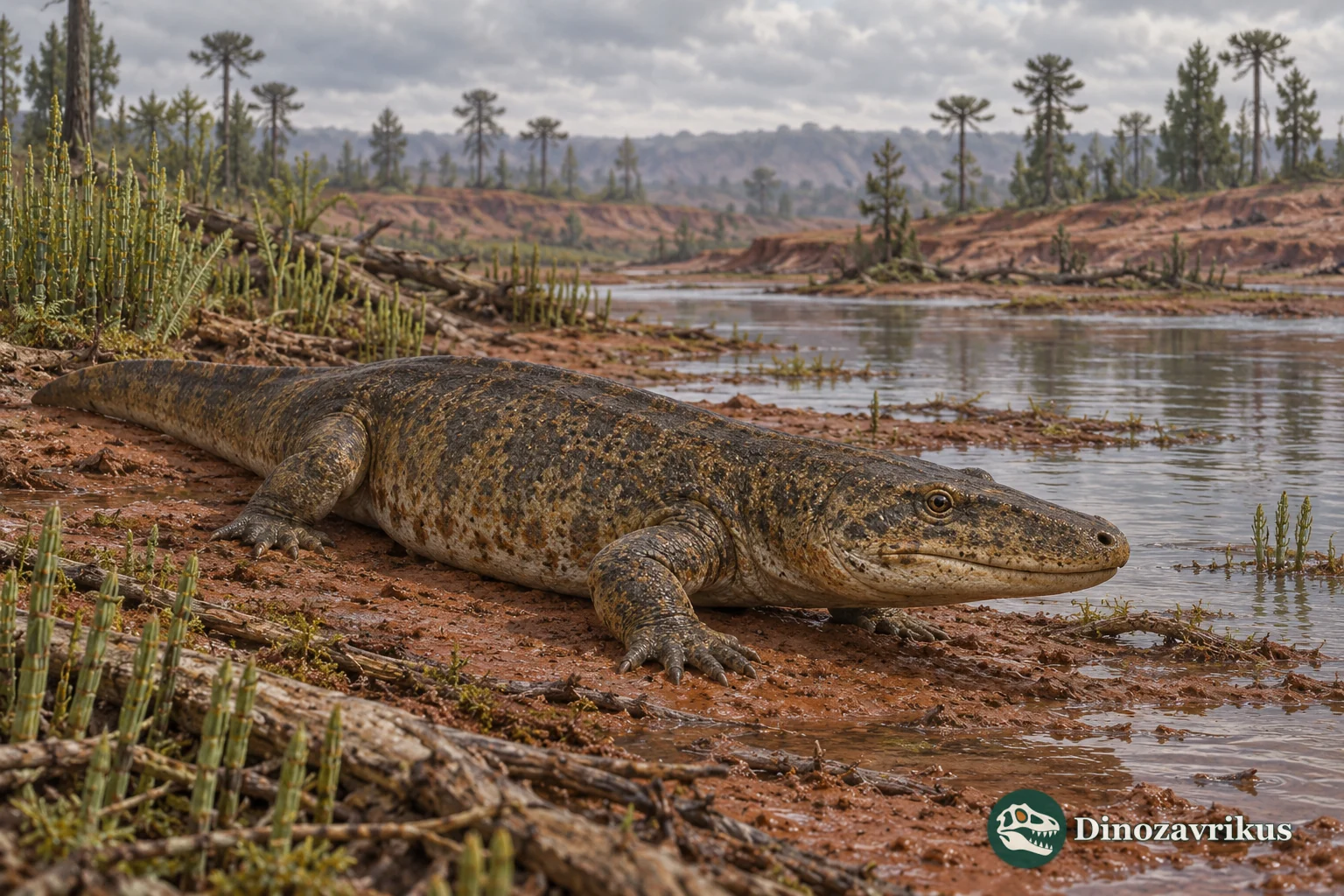
What the skull cannot tell us
The revised material supports details of the skull, palate and growth-related proportions. It does not establish a reliable body mass, total length, skin colour, exact diet or a particular hunting event. A low-bodied temnospondyl near water is a plausible illustration; its body outline is not measured directly from a complete skeleton.
Frequently asked questions
When did Parioxys ferricolus live?
It lived in the Early Permian, in the Cisuralian, in what is now north-central Texas.
What changed in the 2022 study?
Re-examination and preparation of museum material clarified diagnostic skull and palate features and supported a dissorophoid placement.
What does the skull reveal about growth?
The preorbital region is about 1.5 times the posterior skull table in juveniles and about twice as long in adults.
Are all Parioxys species equally well known?
No. P. ferricolus is the best-supported species; P. romeri is based on an isolated humerus and P. bolli has disputed affinities.