

Pasquiaornis lived near the eastern margin of the sea that divided North America early in the Late Cretaceous. Scientists described it from isolated leg and foot bones in Saskatchewan. Resemblances to other hesperornithiforms suggest that the hind limbs powered swimming. The evidence for flight is much less clear.
Quick facts
| Group | Hesperornithiforms |
|---|---|
| Age | Late Cretaceous (late Cenomanian) |
| Region | North America (Saskatchewan, Canada) |
| Diet | No direct evidence |
| Type species | Pasquiaornis hardiei |
| Other named species | Pasquiaornis tankei |
| Holotypes | SMNH P2077.117 and SMNH P2077.63 |
| Length of type foot bones | 54 and 85.6 mm |
What can the fossils tell us?
The left tarsometatarsus of Pasquiaornis hardiei is 54 mm long. Its counterpart in Pasquiaornis tankei is 85.6 mm. Articular features also distinguish the two bones.
Several humeri were tentatively referred to Pasquiaornis. An articulated wing would establish whether the bones belong together and provide better evidence about flight.
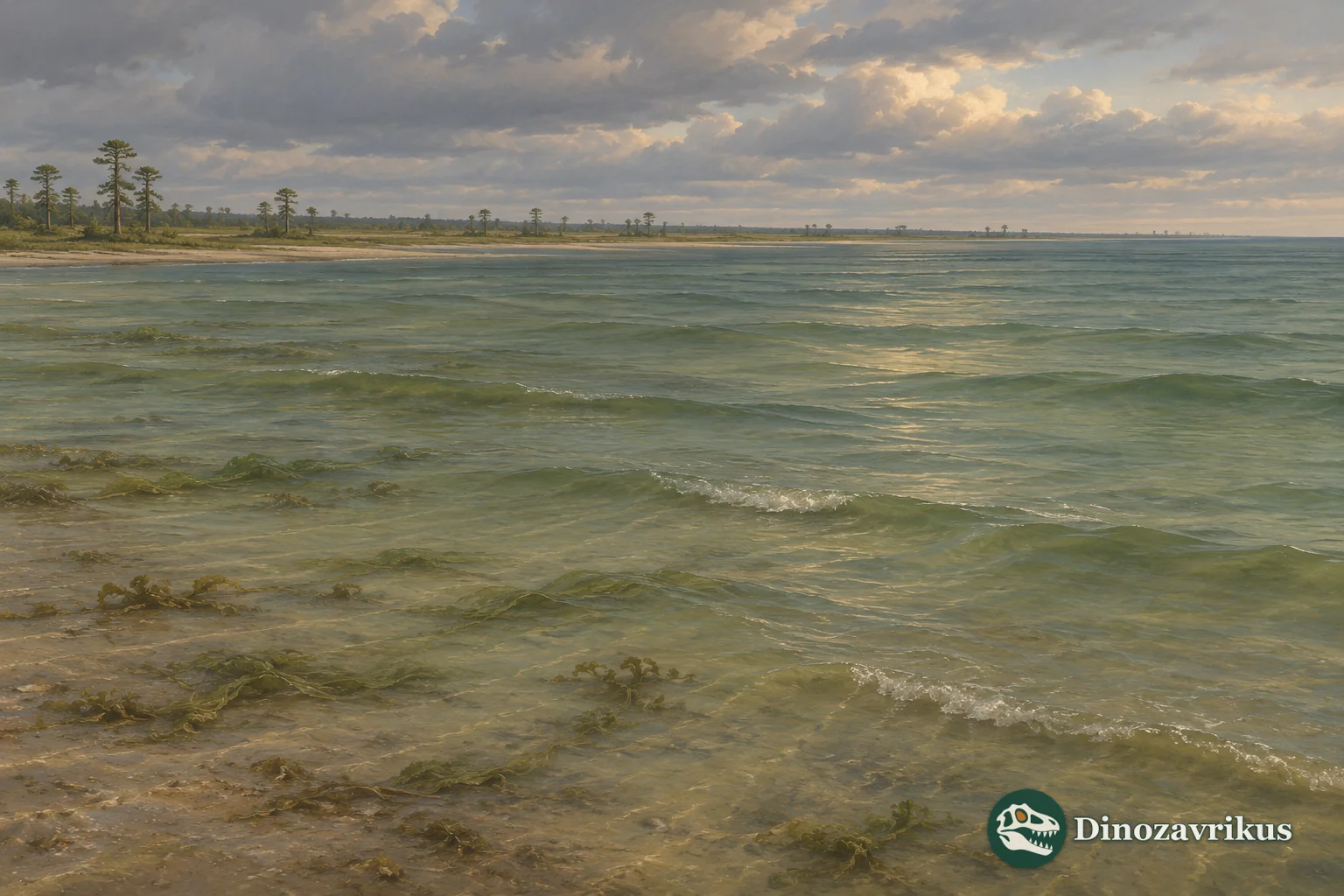
Bird remains were mixed with those of sharks, bony fish and marine reptiles. The deposit formed in shallow water on the eastern side of the Western Interior Seaway.
Two species from an accumulation of bones
Tim Tokaryk, Stephen Cumbaa and John Storer named the genus in 1997 from a site near the Carrot River in the Pasquia Hills, Saskatchewan. The genus takes its name from these hills. The bird bones in the layer were isolated and mixed with those of other animals.
The type bone of P. hardiei (SMNH P2077.117) is a 54 mm left tarsometatarsus. The corresponding bone of P. tankei (SMNH P2077.63) is 85.6 mm long. The tarsometatarsus lies between the lower leg and the toes. The researchers used differences in both size and the shape of the joints to distinguish the species. These measurements describe the individual bones, while the size of the whole bird remains uncertain.
What the legs and wings tell us
The thigh and foot bones share features with other hesperornithiforms. Certain swimming specialisations are less developed than in later birds of the group. In the more specialised Hesperornis, for example, the articulation at the base of one toe projects further out of line with its neighbours. This helps trace the evolution of the foot in diving birds.
The humeri provisionally assigned to Pasquiaornis are better developed than those of Hesperornis, whose wings were greatly reduced. They were found separately from the leg bones, and a whole wing is unavailable. Even if the identification is correct, the humeri alone leave flight performance uncertain.
The edge of the Western Interior Seaway
Pollen and marine microorganisms place the bonebed in the late Cenomanian. The same layer contains shark teeth and remains of bony fish, plesiosaurs and turtles. Together these fossils reconstruct a shallow coastal environment. Identifying a particular prey animal would require additional evidence directly associated with the bird.
Frequently asked questions
Why were two species of Pasquiaornis named?
The authors recognised two size classes with differences in the form of the foot joints. Each species was based on a distinct left tarsometatarsus.
Could Pasquiaornis fly?
The isolated humeri are only tentatively assigned to the genus. A more complete wing would help answer the question.
Where did Pasquiaornis live?
The fossils come from Saskatchewan in Canada, in deposits along the eastern side of the Western Interior Seaway.
What points to diving?
The thigh and foot bones resemble those of other hesperornithiforms, whose hind limbs were adapted to propel the birds through water.