

Paurorthis is an orthide brachiopod genus whose type species is Paurorthis parva. Later Ordovician material illustrates why some identifications remain provisional: the punctate shell expected in the genus is not always observable, and incomplete valves may lack the characters needed for a secure assignment.
The type species comes from the Dapingian Volkhov Formation around Saint Petersburg. The genus is not Cambrian. Other species-level material has been reported from Ordovician successions in places including Argentina, but each record needs to be assessed from its own shell features and stratigraphic documentation. The early animal catalogue brings together these marine fossils from different parts of the early Palaeozoic.
Quick facts
| Scientific name | Paurorthis Schuchert & Cooper, 1931 |
|---|---|
| Type species | Paurorthis parva (Pander, 1830) |
| Group | Rhynchonellata, Orthida, Paurorthidae |
| Type age | Dapingian, Middle Ordovician |
| Type region | Volkhov Formation near Saint Petersburg |
| Diagnostic expectation | Punctate shell wall with microscopic canals |
| Tagoat material | Two dorsal valves; assignment remains tentative |
| Limit | Some material lacks exterior and ventral valves |
What can the fossils tell us?
Schuchert and Cooper established the genus in 1931 and designated Orthambonites parva Pander as its type species. It is now combined as Paurorthis parva, from the Dapingian Volkhov Formation near Saint Petersburg.
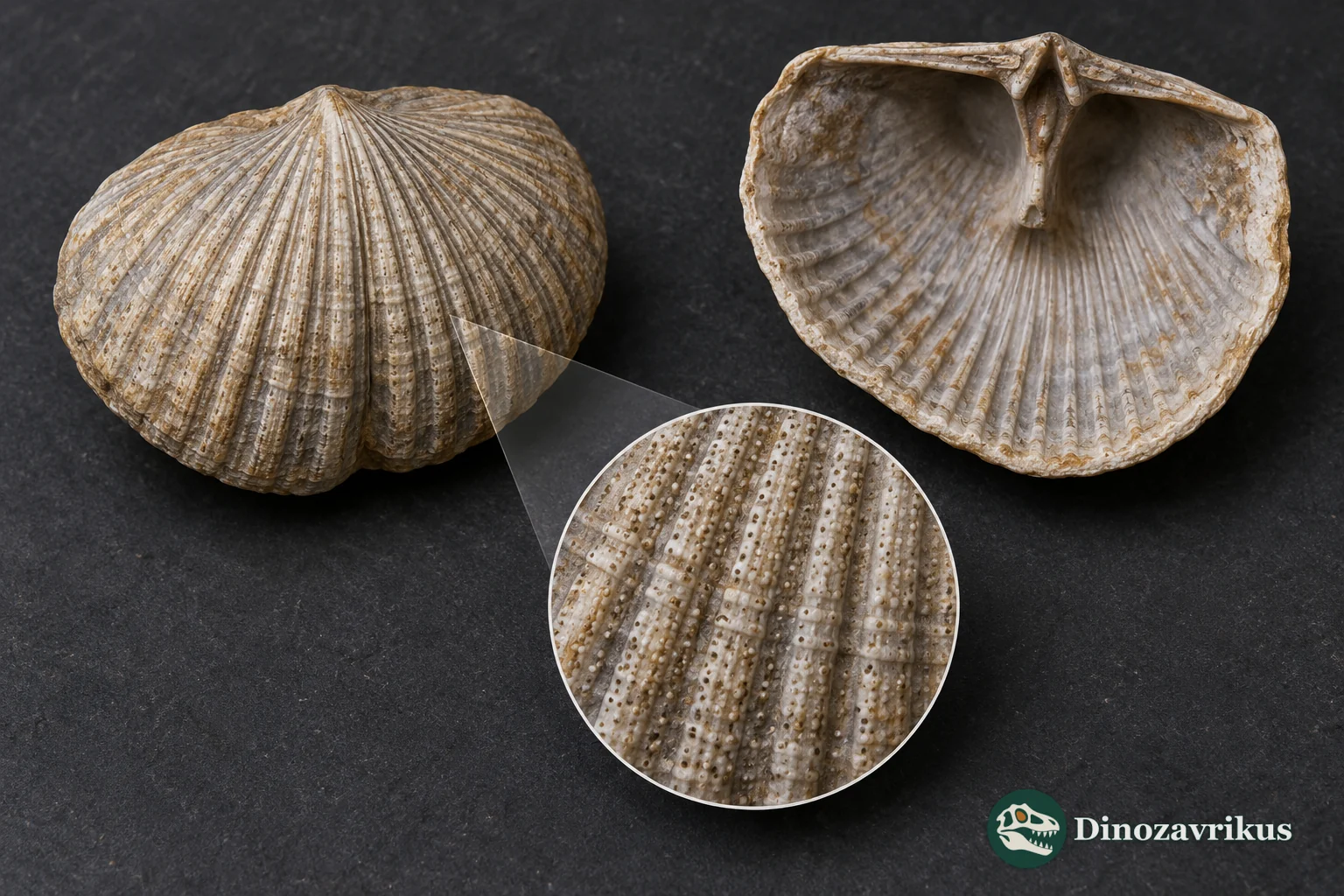
Punctate shell walls contain fine canals. Harper and Bates did not observe the expected punctae in the Tagoat material or in compared Welsh specimens. Preservation and the limited sampled surface complicate the interpretation.
The 2023 study describes two Dapingian dorsal valves with no exterior or ventral valves available. The authors used a question mark for the generic identification and did not assign the material confidently to a species.
A lophophore-based suspension-feeding mode is likely for an orthide brachiopod, but it is not direct evidence from fossil gut contents. The available material does not establish a precise adult size or soft anatomy.
Type species and naming
Charles Schuchert and George Arthur Cooper established Paurorthis in 1931 and designated the species Pander had described in 1830 as Orthambonites parva as the type. The accepted combination is Paurorthis parva. Harper and Bates identify its type occurrence with the Dapingian Volkhov Formation near Saint Petersburg.
The Museum of Comparative Zoology at Harvard records the name and a voucher specimen of P. parva. A database entry for a voucher does not make that specimen a holotype: typological status must be checked against the original description and collection catalogue.
The family Paurorthidae takes its name from the genus. As with related Orthambonites, a rounded exterior alone is not enough to establish a genus-level identification.
Punctae and incomplete evidence
Punctate shells have fine canals through the mineralised wall. These microscopic structures can help distinguish orthide groups, so their presence is an important expectation for Paurorthis. Their absence in a particular thin section is not automatically proof that the specimen belongs elsewhere: the shell may be worn, recrystallised or sampled in a way that misses the canals.
Harper and Bates described two dorsal valves from Dapingian rocks at Tagoat, County Wexford, Ireland, as Paurorthis?. The exterior surface and ventral valves were not available, and the expected punctae were not observed. They therefore left the generic assignment tentative and did not confidently identify the material to species. The question mark communicates the limit of the evidence.
Ordovician occurrences
The type species is Dapingian. Herrera and Benedetto also described Paurorthis ellipticus from the San Juan Formation of Argentina in a study of Early Ordovician Orthidina. These records give the genus a wider regional context, but the age and reliability of each species-level assignment must be considered independently.
A Putilovo collection database lists P. parva from Volkhov-age strata associated with a microbial carbonate mound. That is a locality-level context, not a habitat rule for every species in the genus. Do not extend the type species' age to all historical records.
Probable ecology and unknowns
Like other brachiopods, Paurorthis probably used a lophophore to capture suspended particles. Many orthides attached to the seabed by a pedicle, but attachment and feeding are inferred from group biology rather than a preserved soft body in these specimens.
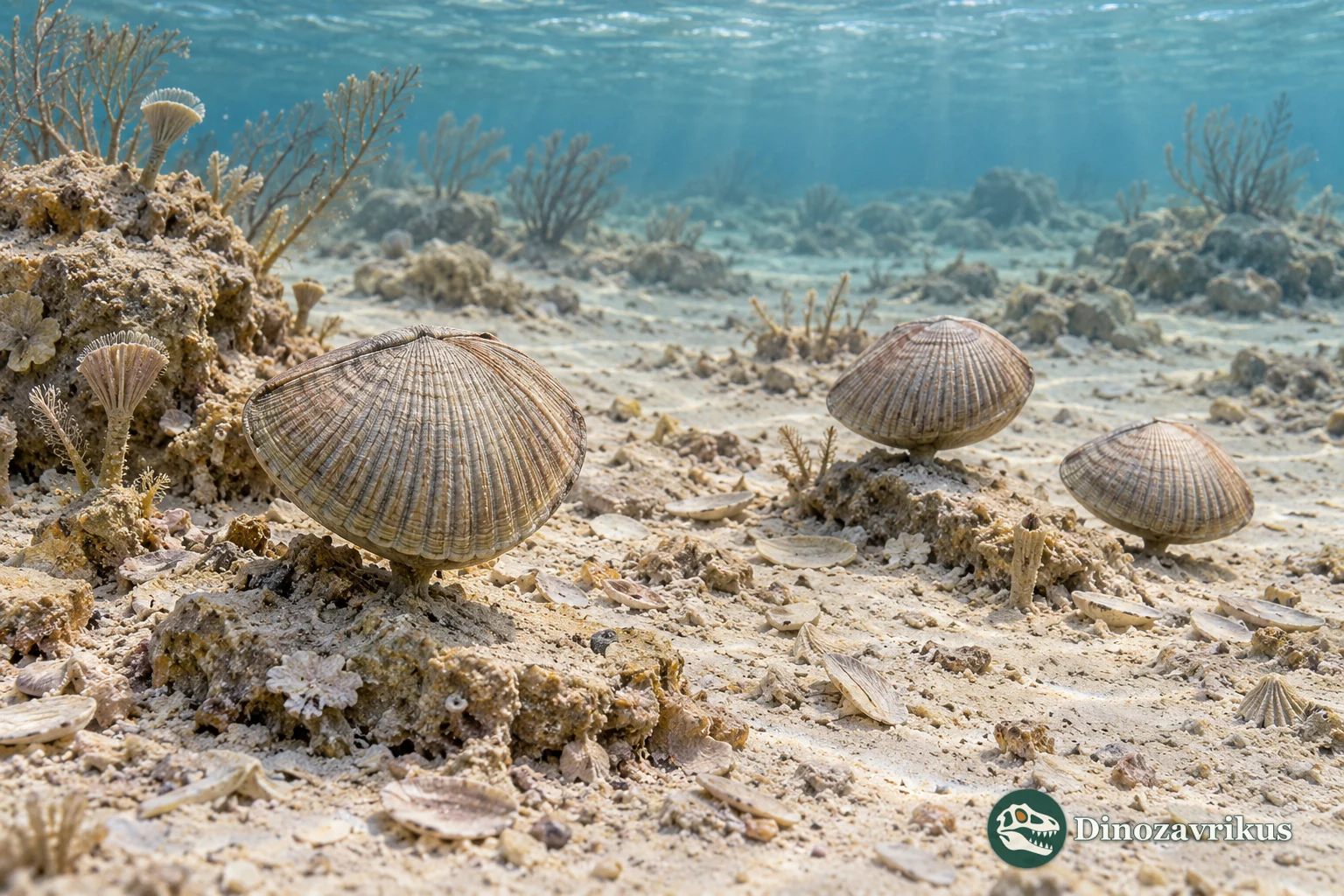
Shells can be measured, but the material discussed here does not establish one reliable adult size for the genus. Colour, lophophore details, reproduction and exact posture remain unknown.
Frequently asked questions
When did Paurorthis live?
The type species Paurorthis parva is Dapingian in age, in the Middle Ordovician. Other records span different Ordovician strata and should be checked individually.
What does the question mark in Paurorthis? mean?
It marks a tentative genus-level identification where not all diagnostic features are available.
Why do shell punctae matter?
Microscopic canals through the shell wall are expected in the group and help compare orthide brachiopods, though preservation can obscure them.
Do we know its size and colour?
Individual valves can be measured, but the cited material does not establish a single adult size. Colour and soft anatomy are unknown.