

Pediohierax is an extinct falconid from the Miocene of North America. The first material was the lower end of a foot bone and was named as an ancient falcon. A complete tarsometatarsus, a humerus and a coracoid later provided enough evidence to name a separate genus.
Quick facts
| Group | Falconidae |
|---|---|
| Age | Miocene |
| Locality | Northwestern Nebraska, USA |
| Holotype | Distal tarsometatarsus USNM V13898 |
| Additional material | Complete tarsometatarsus, humerus and coracoid |
What can the fossils tell us?
Theodore Galusha collected it in Dawes County in 1934. It is held at the Smithsonian Institution.
The humerus and coracoid supplied independent comparisons, while the complete foot bone preserved parts missing from the holotype.
Jonathan Becker recovered it as a sister group to Falconinae, the subfamily containing the typical falcons.
The first Nebraska fossil
Theodore Galusha collected the type specimen in Dawes County in 1934. Alexander Wetmore named the species Falco ramenta in 1936. The specimen, USNM V13898, is held at the Smithsonian’s National Museum of Natural History.
The fossil preserves the distal end of the tarsometatarsus, where the toe joints attach. Their arrangement provides characters for comparing different birds. In the Eocene Milvoides, a fragment from the same part of the skeleton is less complete and its family remains unresolved. Further specimens allowed the first identification of Pediohierax to be tested.
What changed when more bones were found
Jonathan Becker revised the species in 1987 using fossils from the Sheep Creek and Olcott formations of northwestern Nebraska. The available material included a complete tarsometatarsus, a humerus and a coracoid. The complete foot bone could be compared along its length with those of living birds. The upper wing and shoulder girdle offered a separate set of skeletal features.
Becker erected Pediohierax and interpreted it as the sister group of Falconinae. This puts it close to typical falcons in that analysis, on a distinct branch. An older stem falconid described from the Eocene of Antarctica subsequently extended the fossil history of the family further back.
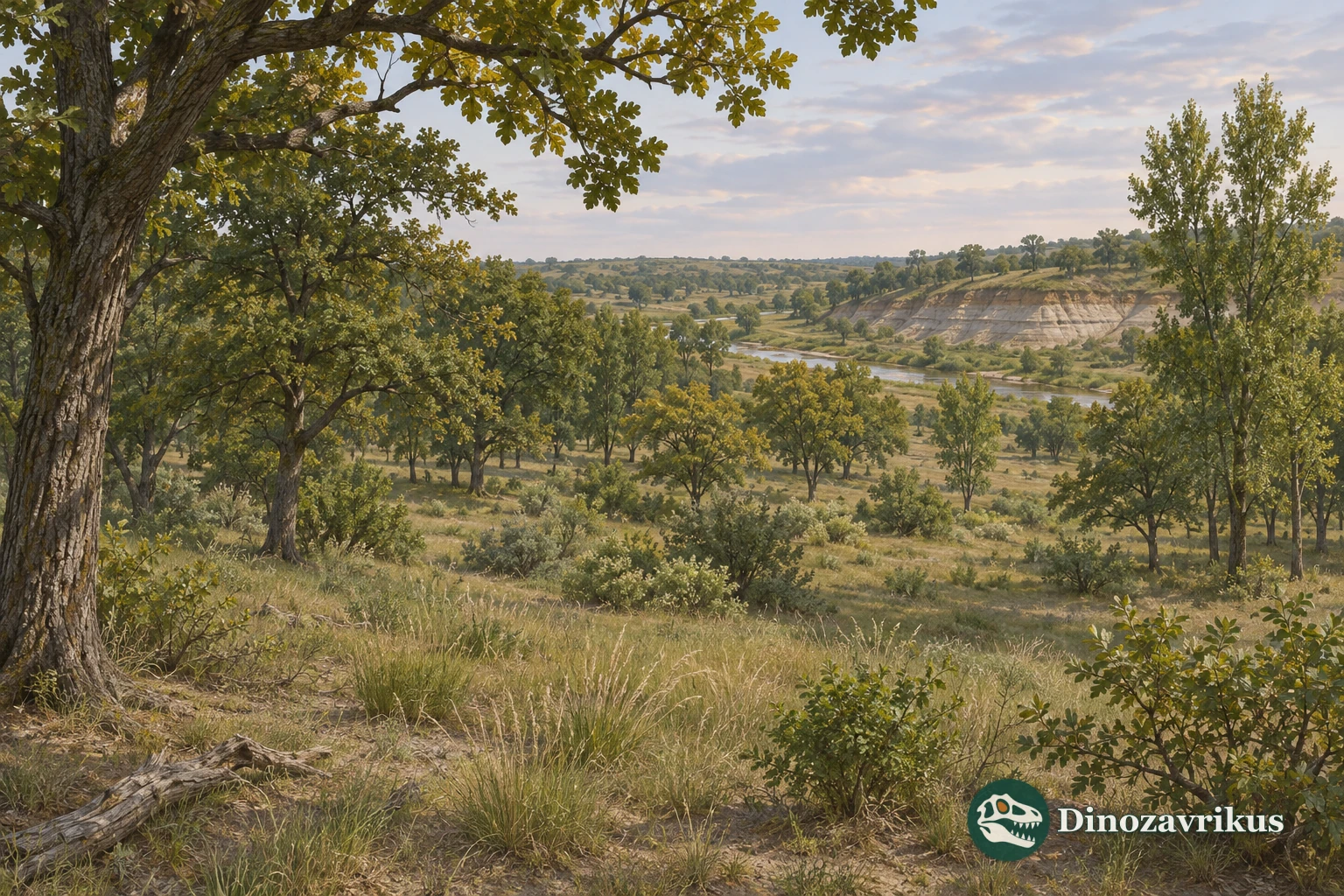
What the living bird may have looked like
Leg and shoulder bones provide useful details of the bird’s limb proportions and relationships. They give little information about plumage or the outline of the folded wing. They also leave its particular prey unknown. The artistic reconstruction uses the general body plan of a small falconid, with conjectural feathering details.
Frequently asked questions
Where was Pediohierax found?
In Miocene deposits in northwestern Nebraska. The type specimen is from Dawes County.
Why was it first called Falco?
Wetmore compared the fossil foot fragment with falcons. The assignment changed when additional skeletal material was studied.
Which bones were found besides the tarsometatarsus?
A humerus from the upper wing and a coracoid from the shoulder girdle.
Was it the direct ancestor of living falcons?
Becker placed it on a separate branch close to the living falcon subfamily. Direct ancestry has not been established.