

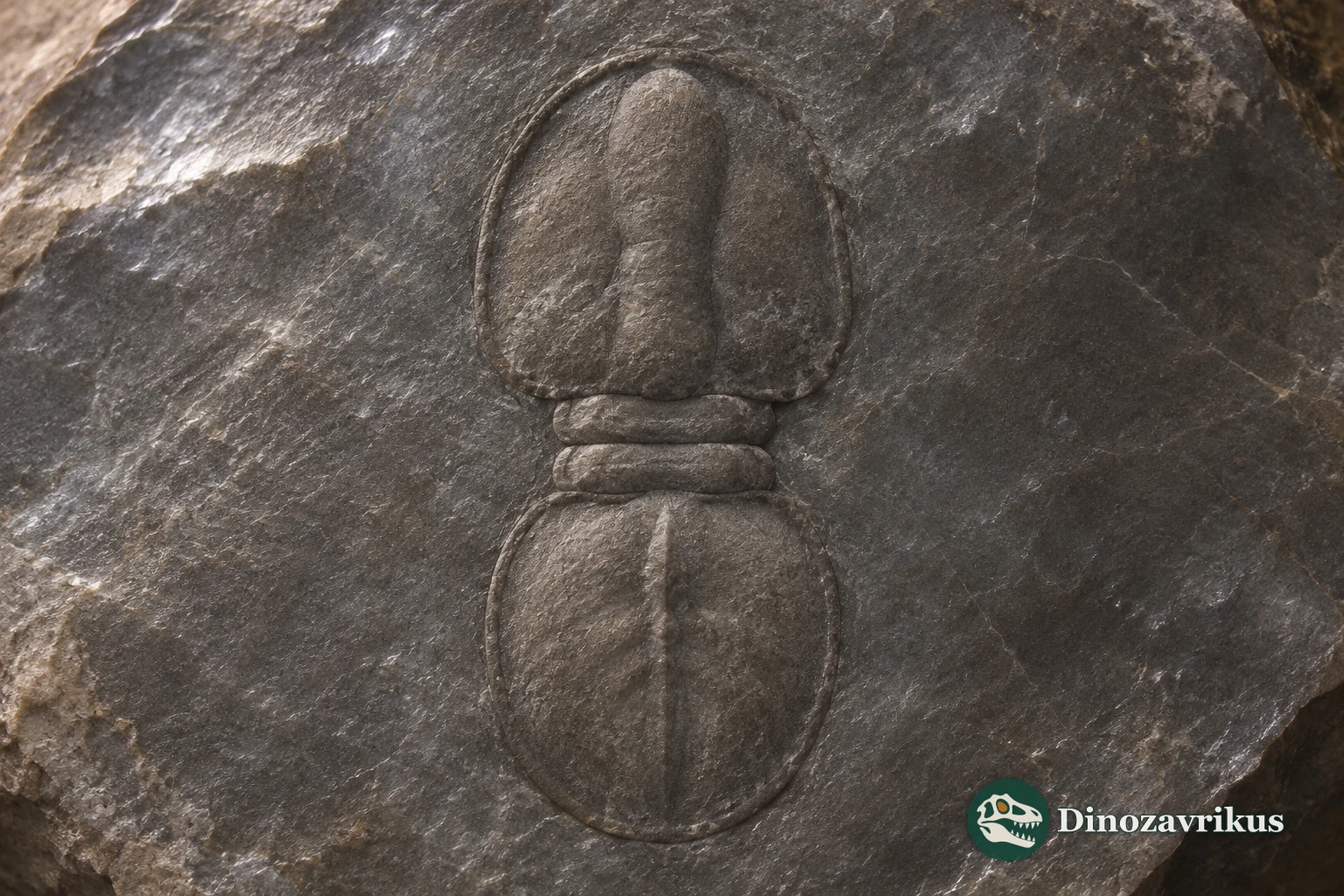
Pentagnostus was a Cambrian agnostoid with a rounded shield at each end of its body. Two short thoracic segments lay between them. Articulated Swedish fossils preserve those segments, while many other collections have yielded isolated shields.
Quick facts
| Group | Agnostida |
|---|---|
| Age of Swedish material | Early Miaolingian, Cambrian |
| Genus named | Elena Lermontova, 1940 |
| Type species | Pentagnostus anabarensis |
| Articulated fossils | Alum Shale, Sweden |
| Thoracic segments | Two |
What can the fossils tell us?
The shields almost meet at the sides. Well-preserved specimens expose the small thorax and its raised axis.
Swedish tail shields range from smooth-rimmed examples to specimens with rear swellings or short spines.
The P. praecurrens Zone lies below the Triplagnostus gibbus Zone in the Scandinavian succession.
Naming the genus and the Swedish fossils
Elena Lermontova established Pentagnostus in 1940, with P. anabarensis as its type species. The Swedish P. praecurrens has a different history. Anders Westergård first named it Agnostus gibbus praecurrens in 1936, treating it as a form of another species.
Thomas Weidner and Jan Ove Ebbestad revised the Swedish fossils. The material from Östnår in Jämtland includes articulated specimen PMU 25711/33. Its head shield is 3.9 mm long and its tail shield is 4.1 mm long. Specimens preserving both shields show the lengths of the individual parts and the number of thoracic segments in the same animal.
Smooth borders and short spines
The Swedish material contains different tail outlines in a single species. Some shields have a smooth border. Others have bumps or short spines toward the rear corners. Border width varies as well. These differences make a combination of head and tail characters more useful than the presence of a spine alone.
In articulated specimens the two segments form a short thorax between the shields. These fossils establish the layout of the exoskeleton. They give no direct evidence for the diet or the anatomy of the soft appendages.
The Pentagnostus interval
In Scandinavia, the P. praecurrens Zone precedes the Triplagnostus gibbus Zone. Older studies sometimes placed the former species in Ptychagnostus. The same species epithet can therefore appear under several genus names in fossil lists.
A separate species, P. bonnerensis, was described from the lower Lakeview Limestone in Idaho as part of a Wuliuan fauna. The Scandinavian and North American fossils help compare marine communities of that age, with different species of the genus documented in the two regions.
Frequently asked questions
How many thoracic segments did Pentagnostus have?
Two. They are visible between the shields in articulated fossils.
What rock yielded the Swedish specimens?
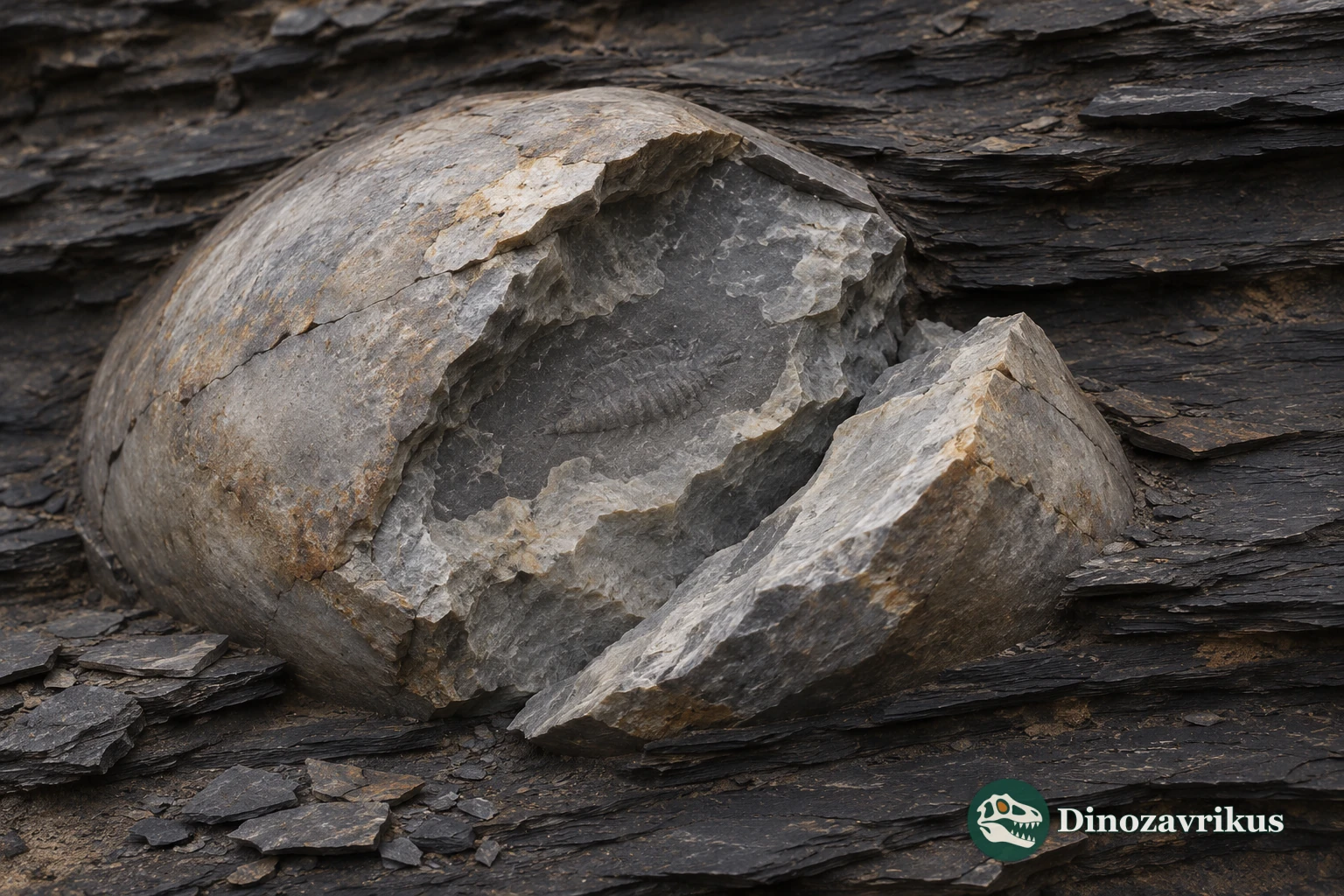
They come from the Alum Shale Formation, including limestone concretions within the shale.
Did every Swedish specimen have tail spines?
Tail shields of the same species include smooth borders, low swellings and short spines.
What is the Pentagnostus zone?
It is an interval of the rock succession named after P. praecurrens. In Scandinavia it precedes the Triplagnostus gibbus Zone.