

Petenyia is an extinct genus of very small shrews, not a marsupial or a large Ice Age mammal. Its type species P. hungarica was described from Hungary. Skulls, jaws and isolated teeth from Pliocene and Early Pleistocene deposits carry most of the evidence; broader classifications also include older Eurasian species.
Its Early Pleistocene record earns it a place in the ice-age animal catalogue, although many finds are older. Beremendia is another fossil shrew for comparison; the two cannot be assumed to have identical diets merely because their teeth occur in small-mammal assemblages.
Quick facts
| Family | Soricidae, shrews |
|---|---|
| Type species | Petenyia hungarica |
| Named by | Tivadar Kormos, 1934 |
| Type material | Skull Ob.3684 from Villány Kalkberg |
| Time | Pliocene to Early Pleistocene for P. hungarica |
| Main evidence | Jaws and tiny pigmented teeth |
What can the fossils tell us?
Type specimen Ob.3684 preserves a skull with nearly complete teeth for comparison with isolated finds. It cannot disclose coat colour or behaviour.
High crests on lower molars, a reduced final molar basin and a heavy jaw help identify P. hungarica. Wear can obscure these characters on a lone tooth.
A 1984 revision accepted only P. hungarica, while later works named additional species and disagreed over the older P. dubia. The genus's time span depends on which forms are included.
Kormos and the Villány type
Tivadar Kormos named Petenyia hungarica in 1934 using material from the Villány area of southern Hungary. The type skull Ob.3684, with nearly complete dentition, was housed at the Hungarian Geological Institute. Jelle Reumer compared it in 1984 with other Hungarian and Dutch samples. Older accounts used late Pliocene terminology for some beds, while later stratigraphic schemes place parts of the sequence near the Pliocene–Early Pleistocene transition. A single rounded age for the type would hide that revision.
Polish research reported P. hungarica at nine localities spanning the Pliocene and Early Pleistocene. These are collections of small teeth and jaws rather than nine complete skeletons. A Zuurland borehole in the Netherlands yielded only part of an upper fourth premolar about 1.53 mm long; its shape is informative but cannot reveal the whole body.
What the teeth actually show
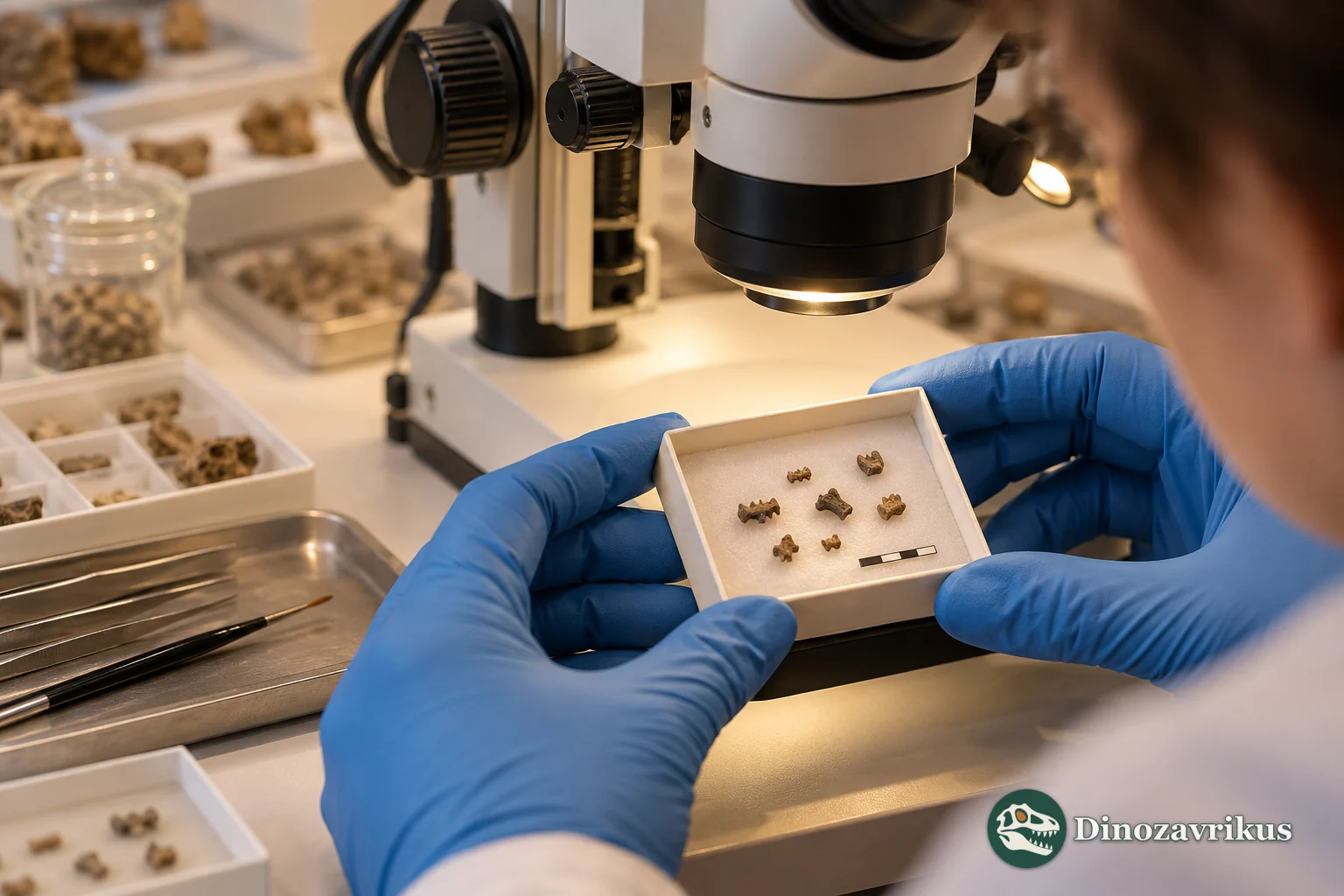
The lower jaw of P. hungarica is relatively robust for a shrew. High crests on the lower molars, a strongly reduced rear basin of the last molar and pigmented enamel contribute to its diagnosis. Researchers also compare the coronoid process, position of the mental foramen and upper premolars. No single worn tooth is an infallible key.
Dental similarity places Petenyia among shrews, but no preserved stomach contents identify its actual prey. Jaws alone do not document fur colour, precise tail length or daily activity. The life reconstruction uses a plausible shrew form while leaving such details explicitly artistic.
Why the species list changed
Reumer treated P. neglecta as a synonym of P. hungarica: the apparent diagnostic incisor condition of the former type resulted from wear. He removed other names and then recognised only one valid Petenyia species. Barbara Rzebik-Kowalska later named P. robusta from Polish Pliocene sites; P. katrinae was described from China. The older P. dubia has been retained in the genus by some authors and moved elsewhere by others.
A fossil consisting only of a lower jaw may support a generic identification without enough upper-tooth evidence to choose a species. Because different revisions include different early forms, they also give different first appearances for the whole genus. The Pliocene and Early Pleistocene record of the type species remains the firmer part of the account.
Frequently asked questions
Was Petenyia a marsupial?
No. Petenyia was a shrew in the family Soricidae, identified mainly through small jaws and teeth.
What is the type specimen of P. hungarica?
A skull with nearly complete dentition, Ob.3684, from Villány Kalkberg in Hungary.
Why do sources list different Petenyia species?
Revisions disagree about worn type material and older forms. P. neglecta was synonymised with P. hungarica, while placement of P. dubia is disputed.
Do we know exactly what Petenyia ate?
No direct meal evidence is known. Tooth anatomy supports its shrew identification but cannot specify individual prey.