

Phalagnostus was a small Cambrian trilobite. The raised shell axis that stands out in many trilobites almost merges with the rest of its shields. The shape of the borders, low nodes and the position of fossils in the rock succession help distinguish its species.
Quick facts
| Group | Agnostoid trilobites |
|---|---|
| Age of the fossils discussed | Middle Cambrian |
| Genus named by | B. F. Howell, 1955 |
| Type species | Phalagnostus nudus |
| Records | Czechia, Denmark and Sweden |
| Fossil material | Head and tail shields and articulated exoskeletons |
What can the fossils tell us?
The head surface is almost smooth. A species from younger beds in southern Sweden has a narrow border.
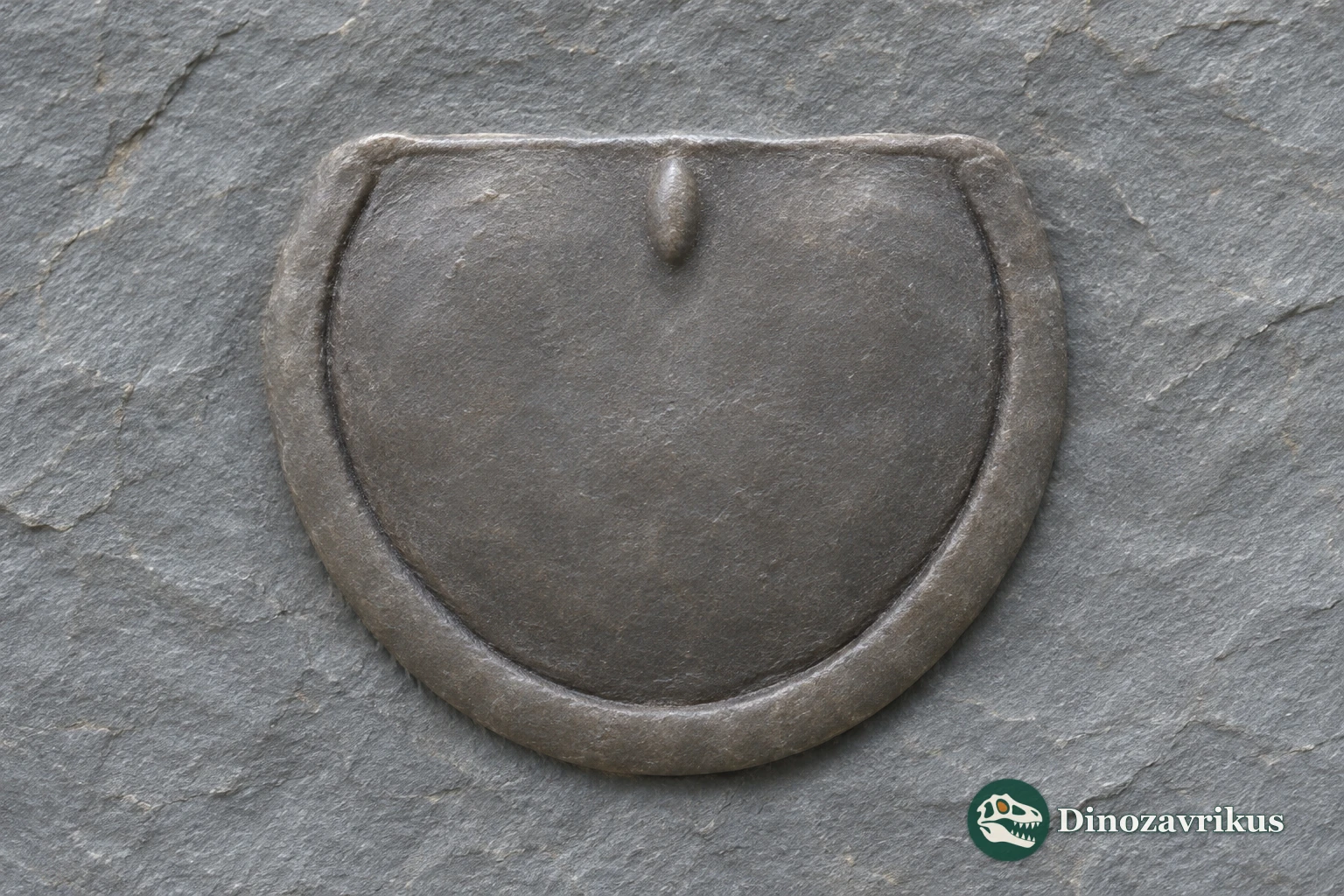
It separates a broad rim. A small elongate node lies well forward on the nearly smooth axis.
Several small indentations interrupt the rear of the tail shield in one specimen. They were interpreted as a healed injury.
The Bohemian type species and fossils from Bornholm
Ernst Beyrich described the type species in 1845 as Battus nudus. Benjamin Franklin Howell assigned it to the new genus Phalagnostus in 1955. Its head surface is nearly featureless and has no distinct rim. The rounded tail has a broad border and a small elongate swelling towards the front of its axis.
The type species is known from Czechia and the Middle Cambrian of Bornholm. The Danish specimens occur in the Acidusus atavus Zone of the Drumian Stage.
Similar shields from different beds
The Swedish P. scanicus also has a round tail shield with a broad rim and an elongate node. The published head shield has a narrow border absent in P. nudus. The Swedish specimens of P. scanicus are from the younger Ptychagnostus punctuosus Zone. Both surface details and geological age help distinguish the fossils.
A Bohemian exoskeleton with a damaged edge
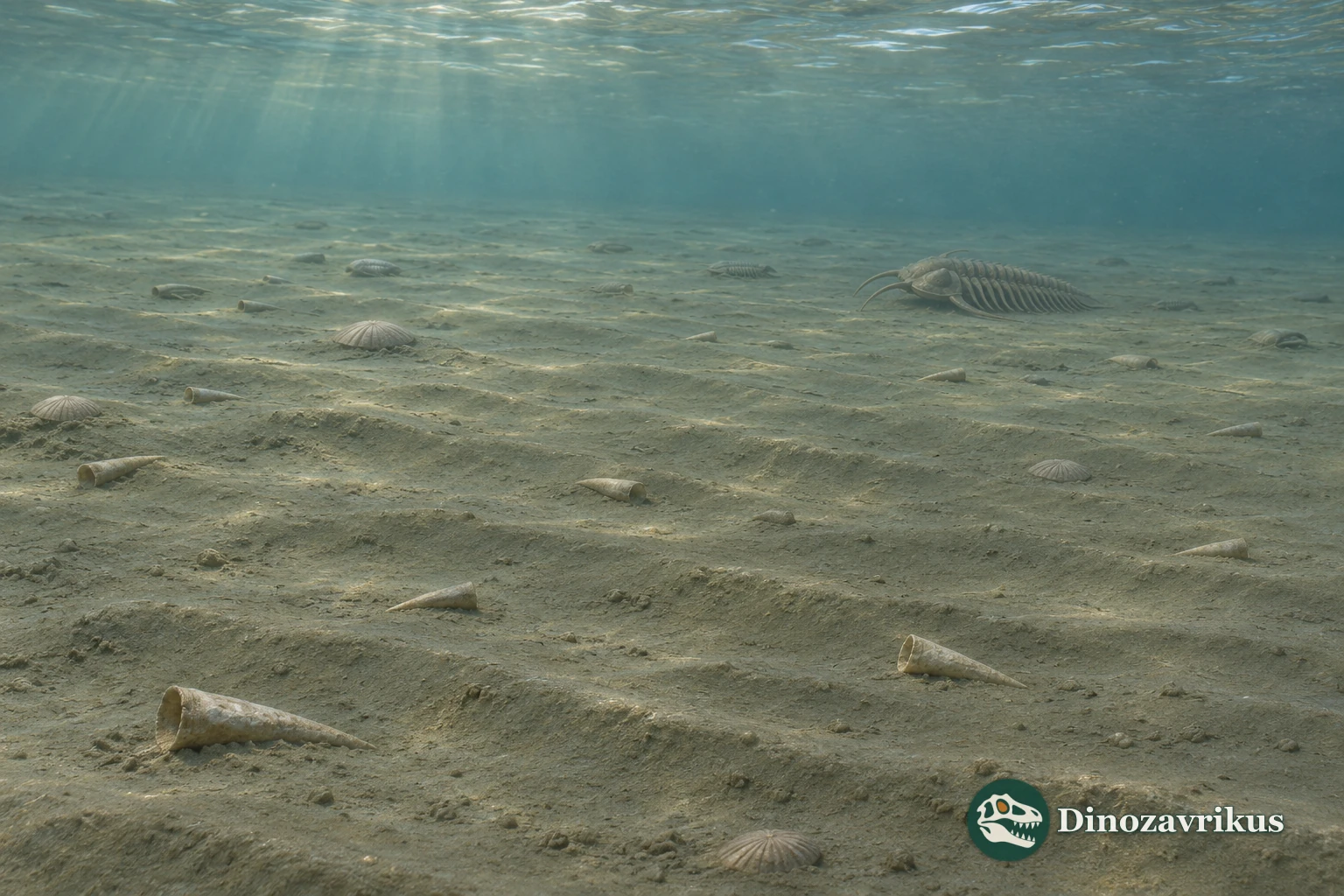
In the Jince Formation of Czechia, P. prantli occurs alongside Peronopsis. The fossil association is interpreted as relatively shallow water. It describes the setting in which the remains accumulated.
One articulated P. prantli has several small indentations around the rear margin of the tail shield. The researchers found evidence of shell repair. They discussed a predator attack as a possible origin of the injury. The marks do not identify the animal that may have made them.
Frequently asked questions
What was the first name of the type species?
Beyrich named it Battus nudus in 1845. It was later assigned to Phalagnostus.
How can the head and tail shields of the type species be told apart?
The head shield is almost smooth and lacks a distinct border. The tail has a broad rim and an elongate axial node.
Where does Phalagnostus occur on Bornholm?
In beds of the Drumian Acidusus atavus Zone on the Danish island of Bornholm.
What do the indentations in the Czech specimen show?
They were interpreted as a healed injury. Its cause cannot be established from that shell alone.