

Phugatherium is an extinct genus in the capybara lineage. Florentino Ameghino introduced the name in 1887 for Argentine fossils, with P. cataclisticum as the type species. Later work recognized several South American Pliocene forms and transferred a North American species, P. dichroplax, into the genus. That northern line reached the early Pleistocene. The cover shows a plausible capybara-like animal, not the known coat or measurements of one fossil individual.
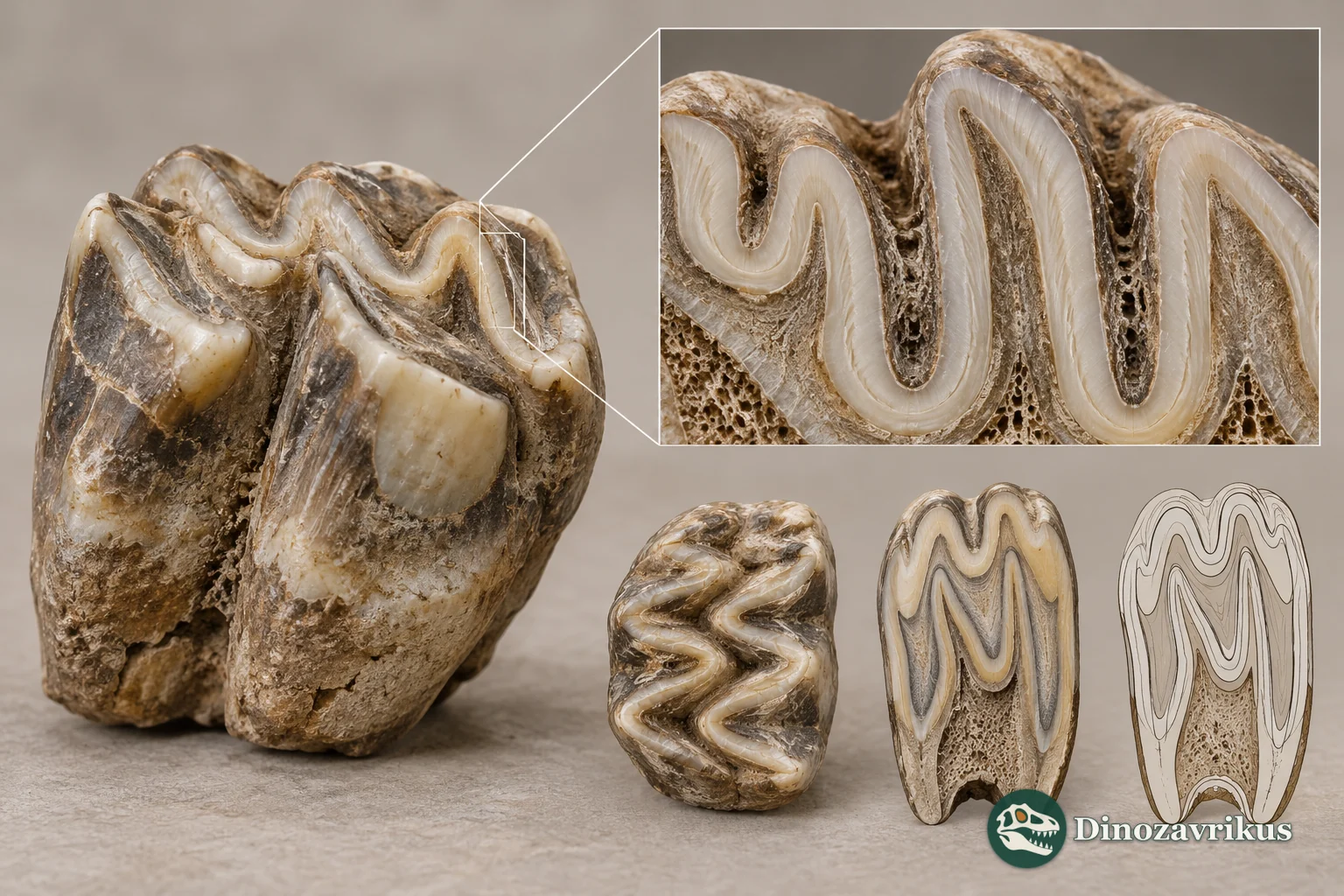
Many determinations rely on jaws and ever-growing cheek teeth. Their chewing surface changes as an animal grows and wears its teeth, so a single isolated molar has limits.
Quick facts
| Genus | Phugatherium Ameghino, 1887 |
|---|---|
| Type species | P. cataclisticum |
| Group | Caviidae, Hydrochoerinae |
| Evidence | Skulls, jaws and complex cheek teeth |
| Main time range | Pliocene |
| Later northern species | P. dichroplax into the early Pleistocene |
| Range | South America, later Mexico and southern USA |
What can the fossils tell us?
The third upper molar has repeated laminae and grooves. Tooth position, growth and wear matter when naming a species.
A 2014 revision joined Chapalmatherium to Phugatherium. In 2015, North American material formerly called Neochoerus dichroplax was reassigned to P. dichroplax.
Argentine, Bolivian, Mexican and US records give points in time and place. They do not trace every step of a migration route.
Argentine fossils and a revised name
Capybara fossils accumulated several genus names as researchers compared body size and folded teeth. The 2014 revision by Vucetich and colleagues treated Chapalmatherium as a junior synonym of Phugatherium. It recognized P. cataclisticum from Monte Hermoso, P. novum from Chapadmalal and P. saavedrai from Bolivia's Umala Formation. These are separate collections rather than stages of one animal.
Adult third upper molars may show roughly 14 to 18 laminae, with some posterior plates joined. Groove depth and other cheek teeth also matter. Age, wear and exact tooth position have to be established before this count can be used taxonomically.
From South America toward the north
A 2015 study reassigned North American fossils previously called Neochoerus dichroplax to Phugatherium dichroplax, also combining some Mexican material named N. cordobai. Other research draws species boundaries differently. The Neochoerus profile helps compare the two interpretations without assuming an older label proves identity.
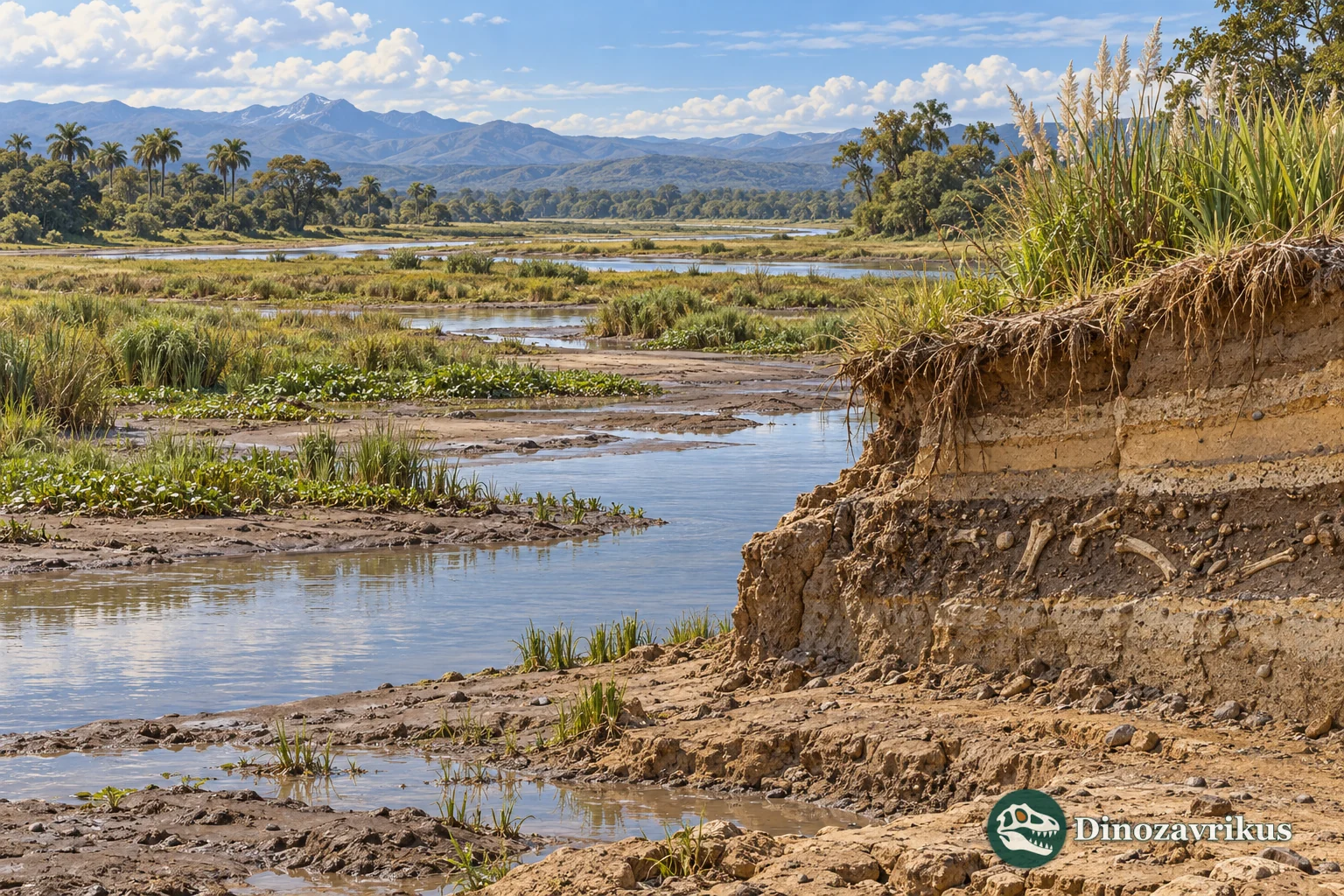
The Mexican record begins in the Pliocene; Arizona and Florida add later sites. The northern species crosses into the early Pleistocene, while most named South American Phugatherium species are Pliocene. Chilean Mininco Formation fossils formally extended the genus's known southern distribution in a recent study. Localities mark observed points, not every step of an uninterrupted route.
What remains uncertain
High, continuously growing cheek teeth are consistent with processing abrasive vegetation. They do not specify one diet for every species. Tooth wear and locality-specific evidence are needed to test feeding interpretations. Nor do isolated jaws establish exact body mass, social groups, swimming frequency or coat color.
The Quaternary period concerns the youngest portion of the northern record. Dates attached to one fossil bed cannot be assigned to every Phugatherium specimen. Both supplementary illustrations here are educational reconstructions rather than photographs of a type molar or a named fossil exposure.
Frequently asked questions
Did Phugatherium live only in South America?
No. Fossils assigned to P. dichroplax also come from Mexico and the southern United States.
Why is Chapalmatherium included in Phugatherium?
A 2014 comparison of fossil characters placed its species under the older genus name.
Were all species Pleistocene animals?
No. Most named South American species are Pliocene; the northern P. dichroplax lineage reaches the early Pleistocene.
Can one molar give a precise body mass?
No. A precise mass needs more skeletal evidence and a stated estimation model.