

Phuwiangvenator yaemniyomi was a carnivorous dinosaur from the Early Cretaceous Sao Khua Formation. Its type skeleton includes hand bones with curved claw cores, vertebrae and parts of both hind limbs. Comparing the size of these bones with those of a related dinosaur yielded an estimate of about six metres in length.
Quick facts
| Group | Theropods (Megaraptora) |
|---|---|
| Age | Early Cretaceous |
| Region | Asia (Khon Kaen Province, Thailand) |
| Diet | Carnivore |
| Type species | Phuwiangvenator yaemniyomi |
| Length | About 6 m, estimated by comparison |
| Holotype | SM-PW9B |
| Formation | Sao Khua Formation |
What can the fossils tell us?
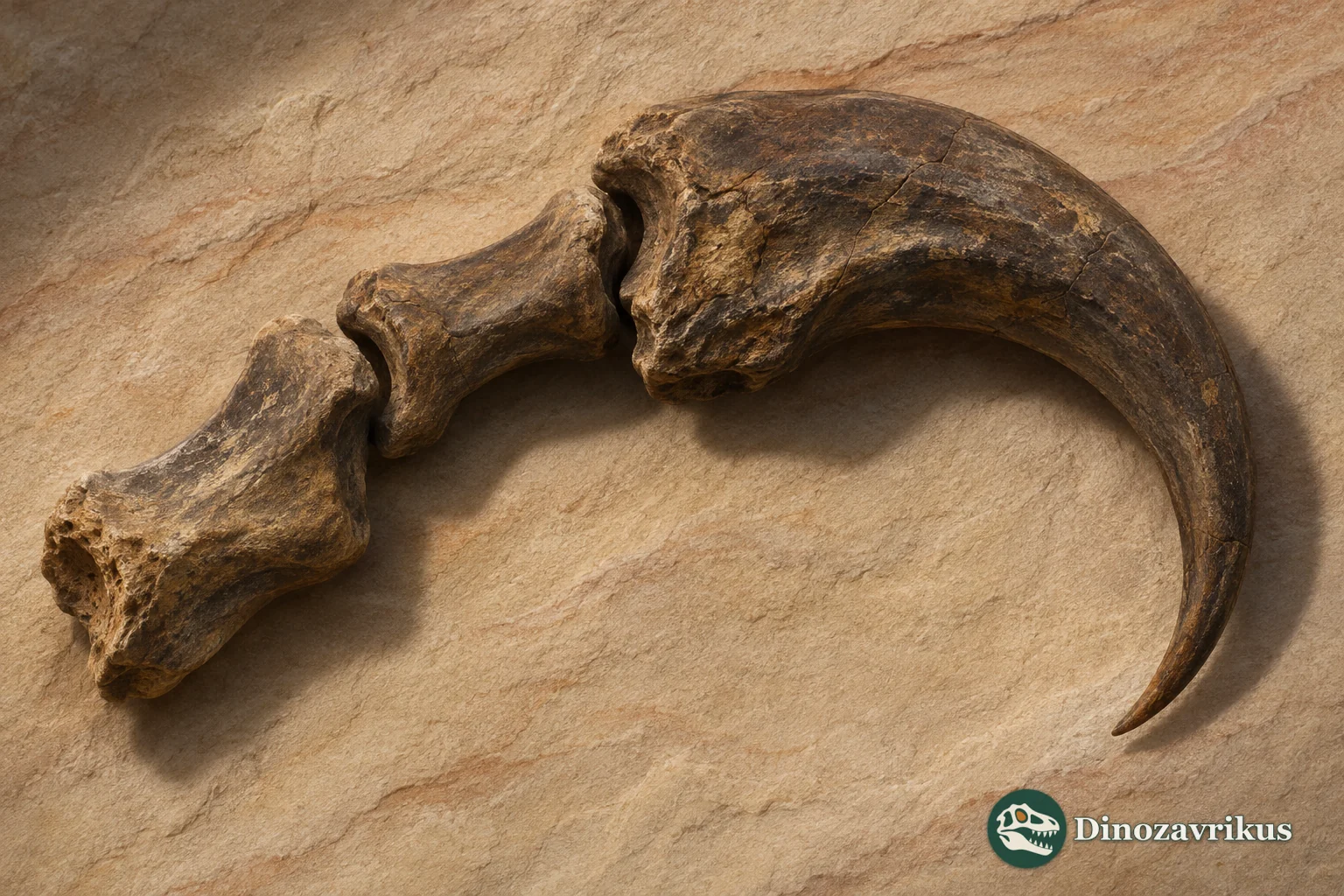
The second metacarpal, finger bones and curved claw bones from the right hand allow comparisons with better-known megaraptorans.
The type specimen includes the fused astragalus and calcaneum from the left ankle and parts of several metatarsals. Other finds from the site added pieces of the metatarsus.
At site 9B, bones from the trunk and limbs of one dinosaur were recovered close to one another. A skull is absent from the described material.
A partial skeleton from Phu Wiang
The type specimen comes from site 9B in Phu Wiang, Khon Kaen Province. Adun Samathi, Pratueng Chanthasit and Martin Sander described it in 2019. The genus name means hunter from Phu Wiang. The species name honours Sudham Yaemniyom, who found the first reported dinosaur bone in Thailand in 1976.
SM-PW9B includes a back vertebra, three fused sacral vertebrae, parts of the right hand, both tibiae and elements of the ankle and foot. Additional fragments of the fibula and metatarsals from the type locality were described in 2022. They refine the picture of the hind limb, while the head remains unknown.
A curved claw and an estimate of size
The bones at the tips of the fingers form curved cores for the claws. Their shape gives a minimum outline of the claw, which would also have had a sheath of keratin. The original study drew on features from the hand, hind limbs and vertebrae to place Phuwiangvenator near the base of Megaraptora.
The authors estimated a body length of around six metres by comparison with the Australian Australovenator. The estimate depends on how closely the two animals shared body proportions. Its identity as a megaraptoran supports a carnivorous diet, while the fossils preserve no direct evidence of particular prey or a hunting method.
Age of the Sao Khua Formation
The Sao Khua Formation of northeastern Thailand records rivers and floodplains that accumulated sediment and vertebrate remains. The original description cited a late Barremian age. Later geological work placed the sampled succession earlier, in the late Valanginian to early Hauterivian. Those dates constrain the rock succession and give context for the fossil. They are not a direct date for the skeleton.

Frequently asked questions
Where was Phuwiangvenator discovered?
The type bones come from site 9B in the Sao Khua Formation at Phu Wiang in northeastern Thailand.
How large was Phuwiangvenator?
The original team estimated a length of about six metres by comparing the preserved bones with those of Australovenator.
What kind of theropod was it?
The original analysis placed it on an early branch of Megaraptora outside the family Megaraptoridae.
Has a skull been found?
A skull is absent from the reported material. The head in the reconstruction is based on comparisons with other theropods.