

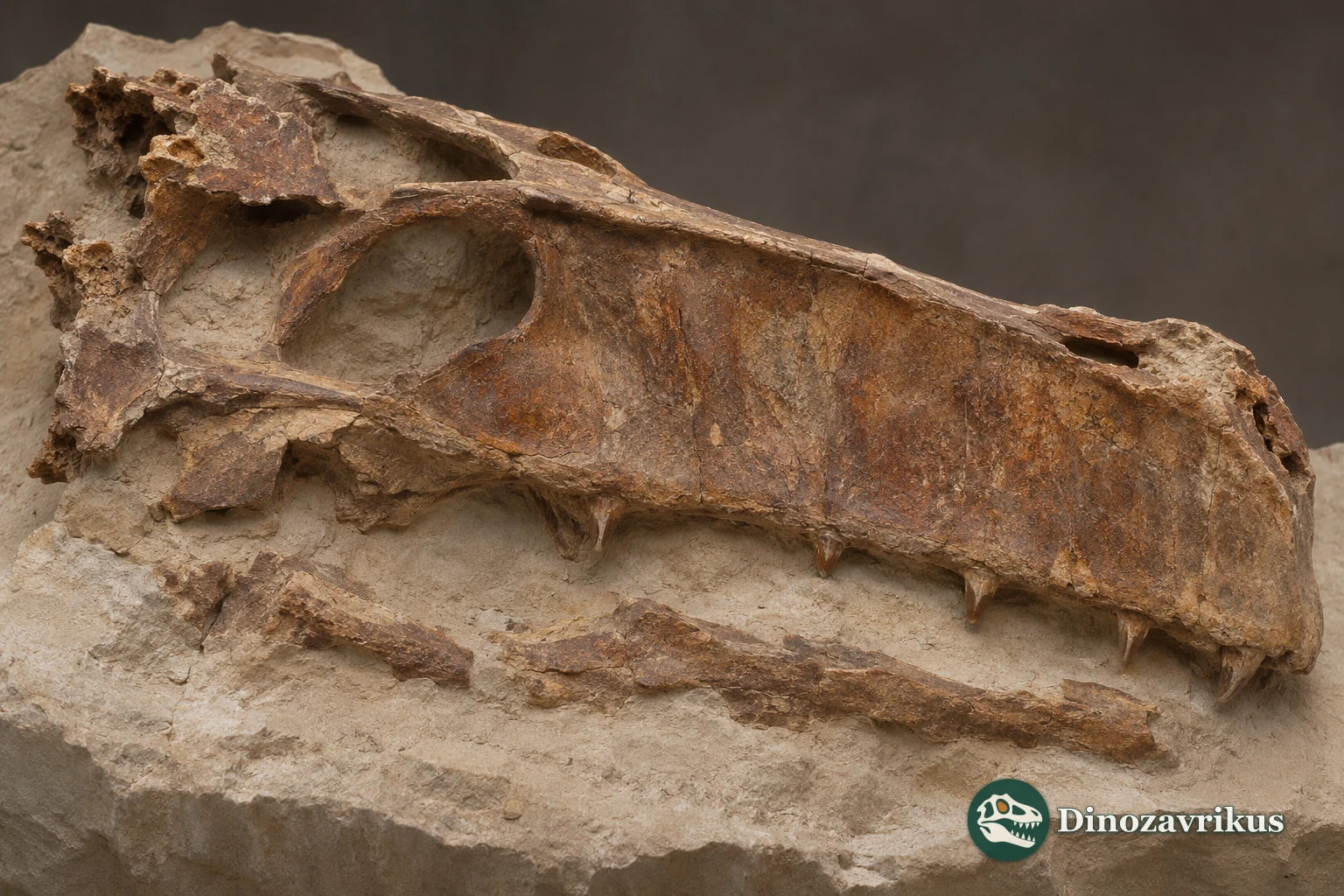
Planocrania is known from skull remains found in southern China. Its narrow, deep snout had nearly vertical sides, and the teeth were flattened from side to side. These features have been compared with those of other Palaeogene crocodyliforms thought to have spent much of their time on land.
Quick facts
| Group | Planocraniidae |
|---|---|
| Age | Palaeocene |
| Type species | Planocrania datangensis |
| Type locality | Nanxiong Basin, Guangdong, China |
| Main material | Incomplete skulls and lower jaw material |
| Distinctive feature | Deep, laterally compressed snout |
What can the fossils tell us?
The Guangdong skull came from the Nongshan Formation. More recent work places it in the middle Palaeocene.
The original description reported 11–12 teeth in each maxilla in the Hengdong specimen, compared with 16 in the type species.
A later examination found no prominent serrations like those in Boverisuchus, although very fine serrations remain possible.
Two finds in southern China
Li Jinling described the type species, Planocrania datangensis, in 1976 from an incomplete skull from the Nongshan Formation of the Nanxiong Basin, Guangdong. In 1984 she named a second species, P. hengdongensis, for an incomplete skull and lower jaw, IVPP V 6074, from near Hengdong in Hunan.
The Guangdong specimen is now assigned to the middle Palaeocene. The red beds that yielded the Hengdong specimen are correlated with the Lower Lingcha Formation, whose age is probably late Palaeocene.
A deep snout and flattened teeth
The snout was narrow in dorsal view and deep in profile. A notch in the upper jaw accommodated the large fourth tooth of the lower jaw. Li reported 16 teeth in each maxilla of the type species and 11–12 in the Hengdong skull. Shallow grooves run down the crowns of the latter.
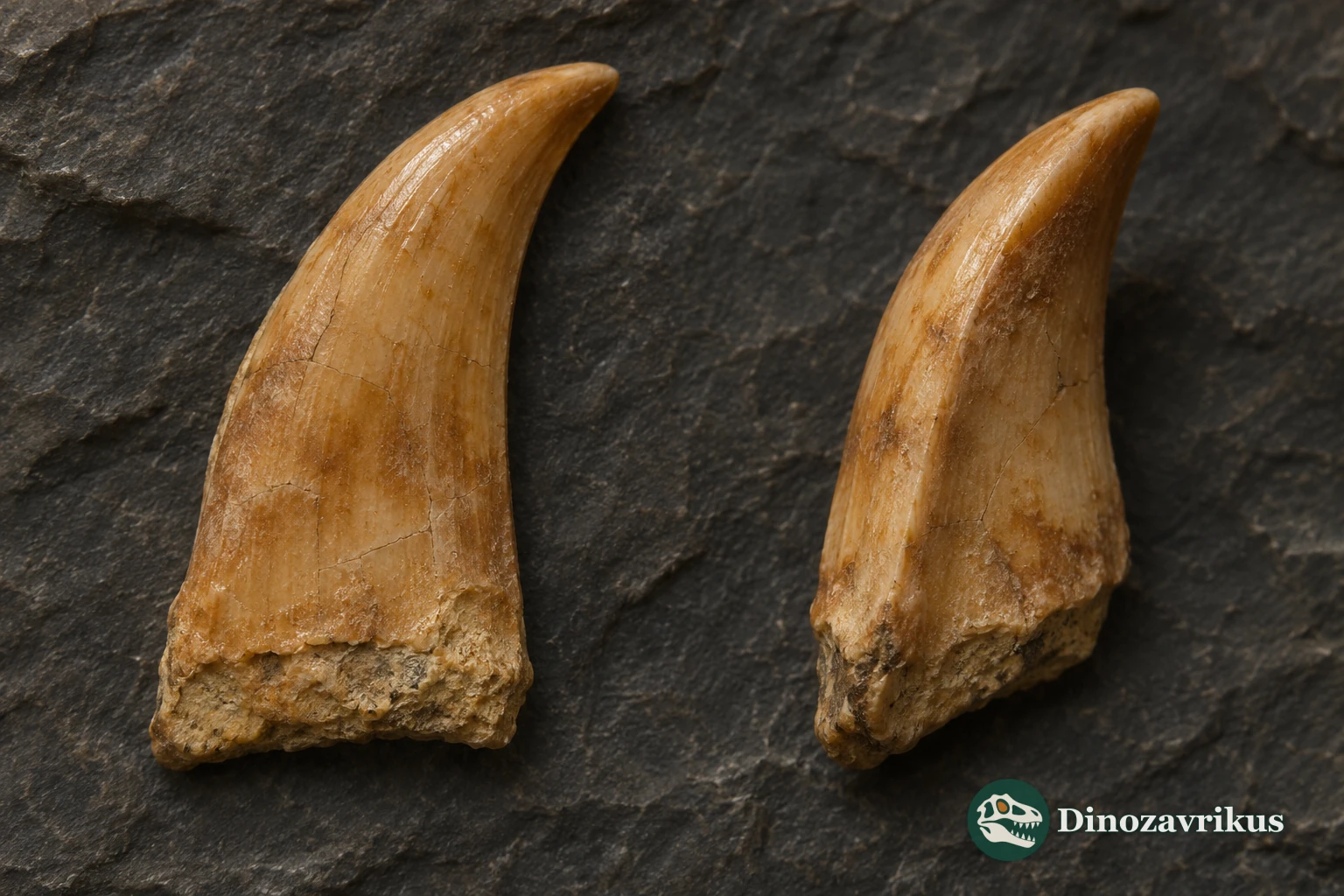
The original descriptions reported serrations on the edges of the teeth. Christopher Brochu confirmed that the crowns were flattened. He found no serrations as prominent as those of Boverisuchus.
What the skull suggests about life on land
The deep snout and shape of the teeth are compatible with a terrestrial hunting hypothesis. Limb bones from related forms provide another line of evidence for that group. The skulls of Planocrania do not show its limb proportions, gait or how much time it spent away from water.
Similarities between the skulls led to their original placement in the same genus. One later analysis placed the Hengdong species among alligatoroids, so its assignment to Planocrania remains open to debate.
Frequently asked questions
Where was Planocrania found?
The type species comes from the Nanxiong Basin in Guangdong. The specimen assigned to the second species was found near Hengdong, Hunan.
What did its skull look like?
The snout was deep, with almost vertical sides. The tooth crowns were compressed from side to side.
Did Planocrania hunt on land?
The snout and teeth are compatible with that hypothesis. The known specimens cannot establish its gait or how much time it spent on land.
Do both species belong to the same genus?
Li Jinling assigned both to Planocrania. A later analysis placed the Hengdong species differently, leaving its position open to debate.