

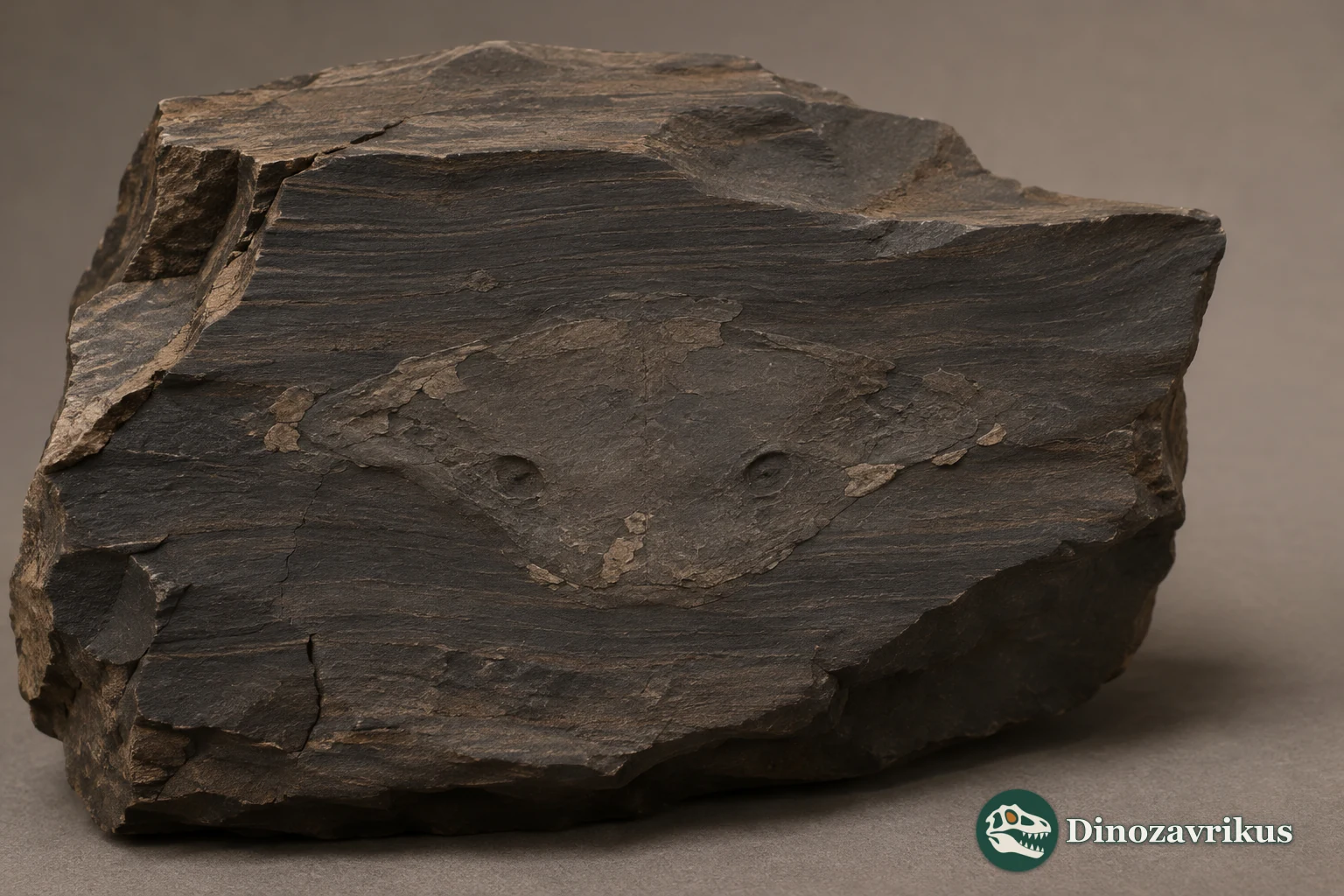
Platyrhinops was a small Carboniferous temnospondyl amphibian. The type species, Platyrhinops lyelli, is known from several fossils found at Linton, Ohio. They show two points on the teeth along the jaw margins and a pair of flattened bones that once supported tissues in the throat.
Quick facts
| Group | Temnospondyls, amphibamids |
|---|---|
| Age | Late Carboniferous, Moscovian |
| Region | North America, United States (Ohio) |
| Type species | Platyrhinops lyelli |
| Scientific name | Platyrhinops |
| Diet | Exact prey is unknown |
What can the fossils tell us?
The Ohio fossils retain two-pointed marginal teeth, frontals that widen towards the snout and a pair of flattened ceratohyals.
Skull features place Platyrhinops close to Amphibamus. Comparison with the type species of Amphibamus supports keeping the two genera separate.
Czech fossils have been described under a separate species name. The identification of some of the material remains disputed.
Why the Linton specimens matter
The carbon-rich beds at Linton yielded several skulls and parts of skeletons of the type species. Jennifer Clack and Andrew Milner compared previously described fossils with specimens that had not been studied in detail. One shows teeth of unusually varied sizes along the premaxilla at the tip of the snout. Comparing individuals helps distinguish a peculiarity of that specimen from a consistent feature of the species.
The teeth, palate and throat
Two points can be seen on the teeth that border the jaws. The palate has elongated choanae, the openings where the nasal passages enter the mouth. Two blade-shaped ceratohyals formed part of the skeleton of the throat. Their shape is one clue to how the support for soft tissues changed in adult amphibamids. Neither the teeth nor these bones establish what Platyrhinops ate.
Its relationship to Amphibamus
Older descriptions sometimes used the name Amphibamus lyelli. Clack and Milner could find no shared derived features that justified placing the species in Amphibamus, though both genera belong to the same branch of the amphibamid family. Small bones and contacts in the skull distinguish them more clearly than the broad outline of the head.
The Nýřany fossils
Fossils from Nýřany, in the Czech Republic, were described as Platyrhinops fritschi. Subsequent work assigned some of the specimens to other amphibians. The best-established record of the genus is therefore in North America. The proposed European record depends on how the remaining material is identified.
Frequently asked questions
Where was the type species found?
The main series of *Platyrhinops lyelli* comes from carbon-rich beds at Linton, Ohio, in the United States.
What is distinctive about its teeth?
The marginal teeth have two tips. In one specimen, the teeth at the tip of the snout also vary unusually in size along the row.
Are Platyrhinops and Amphibamus the same genus?
A revision of the American material supports two closely related but distinct genera.
Did Platyrhinops live in Europe?
A Czech species has been named *P. fritschi*, but some of the fossils referred to it have been disputed. The Ohio material is more secure.