

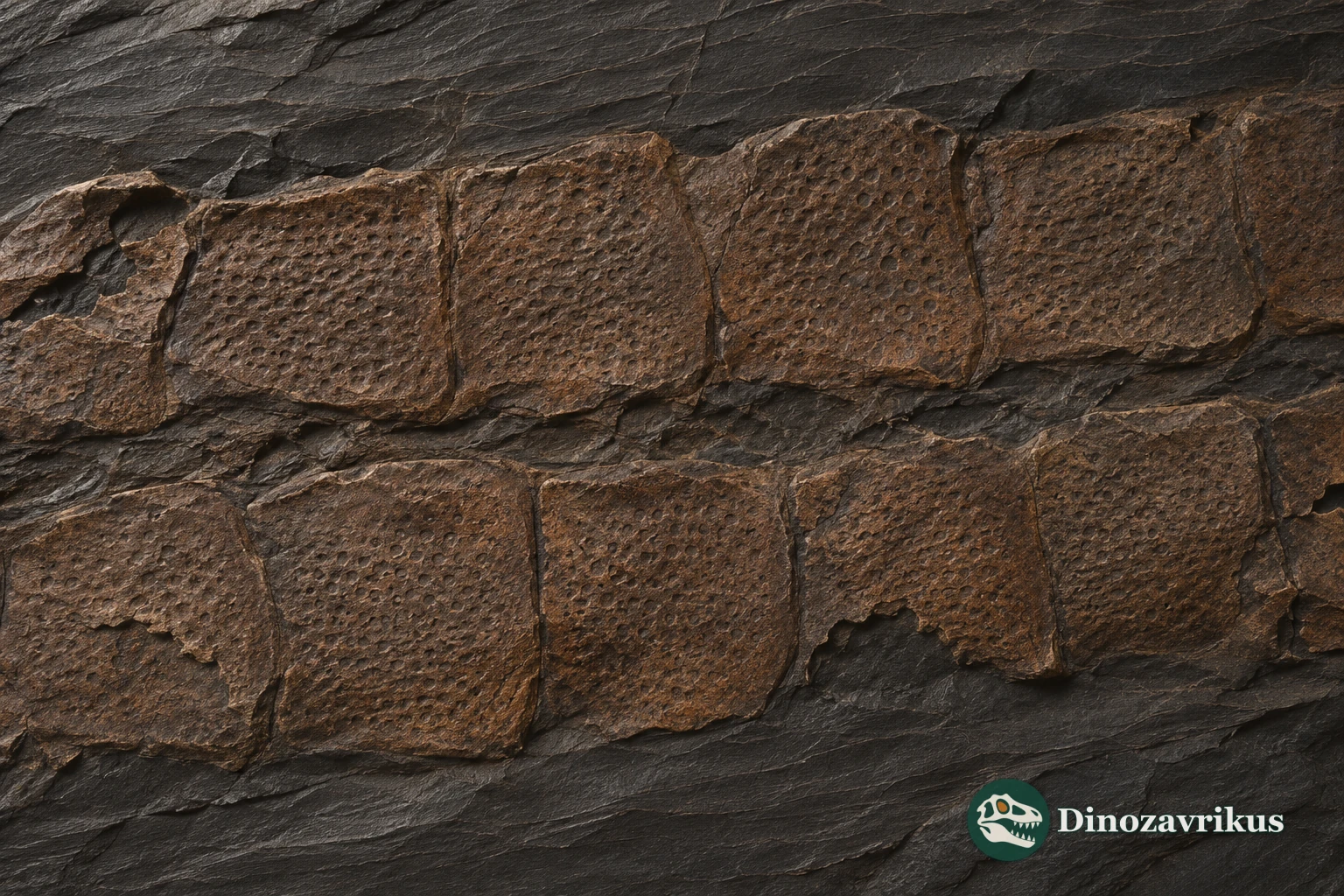
Platysuchus multiscrobiculatus is known from Early Jurassic fossils in Germany and Luxembourg. The German skeletons preserve two rows of wide bony plates along the back. The plates fitted closely and continued from the neck onto the tail. Additional rows of smaller plates covered the underside.
Quick facts
| Species | Platysuchus multiscrobiculatus |
|---|---|
| Group | Teleosauridae, Thalattosuchia |
| Age | Early Jurassic, early Toarcian |
| Localities | Holzmaden area, Germany, and Foetz, Luxembourg |
| Holotype | SMNS 9930, nearly complete skeleton |
| Size | Up to about 3 m among studied German specimens |
What can the fossils tell us?
The type preserves a sequence of dorsal osteoderms from the neck onto part of the tail. Bones from the back and belly differ in size and shape.
The Foetz fragment preserves five premaxillary tooth positions, which help identify it as Platysuchus outside the German localities.
The humerus is about 68–73% as long as the femur in measured specimens. This proportion allows comparisons across species, while time spent on land remains unknown.
Skeletons in the Posidonia Shale
Fritz Berckhemer described the species in 1929 as Mystriosaurus multiscrobiculatus. Frank Westphal established Platysuchus for it in 1961, drawing attention to the body proportions and the armour. The earlier name links its history to Mystriosaurus, another long-snouted Early Jurassic crocodylomorph.
The Holzmaden holotype, SMNS 9930, is held at the State Museum of Natural History Stuttgart. The slab preserves the head, vertebral column, parts of all four limbs and much of the armour. The weight of the overlying sediment flattened the skull. The ribs conceal some of the belly plates, which can be studied in other specimens.
How the armour fitted together
The plates are osteoderms, bones that grew within the skin. The broad dorsal plates form two longitudinal rows with heavily pitted outer surfaces. Farther down the tail, single plates take the place of pairs.
The belly shield along the trunk comprised six longitudinal rows. Its plates were generally smaller than the ones on the back. Some shifted after death, exposing surfaces and parts of the shield that are otherwise hidden by the surrounding bones.
A Luxembourg fossil and clues to locomotion
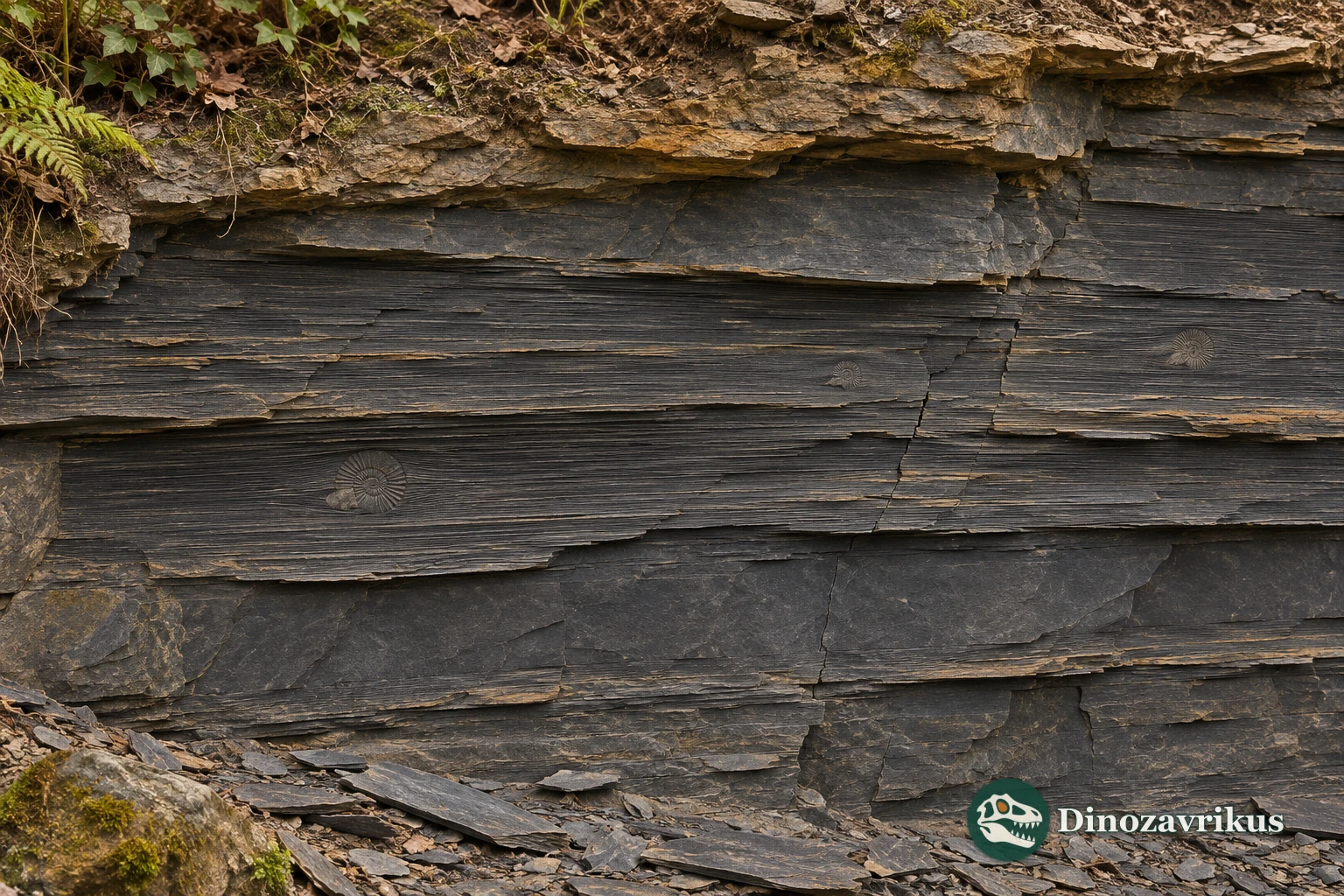
A partial snout from Foetz, MNHNL TU895, preserves five tooth positions in the premaxilla. These helped link the fragment to the German specimens. The ammonite zone of the Luxembourg bed dates it to the early Toarcian, the same broad interval as the German type material.
The interlocking dorsal shield and the proportions of the limbs led researchers to propose that Platysuchus may have moved on land more readily than some other thalattosuchians. The fossils preserve the shape and placement of the bones. How often the animal came ashore remains open.
Frequently asked questions
What formed the armour of Platysuchus?
Separate bones in the skin. Two rows of broad plates protected the back, and rows of smaller plates covered the belly.
Where is the holotype kept?
The nearly complete skeleton SMNS 9930 is held at the State Museum of Natural History Stuttgart.
What survives in the Luxembourg specimen?
Part of the tip of a snout with five tooth positions in the premaxilla.
What do the fossils say about movement on land?
Limb proportions and the interlocking shield suggest it could move on land. The bones cannot show how often it did so.