

Plethopeltis was a Late Cambrian trilobite genus. Around Saratoga Springs, it is particularly common in strata that preserve layered microbial carbonate buildups. Other trilobites dominate the limy sands in the same rock succession.
Quick facts
| Group | Trilobites |
|---|---|
| Age | Late Cambrian, Furongian |
| Region | North America (United States and Canada) |
| Diet | Unknown |
| Type species | Plethopeltis saratogensis |
| Genus named by | Percy Raymond, 1913 |
What can the fossils tell us?
USNM 58558 came from the Hoyt Limestone west of Saratoga Springs. The tail shield in the type series is a separate specimen.
The carbonate buildups contain more Plethopeltis remains, while the limy sands are dominated by Prosaukia.
Other genera share this feature. Identification also draws on the shape of the head and tail shields.
The rocks around Saratoga Springs
Charles Walcott described the type species in 1890 from the Hoyt Limestone of New York. Percy Raymond established Plethopeltis in 1913. The type series includes a cranidium, the central part of the head shield, and a separate pygidium, or tail shield. The cranidium has a convex central lobe with faint lateral furrows.
Rolf Ludvigsen and Stephen Westrop distinguished two fossil assemblages in the Hoyt Limestone. Plethopeltis dominates in layered microbial buildups, while Prosaukia is more common in the limy sands deposited on level parts of the seabed. Comparisons between sections therefore need to account for both depositional setting and age.
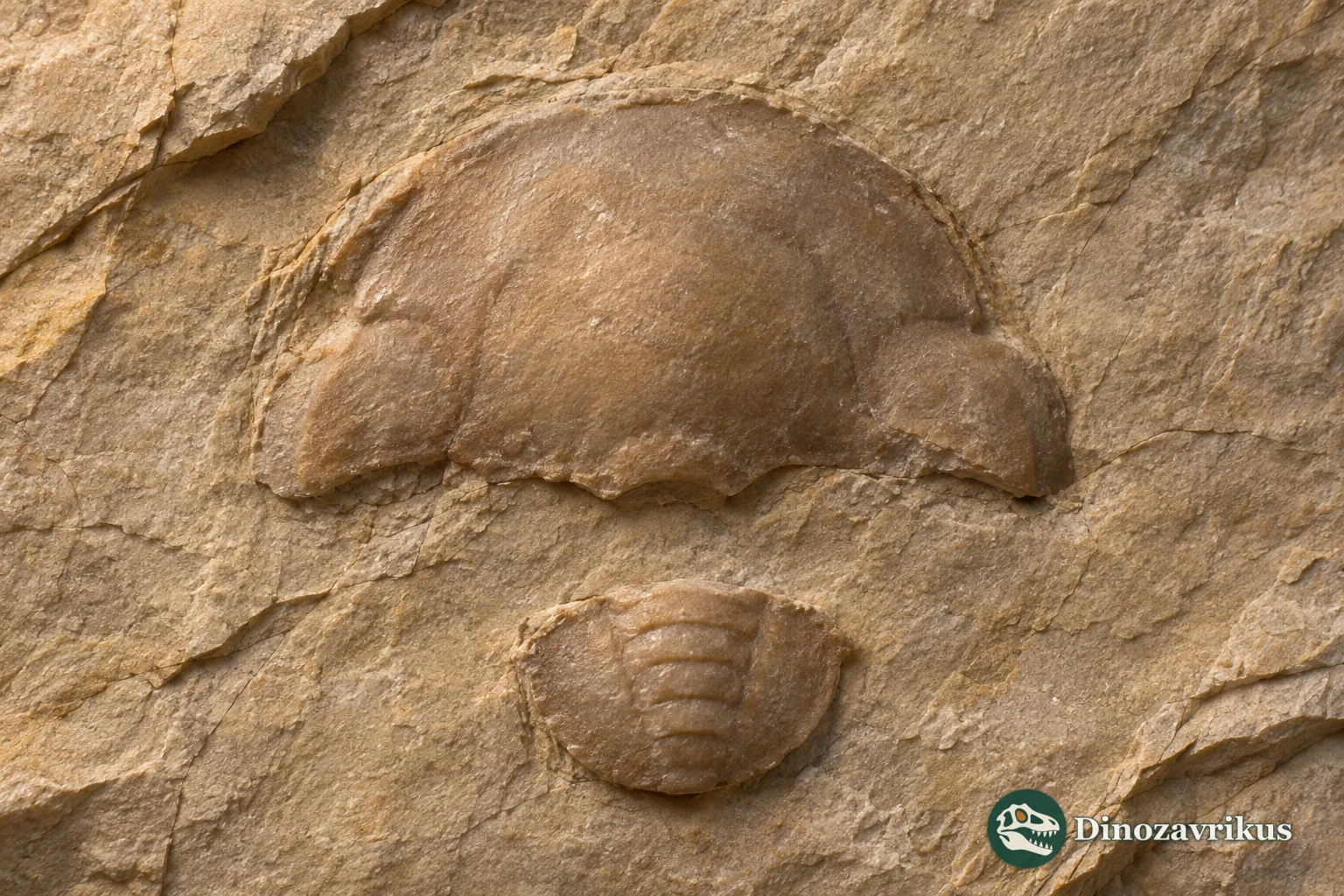
Identifying isolated armour
The thoracic segments of some articulated specimens have angular ends. Comparable tips occur in Leiocoryphe and Stenopilus. Tail shields assigned to Plethopeltis vary more widely in shape. Assemblages with species of other trilobites, including Eurekia, help correlate younger Late Cambrian beds elsewhere in North America.
Plethopeltis was also described from limestone boulders of the Cow Head Group in western Newfoundland. A specimen from the La Flecha Formation in Argentina was compared with the Saratoga species and recorded as Plethopeltis cf. saratogensis. Its exact species identity is unresolved.
Frequently asked questions
Where was the type species found?
West of Saratoga Springs, New York, in the Hoyt Limestone.
How much of the holotype is preserved?
USNM 58558 preserves the central head shield. The tail shield included in the type series is a different specimen.
Which deposits near Saratoga contain abundant Plethopeltis?
The beds that preserve microbial carbonate buildups.
What does cf. mean in the name of the Argentine fossil?
It records a comparison with P. saratogensis. The exact species assignment remains open.