

Pliobatrachus is a genus of extinct frogs in the family Palaeobatrachidae, known from scattered European bones. The type species, P. langhae, was named from material in Romania; similar fragments were later reported in central and eastern Europe. Many are called P. cf. langhae: they resemble the species, but the identification is not certain.
The genus belongs in the ancient amphibian catalogue. It can be compared with the older palaeobatrachid Palaeobatrachus, but shared-looking bones do not make the genera one animal: family boundaries and individual fossil assignments have been reassessed. The finds span the Late Neogene and Early Pleistocene, and each specimen must be tied to its own layer and locality.
Quick facts
| Scientific name | Pliobatrachus langhae; some eastern European specimens are P. cf. langhae |
|---|---|
| Group | Anuran amphibian in the extinct family Palaeobatrachidae |
| Age | Late Pliocene to Early Pleistocene |
| Fossil range | Central and eastern Europe; several Don Basin localities |
| Type material | Sacrum and urostyle from Betfia, Romania |
| Habitat | Aquatic life is likely from palaeobatrachid comparisons |
| Size | One Early Pleistocene vertebra was used to estimate about 100 mm snout-to-vent length |
What can the fossils tell us?
Ferenc Fejérváry named Pliobatrachus langhae in 1917 from a sacrum and urostyle at Betfia, Romania. This was enough to describe distinctive material, but the original bones were not a complete skeleton.
In 1997, Vasily Ratnikov described material from nine eastern European localities, including scattered vertebrae, skull, pelvic and limb elements. Many are labelled Pliobatrachus cf. langhae because resemblance does not always confirm the species.
A large vertebra from the Yablonovets locality in the Upper Don Basin was used to estimate a body length of about 100 mm from snout to vent. This is one Early Pleistocene individual reconstructed from a single vertebra, not a universal genus measurement.
The genus was reassigned from toads to Palaeobatrachidae and its diagnosis expanded as new bones became available. Later reviews note that some historical material called Pliobatrachus langhae needs reassessment. Species names and “cf.” qualifications should therefore be retained.
From a sacrum to a new frog group
Ferenc Fejérváry described Pliobatrachus langhae in 1917 from Betfia, historically also called Püspökfürdő, then in Hungary and now in Romania. The original account relied mainly on a sacrum and urostyle, the elongated bone at the rear of a frog’s vertebral column. The taxon was first associated with toads.
In 1969, Claude Vergnaud-Grazzini and Mieczysław Młynarski reassessed the known bones and placed the genus in Palaeobatrachidae. Later work expanded its diagnosis with additional skeletal elements. Pliobatrachus became one of the genera in this extinct family of aquatic frogs. The history shows how a fragment can be reinterpreted when comparable bones are found and their anatomy is examined.
Scattered bones and cautious identifications
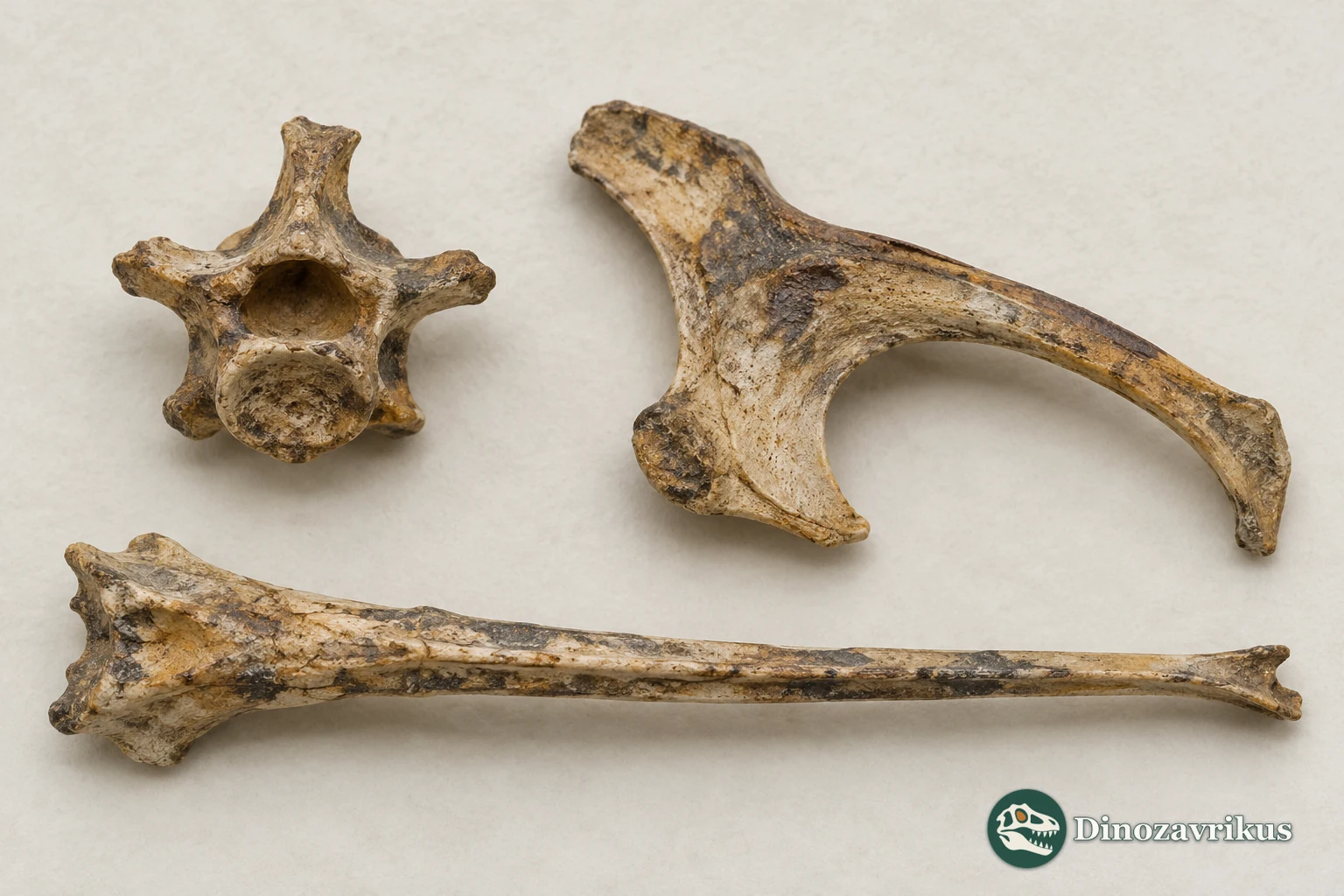
In 1997, Vasily Ratnikov described remains from nine eastern European localities dating from the Late Pliocene to the Early Pleistocene. The material includes vertebrae and fragments of skull, pelvis and limbs. Completeness varies: some localities yielded only single elements, and many remains are identified not as certain P. langhae but as P. cf. langhae.
The abbreviation cf. comes from Latin confer, “compare”. It says that a bone has been compared with P. langhae but lacks enough traits for a firm assignment. It is neither a separate species name nor proof of a second species. Ratnikov discussed variation and systematics because differences in locality and preservation complicate direct comparisons.
Finds in the Upper Don Basin
Localities on the East European Plain are particularly informative. Ratnikov described two fragmentary remains assigned to Pliobatrachus cf. langhae from Early Pleistocene deposits at Yablonovets. In a later review of Muchkapian amphibians and reptiles, he estimated one large individual at about 100 millimetres from snout to vent, using a vertebra. The estimate applies to that specimen; it should not be turned into a size range for the entire genus.
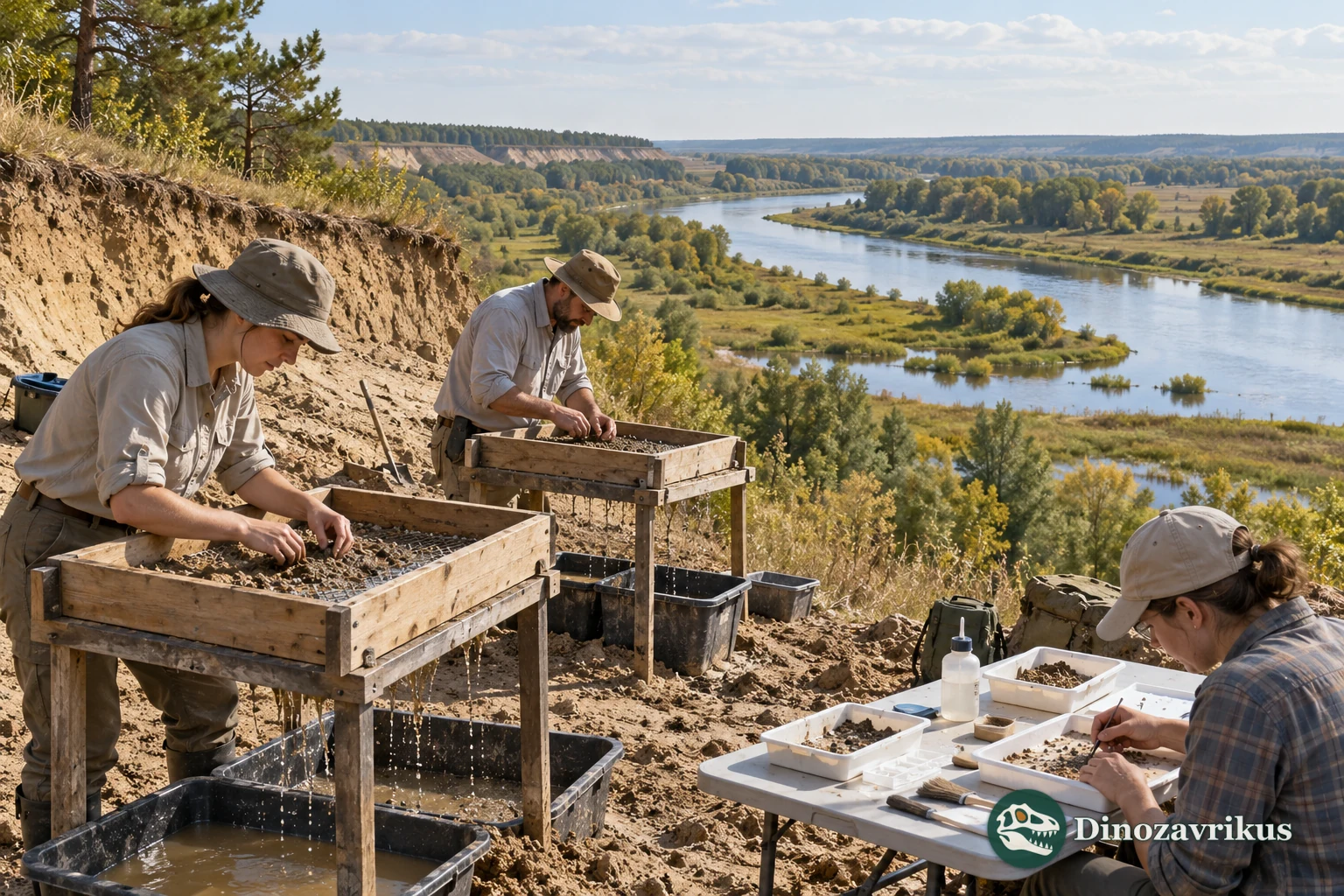
The locality context matters: fossil amphibians and reptiles from the region help reconstruct river and interglacial landscapes. But bones from different layers need not have entered the deposit at the same time. Water transport, differences in durability and reworking can mix remains, so a list of species in sediment is not a census of one pond’s animals.
An aquatic life, with limits to the evidence
Palaeobatrachids are generally considered predominantly aquatic frogs. That is a reasonable reconstruction for Pliobatrachus from its family placement and preserved anatomy; some studies have examined locomotion using pelvic and vertebral elements. Behaviour itself is not preserved, and scattered material cannot recover every movement or pose.
Colour, the size of most individuals, diet, breeding season and larval duration are not reliably known for P. langhae. Such details are known in living frogs but cannot simply be transferred to an extinct species. The cover artwork suggests one possible freshwater inhabitant, not a photograph or a precise reconstruction of soft tissues.
Why the name carries a caveat
Some review literature writes “Pliobatrachus” langhae in quotation marks, signalling that the historical generic assignment may not be final. Later finds expanded the anatomical sample but did not eliminate every identification problem: some bones identify a family better than they distinguish genera and species.
A careful account keeps several levels of confidence together: Pliobatrachus is used in the traditional palaeobatrachid classification; the species name P. langhae is tied to the type material from Betfia; eastern European remains are often qualified as cf.; and some assignments need further study. This preserves the taxon’s history without treating an open question as settled.
Frequently asked questions
When did Pliobatrachus live?
Material assigned to the genus spans the Late Pliocene to Early Pleistocene. The age depends on the individual locality.
What does Pliobatrachus cf. langhae mean?
A bone resembles P. langhae, but it cannot be confidently assigned to that species. The label preserves that uncertainty.
How large was this frog?
One vertebra from Yablonovets was used for an estimate of about 100 mm snout-to-vent length. It is a single estimate, not a universal size.
Was Pliobatrachus aquatic?
An aquatic life is likely from its palaeobatrachid relationships and interpretation of the bones. Details of swimming and behaviour are not directly preserved.