

Precursor is a disputed genus name applied to several early Eocene bird fossils from Britain. Its type material consists of a few isolated bones rather than an associated skeleton, and later studies have questioned some of the original identifications. The extinct bird catalogue lists the name as a record whose biological meaning remains to be tested.
Quick facts
| Name | Precursor Harrison & Walker, 1977 |
|---|---|
| Proposed group | Birds; early authors suggested shorebird affinities, now uncertain |
| Age | Early Eocene, about 54–53 million years for Sheppey material |
| Region | Southern England; Isle of Sheppey and other localities |
| Named species | P. parvus, P. litorum and P. magnus |
| Type material | Distal humeri and an incomplete distal tarsometatarsus |
| Size and diet | Not reliably established from the fragments |
| Catalogue | Extinct birds |
What can the fossils tell us?
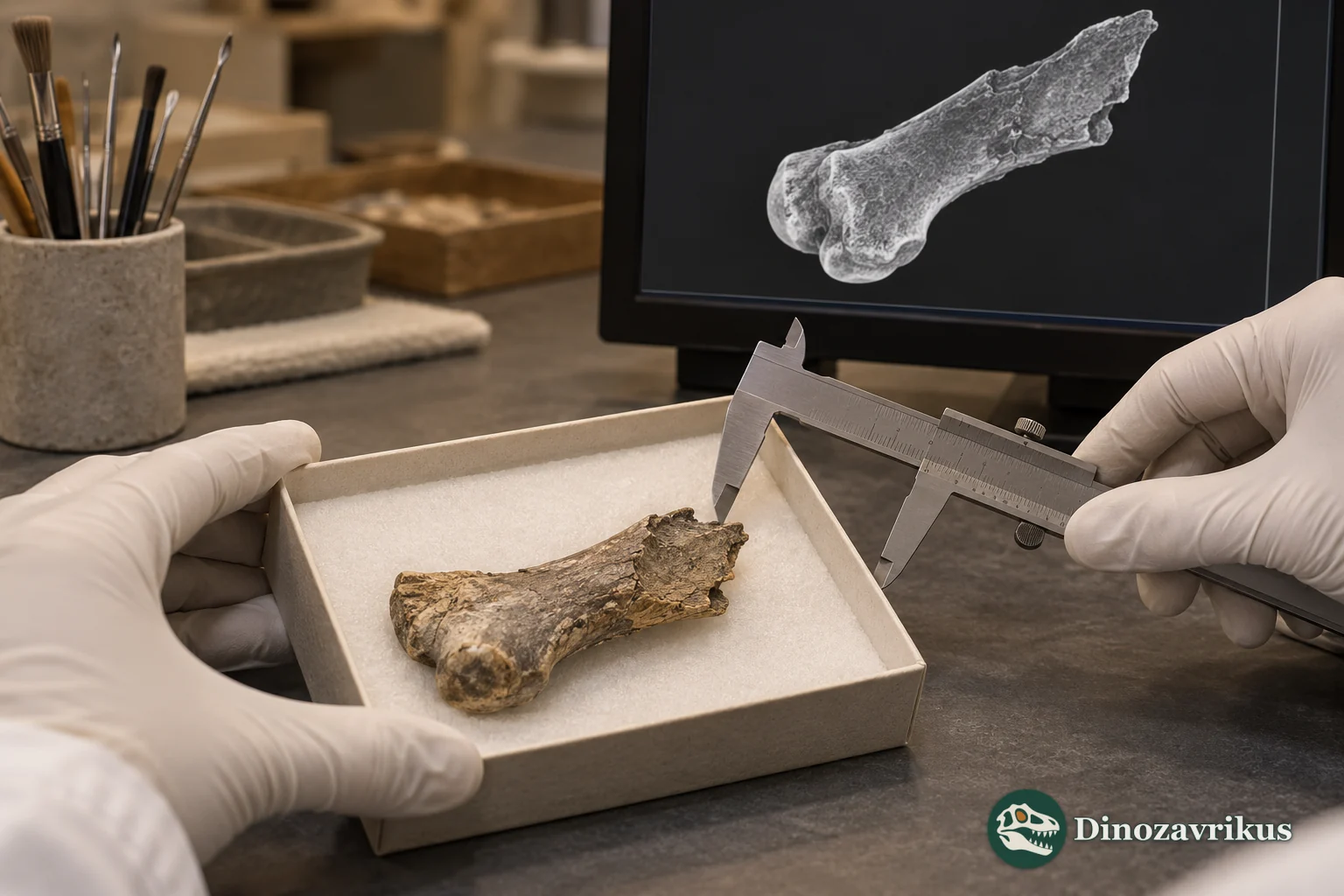
P. parvus is based on a distal left humerus from Bognor Regis; P. litorum on a distal right humerus from Sheppey; P. magnus on an incomplete distal tarsometatarsus. They are not parts of one skeleton.
The original authors proposed affinities with shorebirds, including Glareolidae. Later work showed that some referred material had been misidentified, and the fragmentary types do not securely resolve relationships.
The named types come from different individuals and skeletal regions. Their placement in one genus is a historical taxonomic hypothesis that needs comparison with more complete fossils.
Coastal and marine sediments preserve many disarticulated bones. Occurrence in the same broad formation does not prove one habitat, population or biological group.
How the name was established
Peter Harrison and Colin Walker introduced Precursor in their 1977 account of birds from the British Lower Eocene. They designated Precursor parvus as the type species and also named P. litorum and P. magnus. Each name is tied to different isolated material. The type specimens do not form a skeleton found in articulation, so their combination into a single genus depends on comparisons among separate bones.
A type fixes how a scientific name is used; it does not guarantee that all referred fragments belong to one natural group. In this case, the three species are based on the ends of humeri and a section of a tarsometatarsus. That small sample cannot establish the shape of the skull, bill, complete wing, torso or plumage.
What has actually been preserved
The holotype of P. parvus is the distal end of a left humerus from Bognor Regis. The holotype of P. litorum is the distal end of a right humerus from the Isle of Sheppey. P. magnus is based on an incomplete distal right tarsometatarsus from Sheppey. These fragments preserve joint surfaces and some proportions, but the different bones cannot be assembled into one measured individual.
Why the classification is uncertain
The 1977 authors tentatively associated the species with shorebird groups, including Glareolidae. Subsequent research on early Eocene birds has shown that many older identifications from the London Clay require revision. Some material once referred to P. parvus was later identified as belonging to a pseudasturid parrot. That reassignment does not by itself invalidate the name-bearing type, but it warns against treating every referred fragment as evidence for the genus.
A 2026 review of the London Clay avifauna notes that earlier surveys relied heavily on fragmentary fossils and that many identifications proved incorrect. Where no associated skeleton links diagnostic parts, a narrow character set can produce unstable relationships. Similarity between one joint surface and another bird is a starting point for testing, not a secure family diagnosis.
Environment and way of life
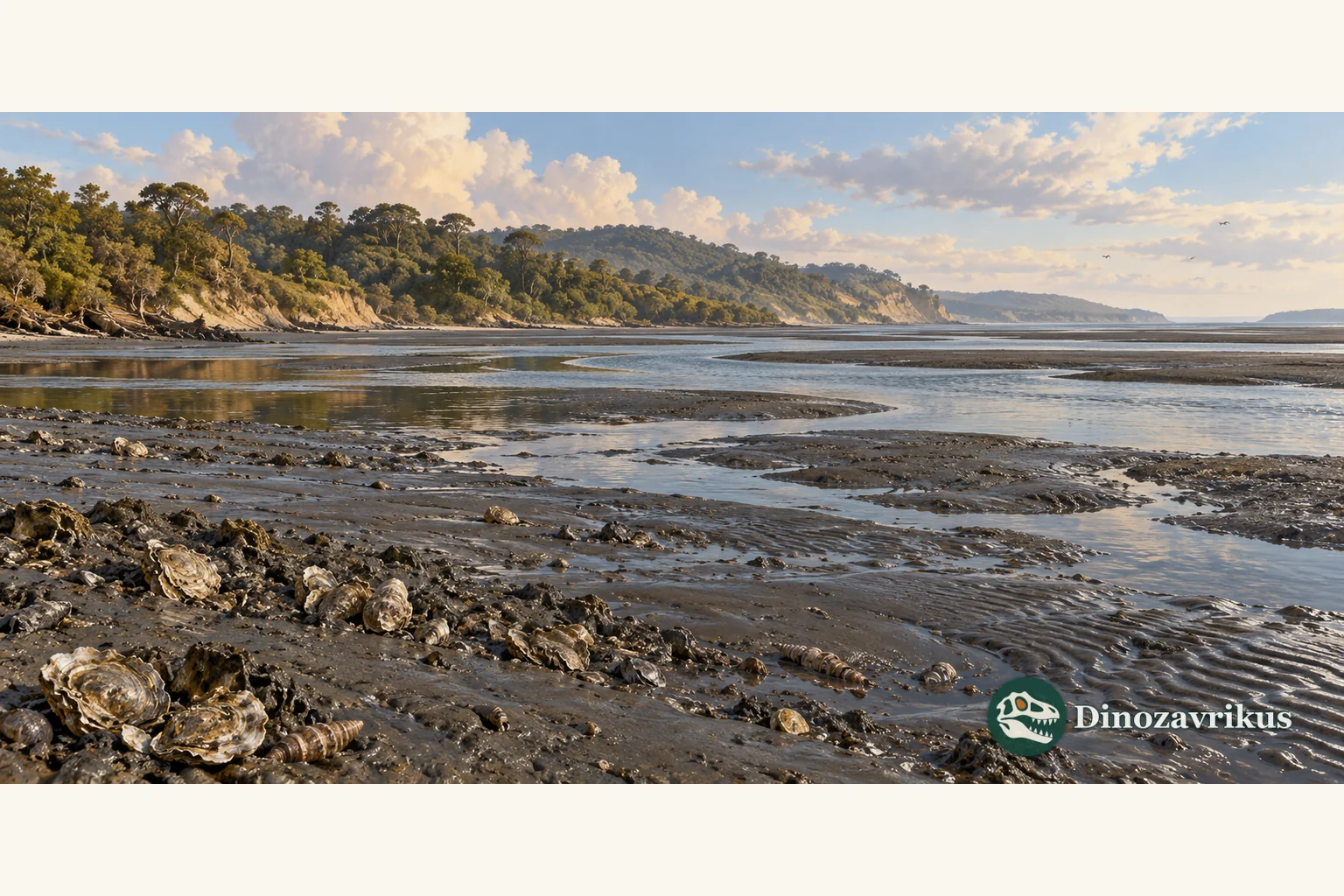
The London Clay accumulated in coastal and marine settings in what is now southeastern England during the early Eocene. The Isle of Sheppey and nearby areas have yielded diverse vertebrate remains. This context describes the depositional system; it does not prove that every bird lived at the waterline. Bones may be transported, and specimens from one formation can differ in locality and age.
The known fragments cannot provide a reliable body mass, height, wingspan, diet or gait. The early shorebird hypothesis does not fill in the missing anatomy. Modern birds can help compare individual bones, but they cannot substitute for the absent skeleton.
What the name means today
Precursor is useful in the history of research on British Eocene birds and in discussions of the limits of taxonomy based on isolated bones. Its three historically named species do not yet provide a confident picture of one well-diagnosed animal. Reassessment of the types and every additional specimen is needed before the genus can be treated as a settled biological unit.
This uncertainty does not mean that the fossils are unimportant. It means that the evidence currently identifies fragments more securely than it identifies the bird that carried them. A more complete specimen with diagnostic parts could test whether these bones belong together and where the lineage fits among early birds.
Frequently asked questions
How many species were named in Precursor?
Three: P. parvus, P. litorum and P. magnus. Their type specimens are different isolated bones.
Was Precursor definitely a shorebird?
No. Shorebird affinities were proposed in the original work, but the available fragments do not securely establish that placement.
Is a complete Precursor skeleton known?
No. The type material consists of humerus and tarsometatarsus fragments, not an associated skeleton.
Can its size or diet be estimated?
Not reliably. The fragments do not preserve enough anatomy to estimate overall size or identify direct feeding evidence.