

Premontreia is a fossil catshark genus described from teeth rather than a complete skeleton. Its type species came from the Eocene Paris Basin; later finds include a distinct Late Eocene species in the Trans-Urals. Crown folds and root structure can distinguish teeth, but neither body length nor colour follows from them. The cover is an artistic comparison with living catsharks.
Quick facts
| Genus | Premontreia Cappetta, 1992 |
|---|---|
| Type species | Premontreia degremonti from Eocene France |
| Group | Carcharhiniformes, Scyliorhinidae |
| Known material | Predominantly isolated teeth |
| Trans-Ural species | Premontreia uralica Malyshkina, 2006 |
| Ural holotype | PIN 5088/01, tooth 5.5 mm high |
| Ural age | Priabonian, Late Eocene |
| Body length | Not established from the described teeth |
What can the fossils tell us?
Cappetta named the type species P. degremonti in 1992 from the late Ypresian Paris Basin. The name was not founded on a complete body.
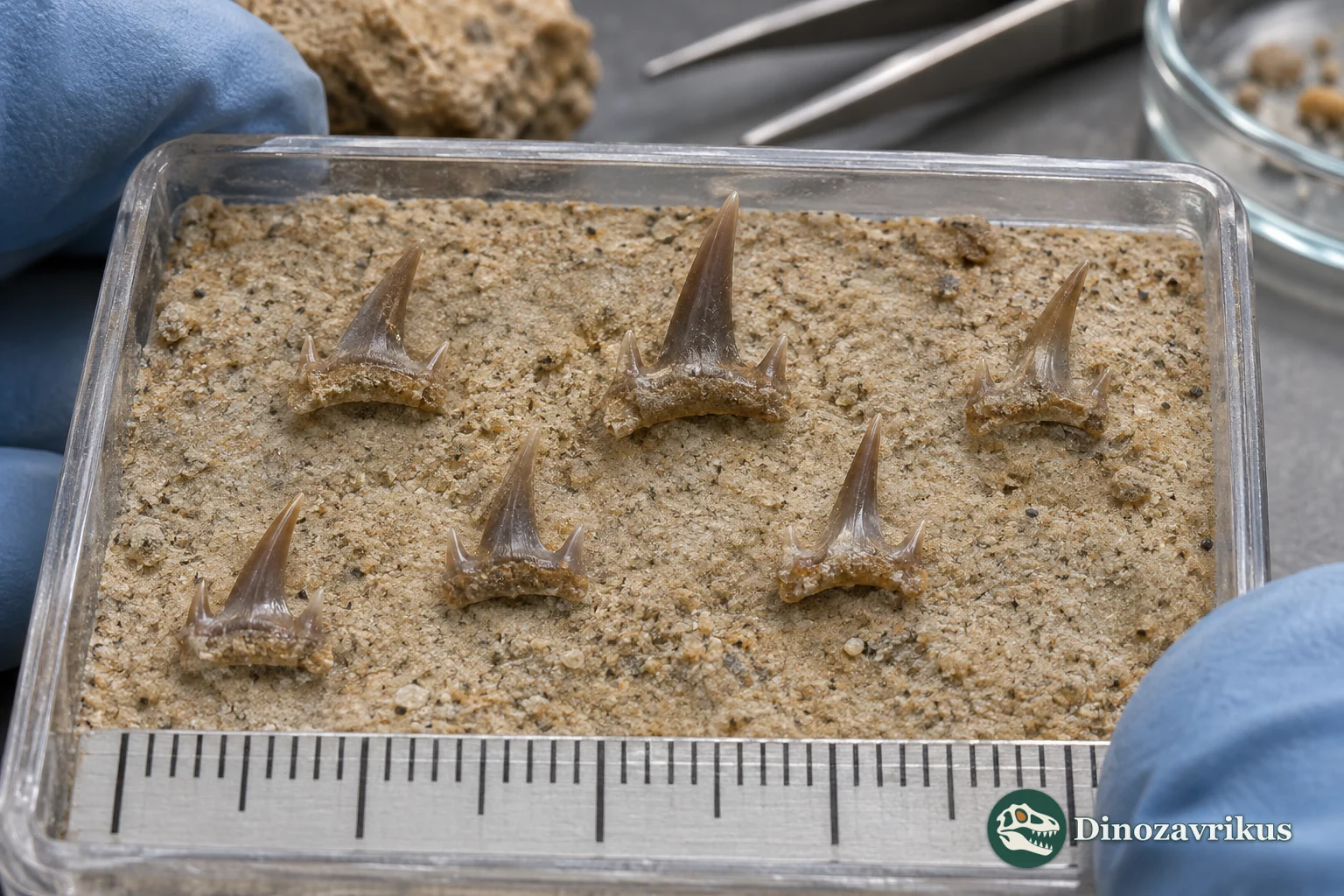
A principal cusp, small side cusplets, enameloid folds and a root groove are recorded. Tooth position in the jaw can change their shape.
PIN 5088/01 is 5.5 mm high. The 2006 study counted 45 teeth from Kurgan and eight from Derney; these are fossils, not a count of animals.
No complete body or directly observed meal accompanies the described material. Fins, colour, precise body size and diet remain unknown.
A genus named from the Paris Basin
Henri Cappetta erected Premontreia for P. degremonti in 1992. The type material came from the late Ypresian of the Paris Basin. That early Eocene age applies to the French type, not to every tooth later assigned to the genus.
The central cusp may be flanked by one or two pairs of smaller cusplets. The outer crown face has basal enameloid folds and the root bears a broad nutritive groove. These characters are useful together, but anterior and lateral teeth of one shark can differ. Pachyscyllium offers a related tooth-based comparison without supplying Premontreia's missing body anatomy.
A measured species in the Trans-Urals
Tatiana Malyshkina described P. uralica in 2006 from Priabonian deposits. Holotype PIN 5088/01 is a lower anterolateral tooth from the Tavda Formation near Kurgan, measuring 5.5 mm high and 4.2 mm wide. Paratype PIN 5088/02 is an upper anterolateral tooth 4.7 mm high. None of these dimensions measures the shark itself.
The study recorded 45 teeth from Kurgan and eight from Derney. The Kurgan clay was sieved through a 2 mm mesh. At Derney, Paleogene shark teeth had been redeposited in younger fluvial sediments, so the age of the host sand is not the age at which the teeth formed. The type series is housed at the Paleontological Institute in Moscow.
Identifying teeth without a skeleton
P. uralica was distinguished by a combination of relatively straight central-cusp margins, low side cusplets, crown folds and a substantial root. These dental features are more specific than an imagined colour pattern. The many isolated teeth do not tell how many individual sharks lived in the basin.
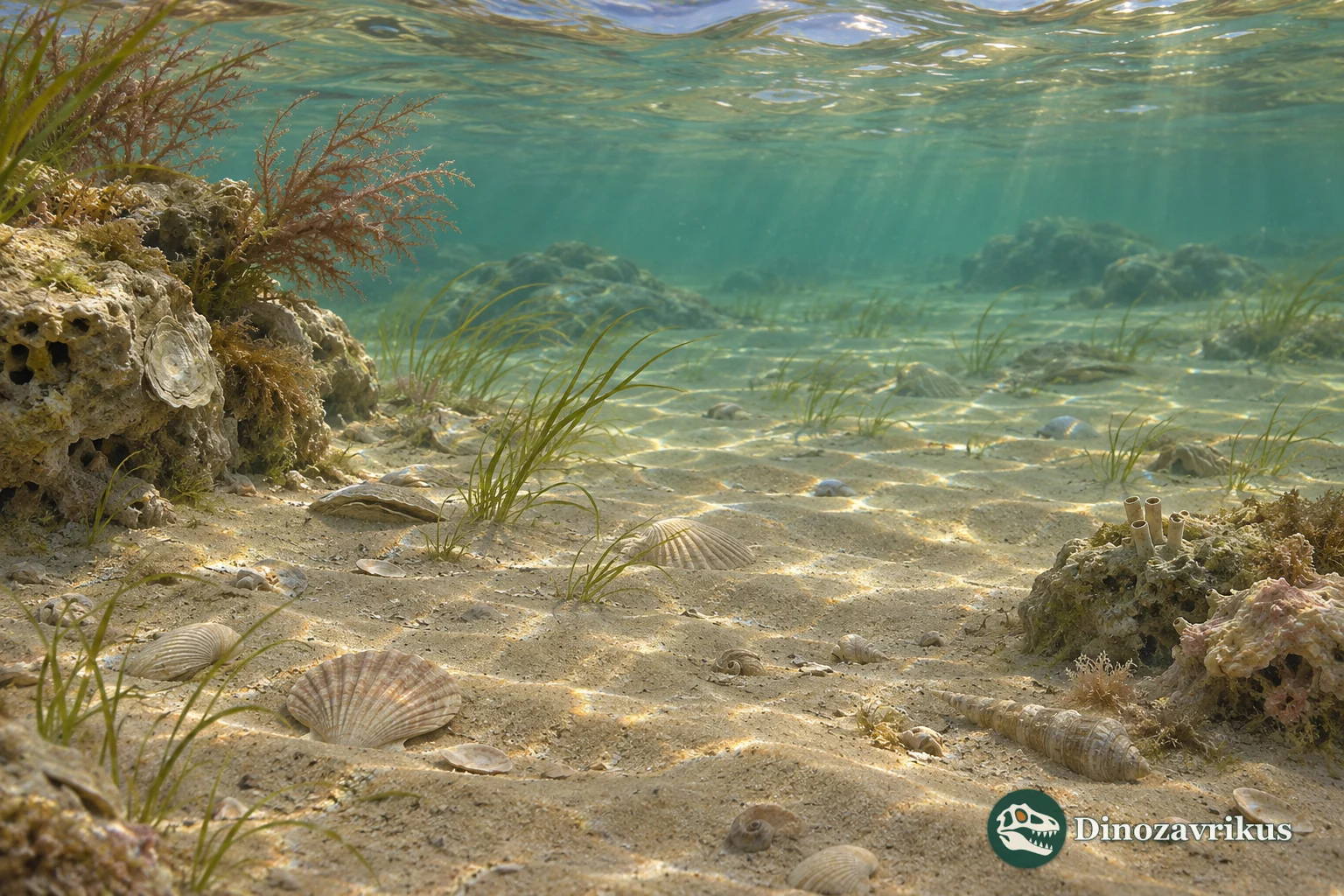
The illustrated research tray is staged. It is not a photograph of PIN 5088/01, and the illustrated marine landscape is a reconstruction rather than an actual fossil site. Palaeogaleus shows another small Paleogene shark lineage, not an animal whose anatomy can be copied wholesale onto Premontreia.
What remains unknown
The teeth support a catshark assignment and species comparisons. They do not directly establish total length, fin shape, exact prey, breeding behaviour or migration. The French and Ural specimens belong to different named species and geological intervals; a genus-wide statement should not erase those differences.
Frequently asked questions
Is a complete Premontreia skeleton known?
The descriptions used here are based on isolated teeth. They do not provide a complete skeleton from which to measure body length or fins.
How large is the Ural holotype?
Tooth PIN 5088/01 is 5.5 mm high and 4.2 mm wide. Those are tooth dimensions, not shark dimensions.
Why is the Derney material difficult to date directly?
Paleogene teeth were reworked into younger river sediments. The secondary host sediment is younger than the original fossils.
Can its exact prey be identified?
No. Tooth shape permits functional hypotheses, but no direct stomach contents or feeding traces establish a particular prey item.