

Prolagurus was an extinct arvicoline vole known mainly from small cheek teeth. Tivadar Kormos named its type species P. pannonicus in 1930 and introduced the genus name in 1938. Early Pleistocene fossils from Kozarnika Cave in Bulgaria allow first lower molars to be compared among several stratigraphic samples. The cover reconstructs a possible vole, not a preserved coat or body.
The similarly named Prolagus was a lagomorph related to pikas, not this rodent. Other fossil voles such as Mimomys and Allophaiomys provide useful dental comparisons without being alternative names for Prolagurus.
Quick facts
| Group | Rodentia, Arvicolinae |
|---|---|
| Type species | Prolagurus pannonicus (Kormos, 1930) |
| Genus author | Tivadar Kormos, 1938 |
| Kozarnika age | Early Pleistocene |
| Main evidence | Small molars, especially first lower molars |
| Name distinction | Prolagurus is a vole; Prolagus was a lagomorph |
What can the fossils tell us?
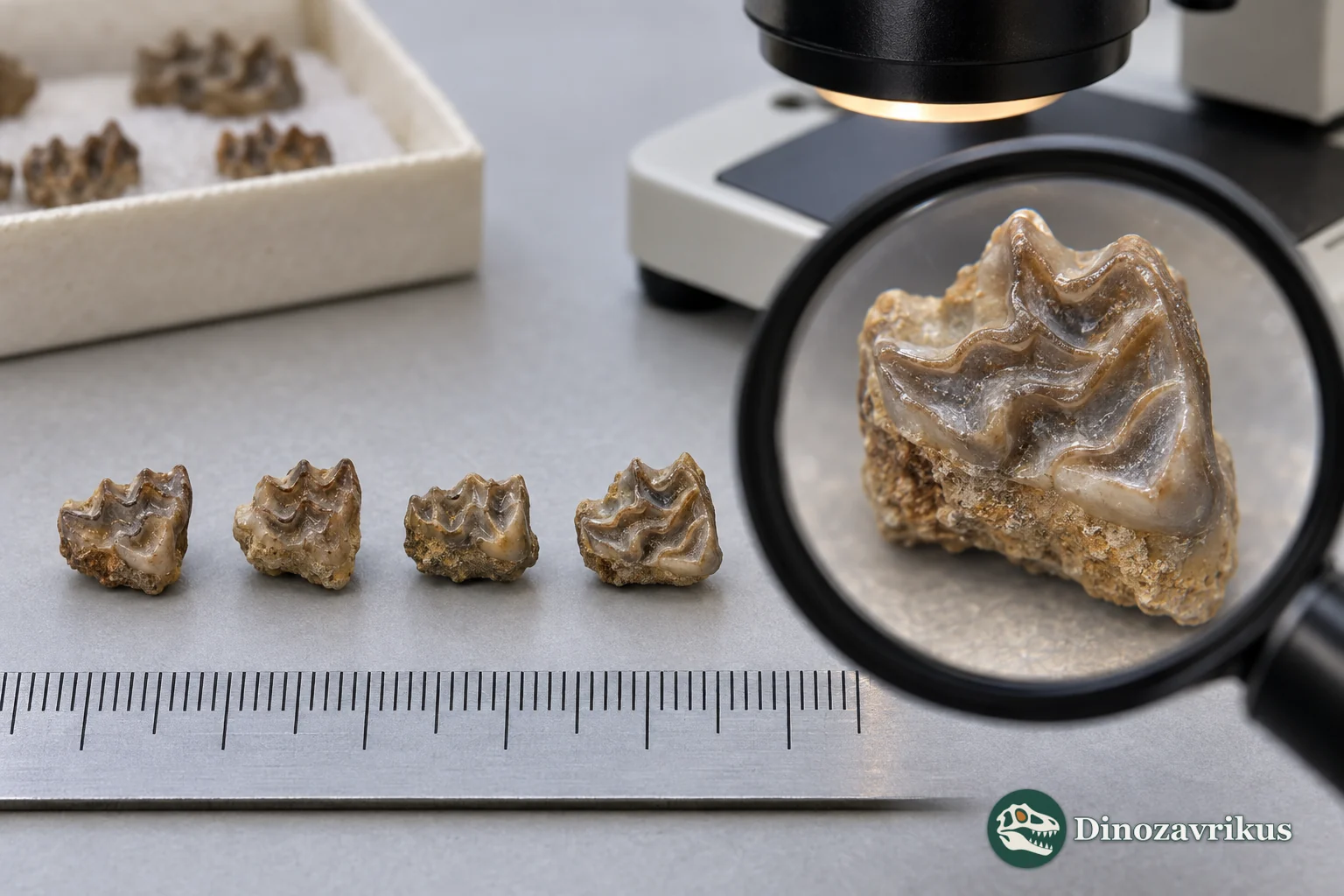
Researchers measure the first lower molar and compare its anterior complex and enamel features across specimens, not from one outline alone.
Molars from separate horizons allow changes and variation to be tested through time without proving a direct parent-child chain.
Historical assignments sometimes placed related teeth in Lagurus. Type material and diagnostic molars remain central to classification.
Why the first lower molar matters
In arvicoline voles, the chewing surface can diagnose taxa more reliably than a generic small-rodent silhouette. Researchers measure first lower molars and compare the front complex, enamel pattern and side angles. A Kozarnika sample yielded an average first lower molar length of about 2.36 mm. This is a tooth measurement, not body length.
The historical type material of P. pannonicus from the Betfia area in Romania is a skull fragment lacking the especially diagnostic first lower molar. Matching old names to newly isolated teeth therefore takes caution. Revisions have also redrawn the boundary with related forms assigned to Lagurus.
Kozarnika and a contested lineage
Kozarnika preserves small mammals in a sequence of cave sediments. A recent study recognized P. pannonicus in four early Pleistocene horizons and compared dozens of first lower molars. Keeping the horizons separate allows changes over time to be tested rather than treating all teeth as one population.
An evolutionary sequence from Borsodia through early Prolagurus forms to P. pannonicus has been proposed. Yet more ancestral and more derived dental combinations coexist in some intervals. The authors caution that this complicates a single, unbranched line of transformation. Similarity among populations is not a recovered genealogy of individual animals.
What teeth cannot reveal
Molars preserve chewing anatomy but not coat color, tail length, behavior or the exact plants eaten. The cover follows the broad build of voles. Teeth in a cave deposit also need not show that the animal lived inside the cave; predators or water may have transported small remains.
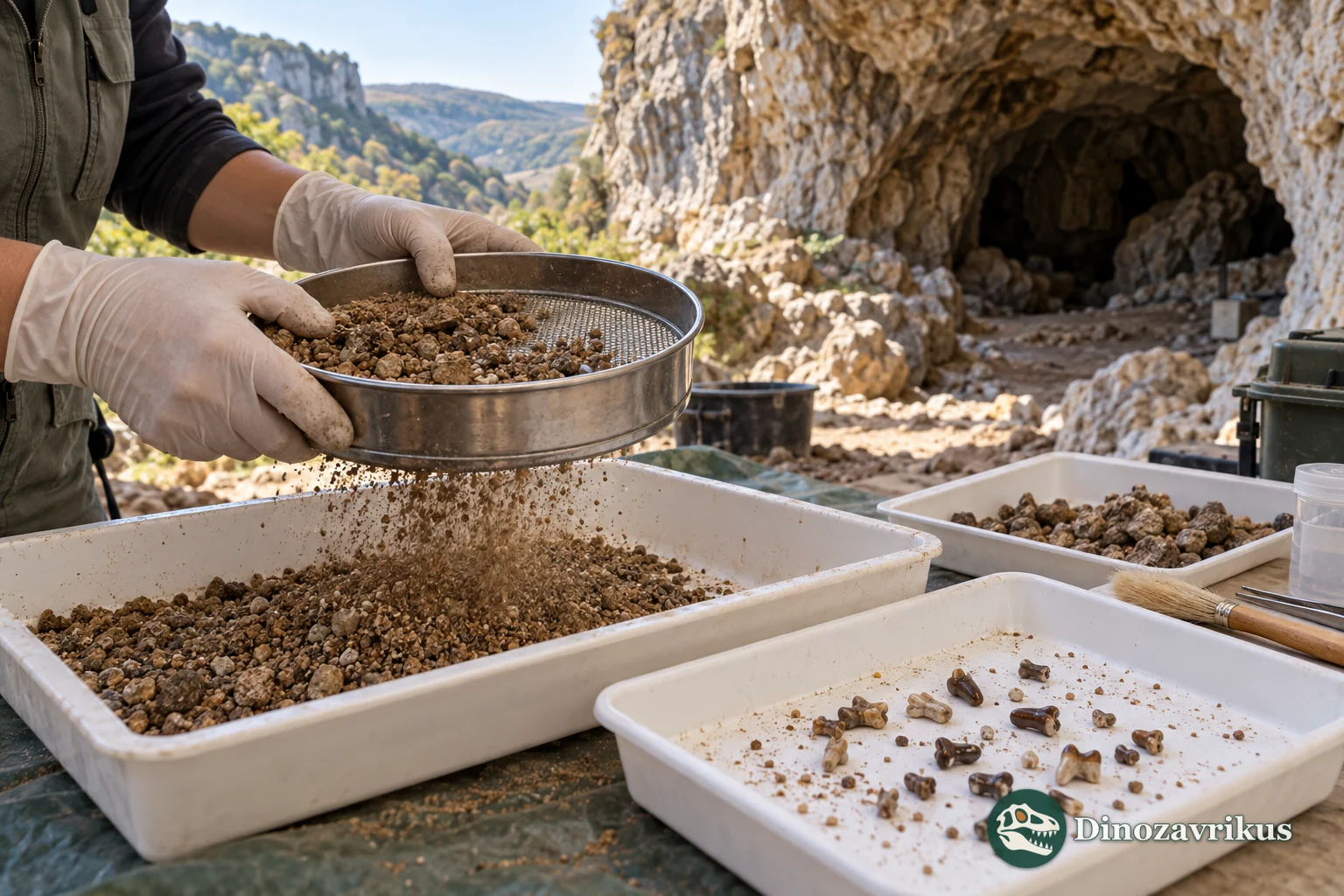
Kozarnika's layers date a local population, not the exact origin or extinction of the whole genus. Historical reidentifications of similar teeth complicate wider range maps. The microscope and screening images illustrate methods rather than the actual Kozarnika fossils or expedition.
Frequently asked questions
Are Prolagurus and Prolagus the same animal?
No. Prolagurus was a rodent vole; Prolagus was a lagomorph relative of pikas.
Why are molars so important for its identification?
First lower molars preserve measurable enamel and chewing-surface patterns that can distinguish fossil voles.
Does a 2.36 mm tooth reveal its exact weight?
No. That figure is an average molar length from a measured sample and does not directly measure body mass.
Is a single straight ancestor line proven?
No. Different dental combinations coexist in some Kozarnika intervals, complicating a simple unbranched sequence.