

Promioclaenus is a genus of extinct placental mammals known chiefly from teeth and jaw fragments in Paleocene North America. Its history is a record of changing dental interpretations: species moved among genera, while its relationship to early ungulate-like mammals remains debated.
Ernest Louis Trouessart established the name in 1904 for North American forms that had already been described under other genera. The species most often treated as the type is Promioclaenus acolytus. This profile belongs to the ancient mammal catalogue; the Palaeogene guide gives the broader time context without implying that every listed fossil came from the same bed.
Quick facts
| Scientific name | Promioclaenus Trouessart, 1904 |
|---|---|
| Type species | Usually treated as P. acolytus (Cope, 1882) |
| Age | The best-supported record is Paleocene North America |
| Localities | Mainly the San Juan Basin and other western interior basins |
| Fossil evidence | Isolated teeth, tooth rows and jaw fragments |
| Family placement | Discussed in both Mioclaenidae and Hyopsodontidae |
| Body size | No dependable whole-body mass estimate |
| Diet | Not directly established from the available material |
What can the fossils tell us?
The genus is represented chiefly by isolated cheek teeth and jaw fragments. Researchers compare crown size, cusp arrangement and position in the tooth row. A single worn crown rarely provides a complete diagnosis or a secure species identification.
The commonly accepted type species, P. acolytus, is associated with holotype AMNH 3208 from the San Juan Basin region. Old locality labels do not always identify a precise bed, so a museum number, formation and age must be kept distinct.
Some species once included in Promioclaenus were referred to other genera. P. wilsoni was separated as Valenia. Authors have also differed over family placement, using Mioclaenidae or Hyopsodontidae; these are competing systematic interpretations, not different fossils.
No stomach contents, feeding traces or complete skeleton securely establish the animal's exact diet, body mass or locomotion. Ecological descriptions beyond the dental evidence remain comparative inference.
A name with a changing boundary
Before Promioclaenus was introduced, individual species were assigned to Hyopsodus or Mioclaenus. Trouessart grouped some of these forms under a new genus, but later authors did not retain the same limits. In parts of the twentieth century, researchers grouped some species with Ellipsodon; later work revived Promioclaenus as a distinct name.
The species P. wilsoni illustrates the problem. It was once included in a broad concept of Promioclaenus, but Thomas Williamson and Anne Weil transferred it to the separate genus Valenia. Records that list it under Promioclaenus reflect an older arrangement.
Family placement has also varied. Authors have used both Mioclaenidae and Hyopsodontidae, based largely on dental comparisons and different phylogenetic frameworks. “Condylarth” was historically applied to a diverse set of early ungulate-like mammals, but that traditional grouping does not settle the ancestry of this genus.
Type material and museum collections
The name is usually anchored to P. acolytus, first described as Hyopsodus acolytus. A regional study of the Nacimiento Formation lists AMNH 3208 as its holotype and places the type locality in the San Juan Basin of New Mexico. The exact horizon of nineteenth-century collecting is less precise than the geographic locality, so the fossil should not be assigned a narrow date without additional stratigraphic evidence.
Other species and referred samples are represented in museum collections by separate jaws and isolated teeth. The Smithsonian, for example, records a holotype of P. pipiringosi from Wyoming. Such specimens document a taxonomic history; they do not constitute a single associated skeleton.
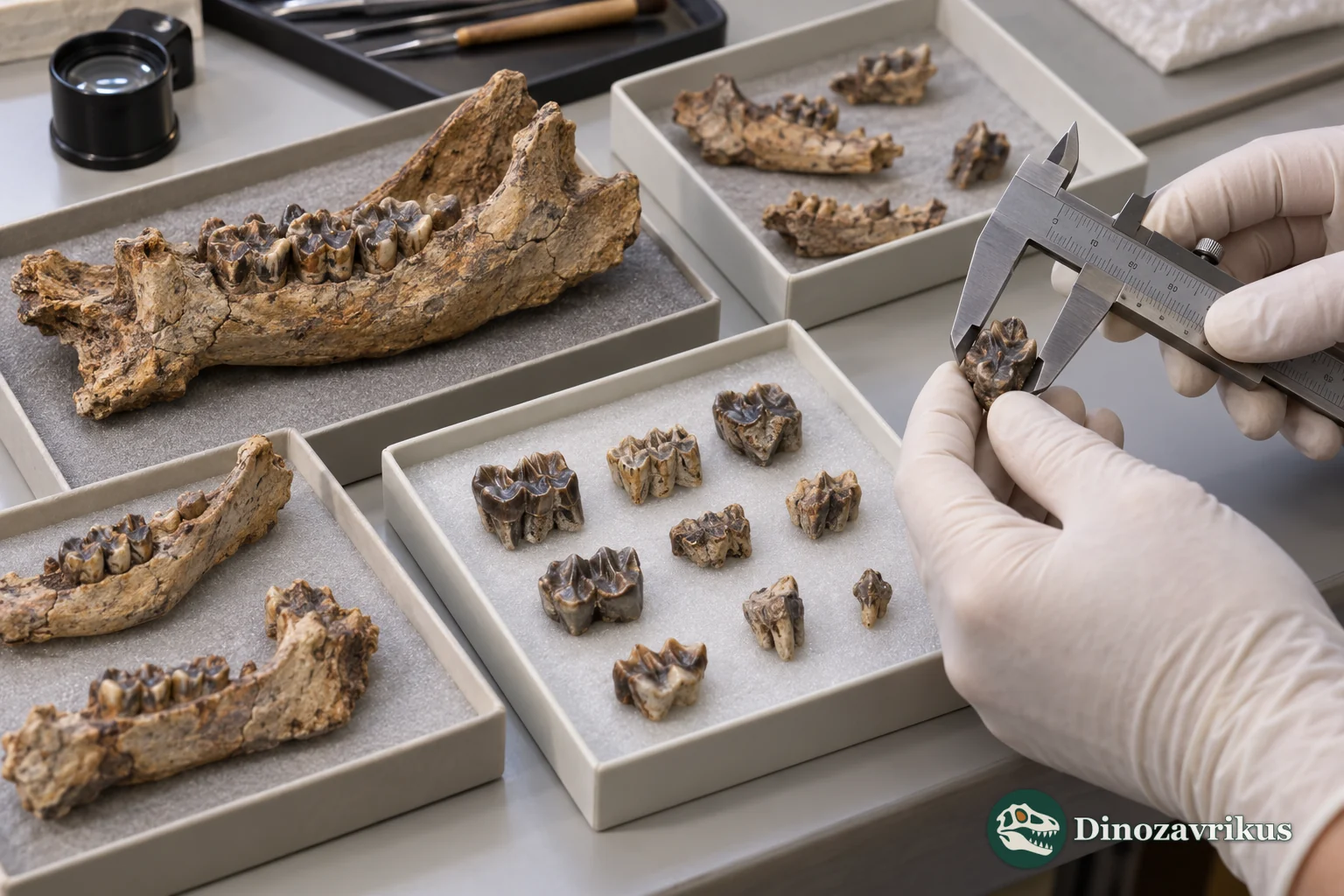
What the teeth can show
Dental identification depends on the shape of crowns and the arrangement of cusps, ridges and marginal shelves. Upper and lower teeth have different forms, and a tooth's position within the row matters. Wear can remove small features that would otherwise help distinguish one taxon from another.
A jaw fragment is more informative than one isolated crown because it preserves the order of neighbouring teeth. Even a short tooth row cannot reveal the animal's trunk, limbs, coat or posture. No complete skeleton of Promioclaenus currently supplies those proportions.
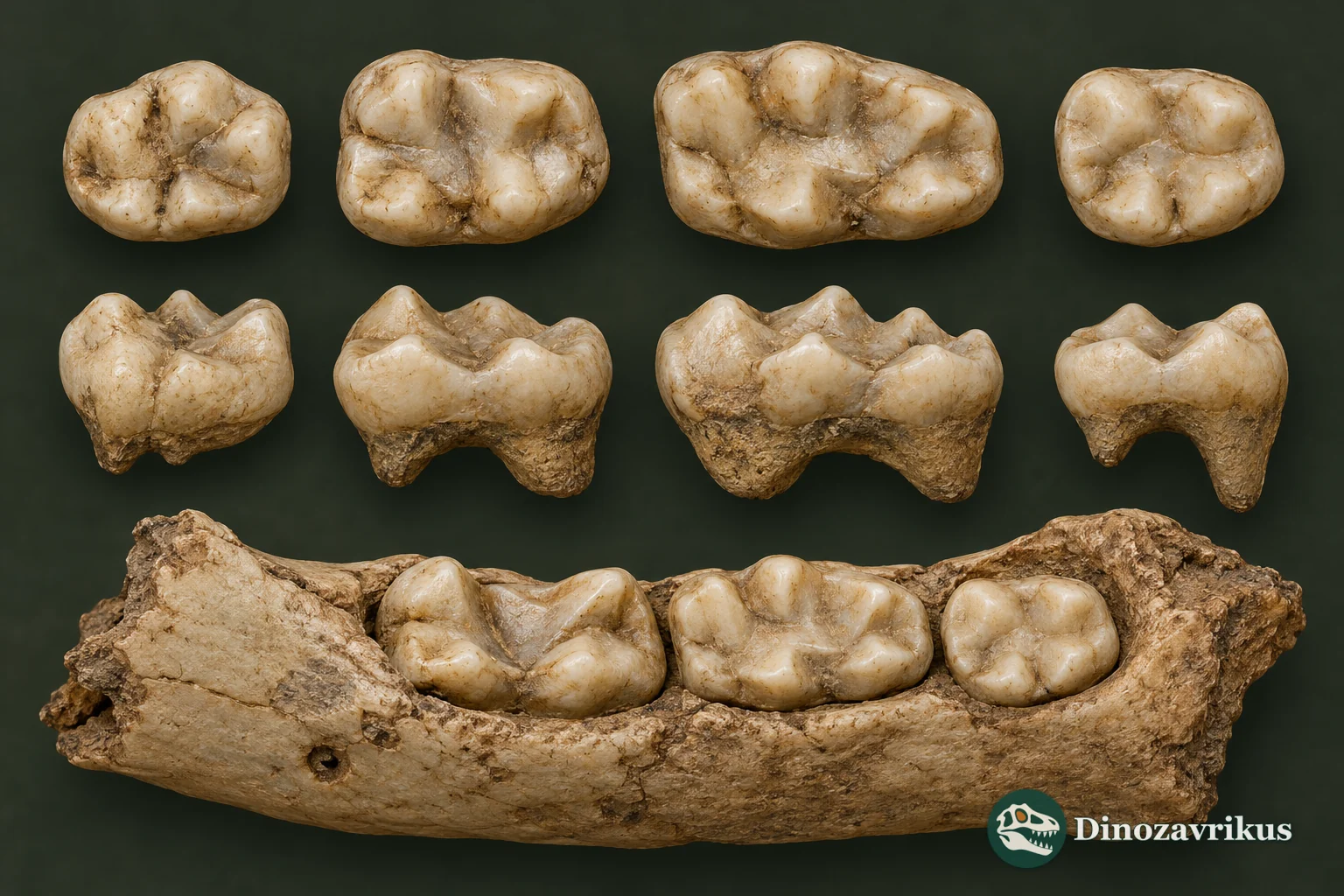
Paleocene basins and uncertain ranges
Important early records come from the Nacimiento Formation in the San Juan Basin of New Mexico. Some classic localities were first collected in the 1880s. Thomas Williamson and Spencer Lucas later relocated the Chico Springs area using archival field notes and reported additional fossils, including Promioclaenus lemuroides. Other named material comes from western interior basins, including the Bison Basin in Wyoming.
The genus-level range in databases depends on which disputed names and referrals are included. A late Cretaceous record or a report from another continent should be checked against its primary description before it is used to extend the history of the genus. It is safer to report the age of a species and its bed than to treat every historical identification as one continuous lineage.
Old field labels are not always precise enough to place a specimen within a measured section. A geographic basin can be known while the exact stratigraphic position remains uncertain; those are different levels of evidence.
Body size, feeding and reconstruction
The teeth indicate a small mammal relative to large Paleocene forms, but no dependable mass estimate exists for the genus. Turning a tooth measurement into a body mass would require a comparison group and a model; the available fossil record does not justify a precise figure.
Tooth shape informs hypotheses about how food was processed, but it does not identify a meal. Promioclaenus is not known from stomach contents or diagnostic feeding traces. Its exact diet and degree of dietary specialization therefore remain unresolved.
The cover painting is an artistic possibility built around a small quadrupedal mammal. Fur, colour, ears and stance are not preserved. Direct evidence begins with teeth, jaws, localities and collection records, not with a complete portrait.

Frequently asked questions
When did Promioclaenus live?
Its best-supported species come from the Paleocene of North America. The age should be tied to each species and locality because the genus has a changing taxonomic history.
What fossils identify Promioclaenus?
Mostly isolated cheek teeth, tooth rows and jaw fragments. A complete skeleton is not known.
Why do authors place it in different families?
The genus is known mainly from dental anatomy, and authors have interpreted similar tooth characters differently. Mioclaenidae and Hyopsodontidae both appear in the literature.
Do we know its size or diet?
There is no reliable body-mass estimate or direct record of a meal. Teeth support comparisons but do not establish an exact diet by themselves.