

Prosiren elinorae is a fossil salamander from Lower Cretaceous deposits of Texas. Its story is unusually dependent on a small amount of evidence: the holotype is one dorsal vertebra, while jaws later added to the species were eventually separated and named as material of Albanerpeton arthridion.
Prosiren belongs in the Ancient amphibian catalogue. Its taxonomic history is closely connected with Albanerpeton, whose distinctive jaws were once incorrectly combined with the vertebral type of Prosiren.
Quick facts
| Scientific name | Prosiren elinorae Goin & Auffenberg, 1958 |
|---|---|
| Group | Caudate amphibian; sirenid affinities were proposed tentatively |
| Age | Early Cretaceous, Texas |
| Holotype | FMNH PR 391, one dorsal vertebra |
| Locality | Turtle Gully, Montague County, Texas |
| Collector | Bryan Patterson, 1950 |
| Body length | Not established |
What can the fossils tell us?
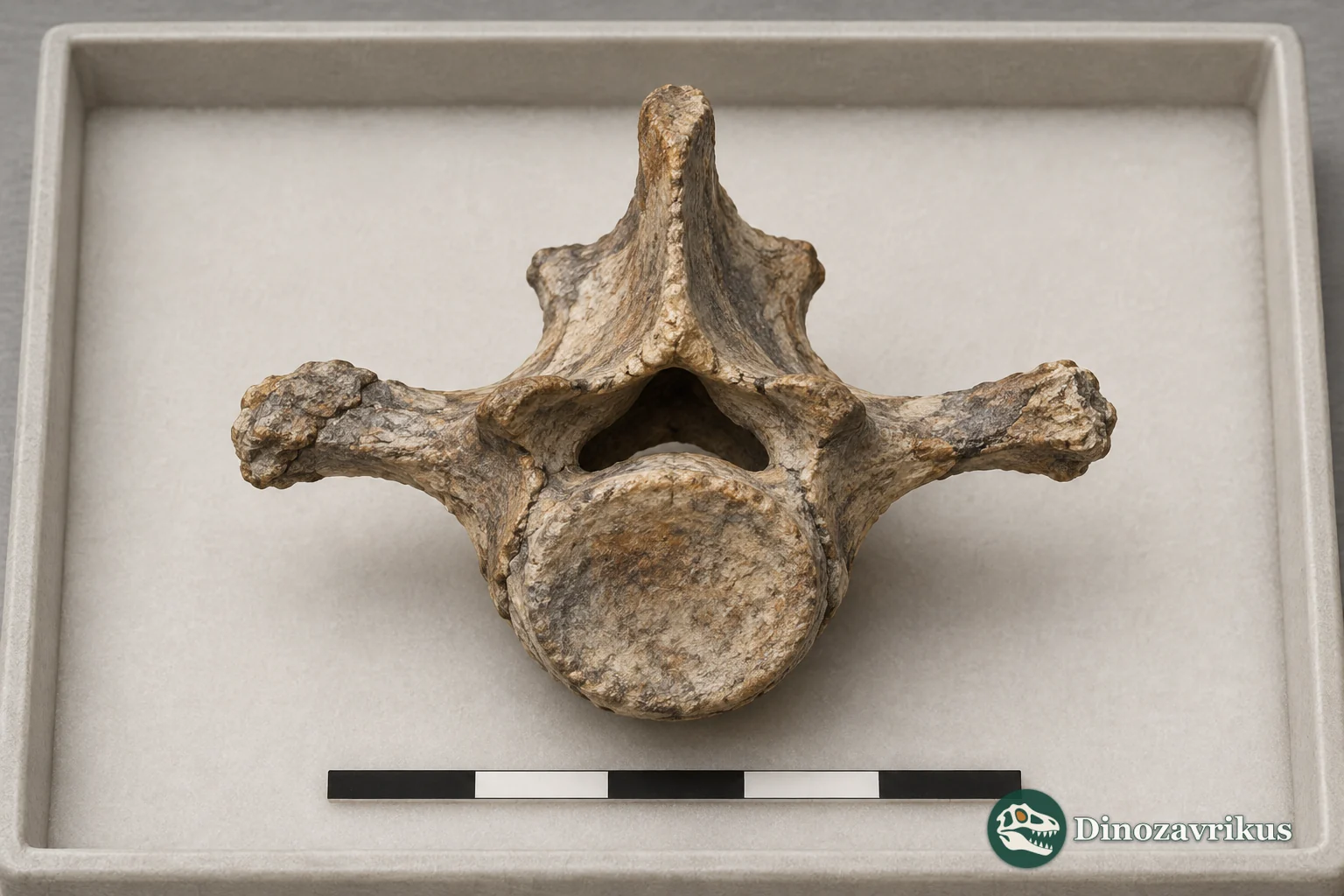
FMNH PR 391 is the holotype of Prosiren elinorae. The original description gives a centrum length of 2.1 mm. It anchors the name but does not preserve a complete skeleton.
The described specimen has a neural spine that continues between the aliform processes and well-developed basapophyseal accessory processes. These details support comparison with other salamanders, but they cannot establish colour, diet or full-body proportions.
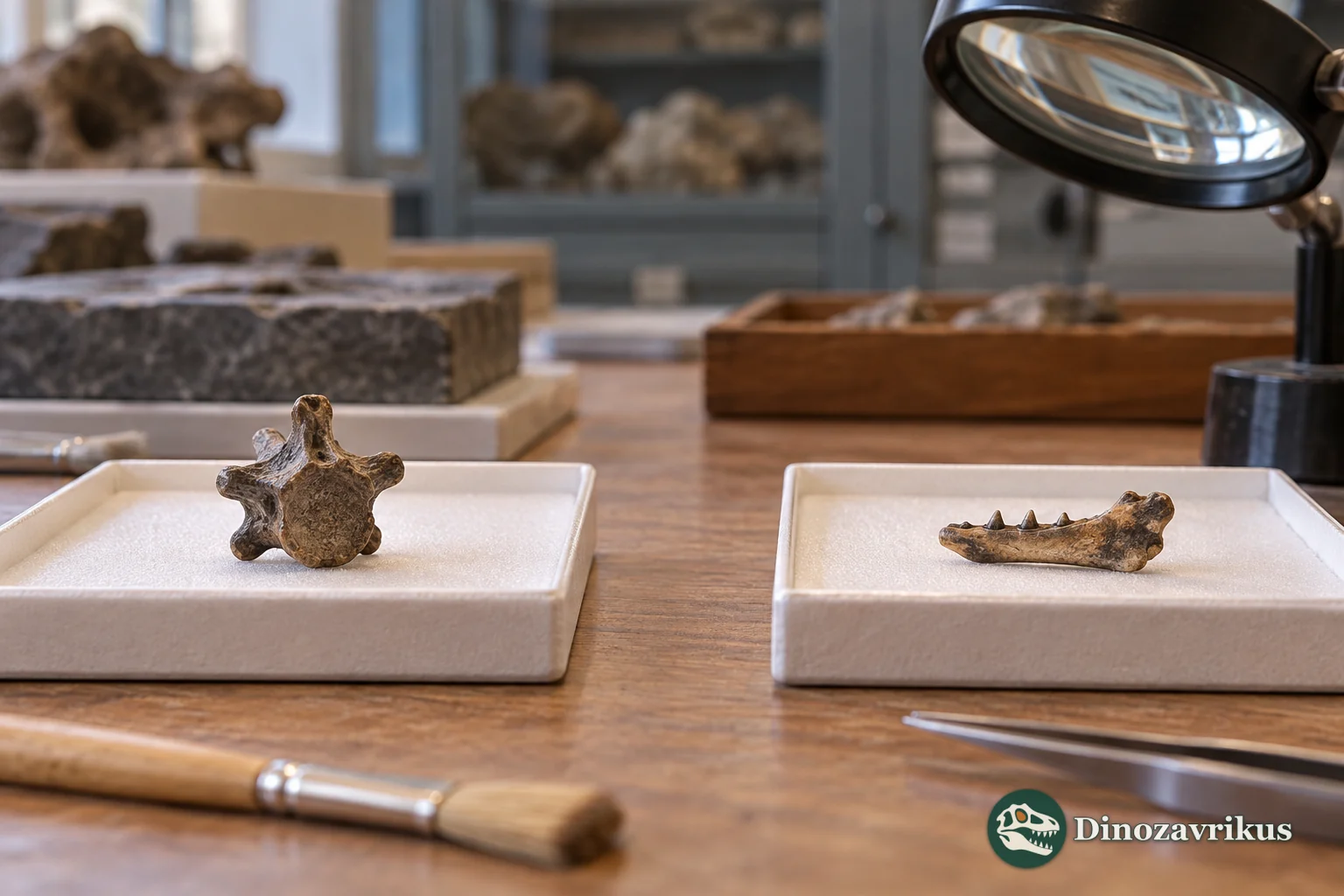
Estes associated lower Cretaceous jaws and other bones with Prosiren in 1969. Fox and Naylor reassigned the jaws to Albanerpeton arthridion in 1982 while retaining the vertebral type in Prosiren. Those jaws are not evidence for Prosiren’s skull.
The Field Museum type catalogue records FMNH PR 391 from Turtle Gully and two paratype vertebrae from Turtle Gully and Triconodont Gully near Forestburg. This identifies specimen context, not the animal’s exact habitat or behaviour.
Discovery and naming
Coleman J. Goin and Walter Auffenberg named Prosiren elinorae in 1958 while describing salamanders from Mesozoic deposits of North America. Bryan Patterson collected the holotype in 1950 at Turtle Gully, southwest of Forestburg in Montague County, Texas. The type is catalogued as FMNH PR 391 at the Field Museum of Natural History. The same description listed PR 390 and PR 392 as referred dorsal vertebrae from nearby localities.
The authors placed the new genus tentatively in Sirenidae. They compared details of the neural arch and transverse processes with living sirenids, but also stressed differences that could indicate a primitive side branch. Their cautious family assignment should not be turned into a settled evolutionary position.
What the vertebra preserves
The holotype’s centrum measures 2.1 millimetres along its lower midline. The width between the tips of the prezygapophyses and postzygapophyses is 2.8 millimetres. Goin and Auffenberg described a neural spine that extends between the paired aliform processes, well-developed zygapophyseal ridges, and accessory processes on the underside of the centrum.
These structures gave the authors a basis for distinguishing the fossil from other sirenids. Yet the specimen is still one vertebra. Its measurements are not a proxy for total body length, and they reveal nothing direct about the animal’s mass, limbs, feeding, colour or reproductive biology.
A taxonomic mistake and its correction
In 1969, Richard Estes associated additional lower Cretaceous Texas fossils with Prosiren elinorae, including jaw material. Similarities among those jaws also informed his proposal of the family Prosirenidae. Later work separated the vertebral and jaw evidence.
Richard Fox and Bruce Naylor reassessed the jaws in 1982. Their comparison of dental and mandibular features supported assignment to Albanerpeton arthridion, while the type and referred vertebrae remained in Prosiren elinorae. Reviews of albanerpetontids have maintained this distinction. A jaw originally placed beside a vertebra is not necessarily from the same animal or taxon, especially when the fossils come from separate lots or nearby sites.
Age, setting and way of life
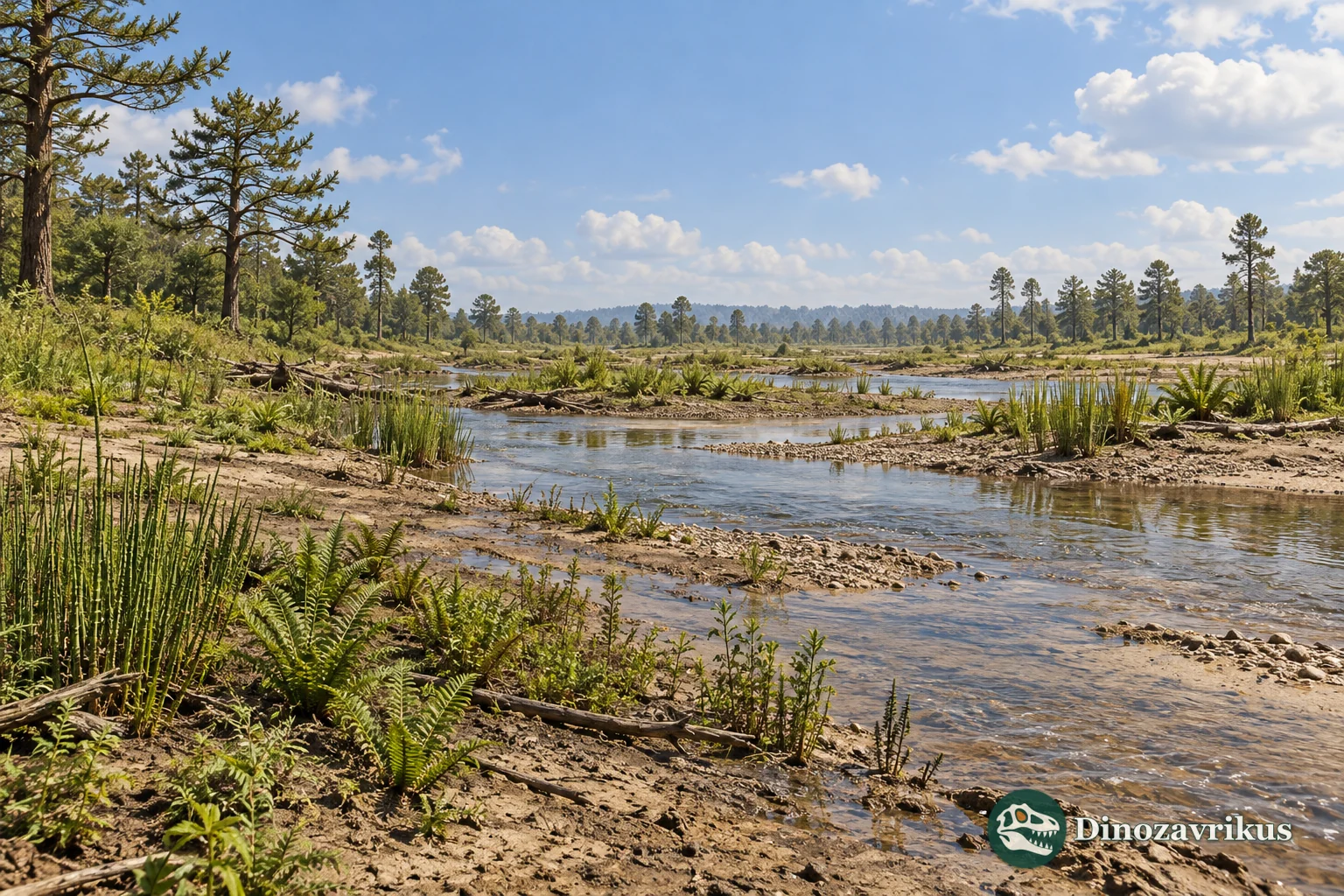
The type material comes from Lower Cretaceous strata in Montague County. The Field Museum catalogue identifies the horizon as Trinity Sandstone. The wider regional record includes fluvial, floodplain and coastal deposits, but the isolated vertebra does not let researchers identify the microhabitat occupied by this individual.
No direct evidence establishes what Prosiren ate, how it moved, or whether it spent most of its time in water. A comparison with modern sirenids may suggest questions to investigate, but the genus’s family placement remains uncertain and the fossils do not preserve a complete body plan.
What can be reconstructed
The secure record is narrow but useful: a named species anchored by one dorsal vertebra, two additional vertebrae in the original account, and a later taxonomic correction that removed the jaws from the species. A small salamander-like animal is a reasonable educational reconstruction, but its exact proportions and appearance are not measured from a complete skeleton.
For that reason, claims about body size, diet, locomotion and behaviour should remain open. Even the vertebral features that support comparison with Sirenidae do not establish that Prosiren was a direct ancestor of living sirens.
Frequently asked questions
Where was Prosiren elinorae found?
The holotype came from Turtle Gully in Montague County, Texas. Bryan Patterson collected it in 1950 from Lower Cretaceous deposits catalogued as Trinity Sandstone.
What is the holotype of Prosiren?
FMNH PR 391, a single dorsal vertebra in the Field Museum collection. Two other vertebrae were listed as paratypes, but no complete articulated skeleton is known.
Why were the jaws removed from Prosiren?
Fox and Naylor identified albanerpetontid features in the jaws and assigned them to Albanerpeton arthridion. The vertebral type remained in Prosiren elinorae.
How large was Prosiren?
Its total body length and mass are unknown. The published millimetre measurements describe the holotype vertebra, not the full animal.